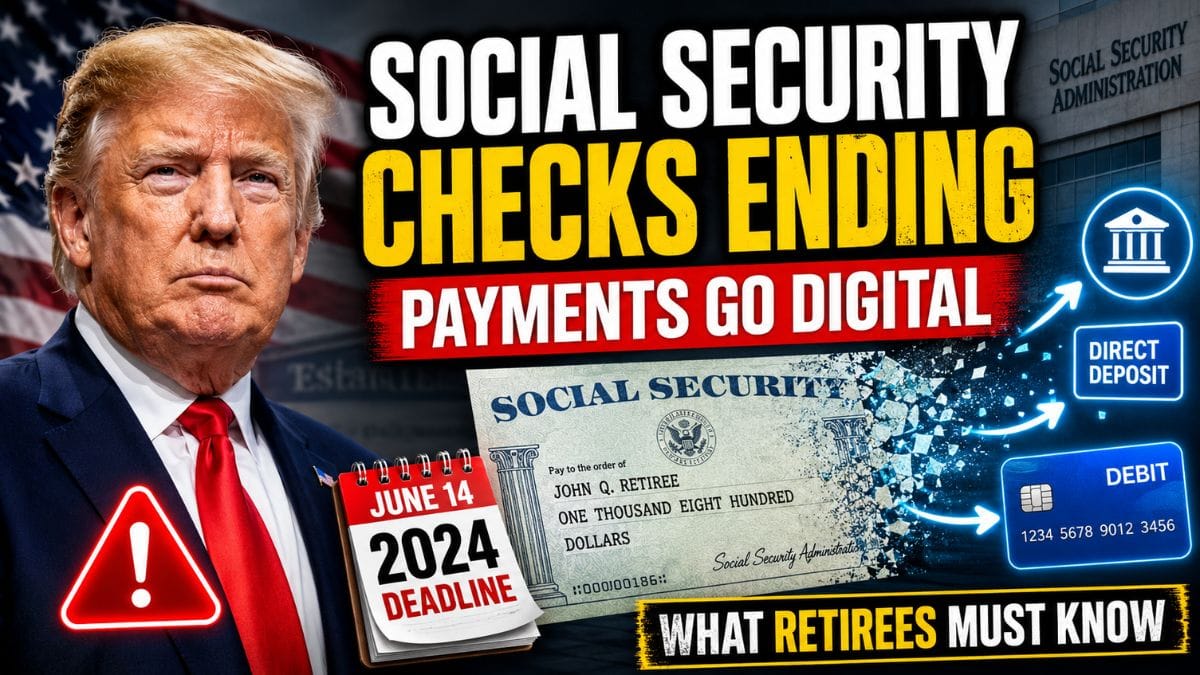
Social Security payments are entering a new phase, and the change affects millions of retirees and families across the country. For decades, many beneficiaries received their monthly benefits as paper checks delivered by mail. That long-standing system is now ending. The Social Security Administration is completing a transition to electronic payments, with the goal of making benefit delivery faster, safer, and more reliable.
While the move is intended to reduce delays and fraud, it also requires preparation. For people who rely on Social Security as their primary or only source of income, understanding how payments will be delivered and what steps may be required is essential.
Shift
Paper Social Security checks are being phased out nationwide. The SSA has been directed to move nearly all beneficiaries to electronic payment methods, with the transition expected to be completed this year. Paper checks will continue only in limited circumstances, and beneficiaries who wish to keep receiving them must qualify for a government-approved waiver.
The agency says electronic payments reduce the risk of lost or stolen checks and help ensure benefits arrive on time. At the same time, the shift requires some beneficiaries to adjust to systems they may not have used before.
Methods
Going forward, Social Security benefits will be delivered through two primary options.
The most common option is direct deposit into a checking or savings account at a bank or credit union. This method allows benefits to be deposited automatically on the scheduled payment date.
The second option is the Direct Express Debit Mastercard, a prepaid debit card backed by the U.S. Treasury. Benefits are loaded onto the card each month, and cardholders can use it to make purchases, pay bills, or withdraw cash.
| Payment Option | How It Works | Best For |
|---|---|---|
| Direct Deposit | Funds deposited into a bank account | Beneficiaries with bank access |
| Direct Express Card | Benefits loaded onto prepaid card | Beneficiaries without bank accounts |
Setup
Beneficiaries can set up direct deposit in several ways. Enrollment can be completed through a personal my Social Security account online, the Treasury Department’s Go Direct website, by phone through SSA or Treasury support, or with help from a bank or credit union.
The Direct Express card can be requested through the SSA. Once activated, it functions similarly to a standard debit card and does not require a separate bank account.
Barriers
Not all beneficiaries use traditional bank accounts. Some have had negative experiences with fees or overdraft charges. Others live in rural areas with limited access to bank branches. Some find account management confusing or difficult to navigate.
For these individuals, paper checks felt familiar and dependable. The transition to electronic payments can feel uncertain, especially when Social Security benefits are used to cover essential expenses such as housing, utilities, food, and medications.
Risks
Certain groups may face greater challenges during the transition. These include older adults without internet access, people who do not use computers, individuals with memory or cognitive difficulties, and widows or widowers who previously relied on a spouse to manage household finances. Concerns about scams and identity theft also make some beneficiaries hesitant to share banking information.
Consumer advocates note that the change is not only a technology update but also an access issue, particularly for vulnerable populations.
Security
To reduce fraud, the SSA has strengthened its identity verification procedures. Beneficiaries who cannot access their online accounts may be required to visit a local SSA office. Those who continue to receive paper checks must go in person to change a mailing address. Additional verification steps are also required when updating direct deposit information.
While these measures are designed to protect benefits, they may create difficulties for seniors who no longer drive, have mobility challenges, or live far from SSA offices. Family caregivers may be aware of what needs to be done but may not have legal authority to act on behalf of the beneficiary.
Support
Families can play a helpful role by assisting beneficiaries with setting up or securing a my Social Security account. Account information and passwords should be protected, and assistance should be provided only with the beneficiary’s consent or proper legal authorization.
Support is most effective when it respects the beneficiary’s independence while helping them navigate required steps.
Tracking
Even with electronic payments, problems can still occur. Beneficiaries may benefit from keeping a simple tracking system that includes payment dates, bills tied to those payments, and contact numbers to use if a payment does not arrive as expected.
Advance preparation can reduce stress and help resolve issues more quickly if delays occur.
The end of paper Social Security checks represents a significant change for many retirees. Electronic payments are expected to improve reliability for most beneficiaries, but others may need additional guidance and time to adjust. Families who prepare early can help reduce the risk of missed payments or confusion. For millions of Americans, Social Security remains a critical source of financial stability, making a smooth transition especially important.
FAQs
Are paper Social Security checks ending?
Yes, most beneficiaries are moving to electronic payments.
What payment options replace paper checks?
Direct deposit and the Direct Express debit card.
Can retirees still receive paper checks?
Only in limited cases with an approved waiver.
Is the Direct Express card a bank account?
No, it is a prepaid debit card backed by the U.S. Treasury.