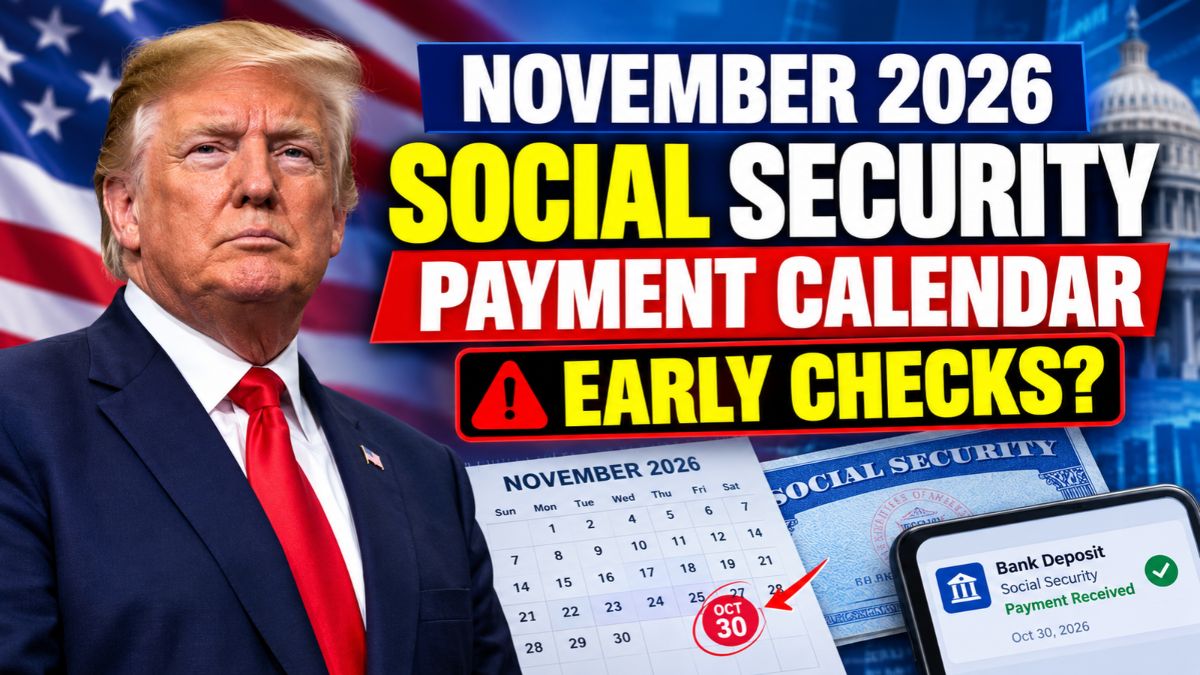
Millions of Americans who receive Social Security and Supplemental Security Income (SSI) benefits are preparing for the next round of monthly deposits as October 2026 comes to an end. The payment calendar includes the final regular October payment for beneficiaries whose birthdays fall later in the month, along with an early SSI deposit for November.
According to the schedule described by the Social Security Administration (SSA), Wednesday, October 28, is the final regular October payment date for beneficiaries whose birthdays fall between the 21st and 31st of any month. Meanwhile, SSI recipients are scheduled to receive their November benefits on Friday, October 30, because November 1 falls on a Sunday.
These calendar adjustments are part of the agency’s standard payment procedures. They do not indicate an additional benefit or a special increase in monthly payments. Knowing the schedule can help recipients plan household expenses, check their bank accounts, and avoid confusion when payments arrive before the beginning of a new month.
Schedule
The Social Security Administration uses different payment schedules depending on the type of benefit a person receives and, in many cases, their date of birth.
For most people receiving retirement, survivors, or Social Security Disability Insurance (SSDI) benefits, payment dates are assigned according to their birthday. The agency generally distributes these payments on the second, third, or fourth Wednesday of the month.
However, some beneficiaries follow a separate schedule. People who began receiving Social Security benefits before May 1997 generally receive payments on the third day of the month. Certain individuals who receive both Social Security and SSI also follow specific payment arrangements.
SSI operates under a different calendar because it provides financial assistance to eligible people who are aged 65 or older, blind, or disabled and have limited income and resources.
Recipients can review the official Social Security Administration payment schedule to determine which dates apply to their benefits.
October
Wednesday, October 28, marks the final regular October payment date for beneficiaries whose birth dates fall between the 21st and 31st and who receive benefits under the standard Wednesday payment schedule.
These payments generally cover retirement benefits, survivors benefits, and SSDI, depending on the recipient’s circumstances.
The payment date is important for people who organize their monthly budgets around the arrival of their benefits. Rent, utility bills, groceries, transportation, and medical expenses can all depend on receiving payments on time.
However, not every Social Security beneficiary receives money on October 28. People assigned to earlier Wednesday dates or a separate payment schedule may already have received their October benefits.
Recipients should therefore check their individual payment arrangements rather than assuming that the final Wednesday payment applies to everyone.
SSI
The November SSI payment is scheduled for Friday, October 30. This earlier deposit occurs because November 1 falls on a Sunday.
The SSA generally schedules SSI payments for the first day of each month. When that date falls on a weekend or a federal holiday, the payment is usually issued on the preceding business day.
As a result, eligible recipients receive their November payment before the calendar month begins.
It is important to understand what this adjustment means for household finances. The October 30 deposit represents the SSI benefit for November, not an extra payment for October. Recipients should account for the early deposit when planning their expenses for the following month.
The change also does not mean that SSI benefits have increased. Any change to a person’s payment amount would depend on applicable benefit calculations, cost-of-living adjustments, income, resources, and other eligibility factors.
For additional information about eligibility and payment rules, recipients can visit the SSA’s official Supplemental Security Income information page.
November
The November 2026 calendar includes payments for beneficiaries who follow the third-day schedule, three Wednesday-based payment groups, and the early SSI deposit.
The scheduled dates are as follows.
| Payment date | Beneficiary group |
|---|---|
| Friday, October 30 | SSI recipients receiving their November benefit |
| Tuesday, November 3 | Eligible Social Security beneficiaries on the third-day schedule |
| Tuesday, November 10 | Beneficiaries born between the 1st and 10th |
| Wednesday, November 18 | Beneficiaries born between the 11th and 20th |
| Wednesday, November 25 | Beneficiaries born between the 21st and 31st |
The November 10 payment is scheduled earlier than the usual second Wednesday because November 11 is Veterans Day, a federal holiday.
The dates above reflect the payment schedule provided in the source material. Beneficiaries should confirm their own dates through official SSA information, particularly if they receive multiple types of benefits or have recently changed their payment arrangements.
Eligibility
The payment date alone does not determine how much money a person will receive. Social Security and SSI use different eligibility requirements and benefit calculations.
Retirement benefits are generally based on a person’s earnings history and the age at which they claim benefits. SSDI eligibility depends on qualifying disability and work-history requirements, while survivors benefits are available to eligible family members of deceased workers.
SSI, by contrast, is a needs-based program. Eligibility generally depends on age or disability status, income, and countable resources. The amount paid can vary according to a recipient’s financial circumstances and other applicable rules.
For this reason, two people receiving benefits on the same date may receive different amounts.
Recipients should also distinguish between a regular monthly payment and a cost-of-living adjustment (COLA). A COLA is an annual adjustment intended to help benefits keep pace with changes in consumer prices. An early payment caused by a weekend or holiday does not represent a COLA or a change in eligibility.
Anyone who wants to understand their expected benefit amount can review their notices from the SSA or check their information through a personal my Social Security account.
Delays
Most beneficiaries receive payments electronically through direct deposit or another designated payment method. Nevertheless, a deposit may occasionally appear later than expected because of bank processing, account information problems, or other administrative issues.
If a scheduled payment does not arrive, recipients should first verify the payment date that applies to their benefit type. They should then check their bank account and confirm that their banking details have not changed.
The SSA generally advises beneficiaries who have not received an expected payment to allow three additional mailing days before contacting the agency. Although electronic payments do not travel through the postal system, checking the official guidance and confirming the payment details can help recipients identify the appropriate next step.
If the payment remains missing after the recommended waiting period, beneficiaries can contact the SSA for assistance. They should use official contact information rather than responding to unexpected messages that request personal details or banking credentials.
Recipients should never share their Social Security number, account passwords, or other sensitive information with unverified callers or websites claiming to release delayed payments.
Budgeting
Knowing when benefits arrive can make it easier for recipients to manage monthly expenses. However, the November schedule requires some attention because the SSI payment arrives before the month begins.
For example, a recipient who receives SSI on October 30 may need to use that deposit to cover expenses throughout November. Treating the payment as additional October income could leave less money available later in the month.
Social Security recipients who receive benefits on November 3, 10, 18, or 25 should also consider the timing of recurring expenses. Planning around confirmed deposit dates can help reduce the risk of missed payments, overdraft charges, or unnecessary withdrawals from savings.
Households receiving both Social Security and SSI should pay particular attention to their individual schedules. The payment rules may differ depending on the benefits involved, and not everyone will receive separate deposits on the same dates.
The November calendar is also a reminder that federal holidays can affect payment timing. Checking the annual schedule in advance can help beneficiaries prepare for these adjustments without assuming that an early deposit represents extra money.
Outlook
The transition from October to November 2026 involves several scheduled Social Security payments, with the final regular October deposit falling on October 28 for the relevant birthday group and the November SSI benefit arriving on October 30.
The remaining November dates are November 3, 10, 18, and 25 for the beneficiary groups covered by the schedule. The November 10 payment is adjusted because Veterans Day falls on the usual second-Wednesday payment week.
For beneficiaries, the main priority is to confirm which schedule applies to their benefits and understand which month each deposit covers. Early payments caused by weekends or federal holidays are routine calendar adjustments, not additional benefits.
Checking official SSA resources, keeping bank details current, and planning monthly expenses around confirmed payment dates can help recipients manage their income with greater confidence.
FAQs
When is the final regular October 2026 payment?
October 28 is the final regular payment date for the relevant birthday group.
When will November SSI benefits be paid?
November SSI benefits are scheduled for October 30, 2026.
Why is SSI paid before November begins?
November 1 falls on Sunday, so the payment moves to the previous business day.
When is the November 2026 Social Security payment?
Regular Wednesday-group payments are scheduled for November 10, 18, and 25.