Social Security and Medicare are drawing increased attention in Montana as voters prepare to decide who will represent them in Congress. With more than one in five Montana residents aged 65 or older, retirement benefits and access to healthcare are important concerns for households across the state. A key issue is the projected funding shortfall in Social Security, which could lead to a reduction in scheduled benefits if Congress does not take action.
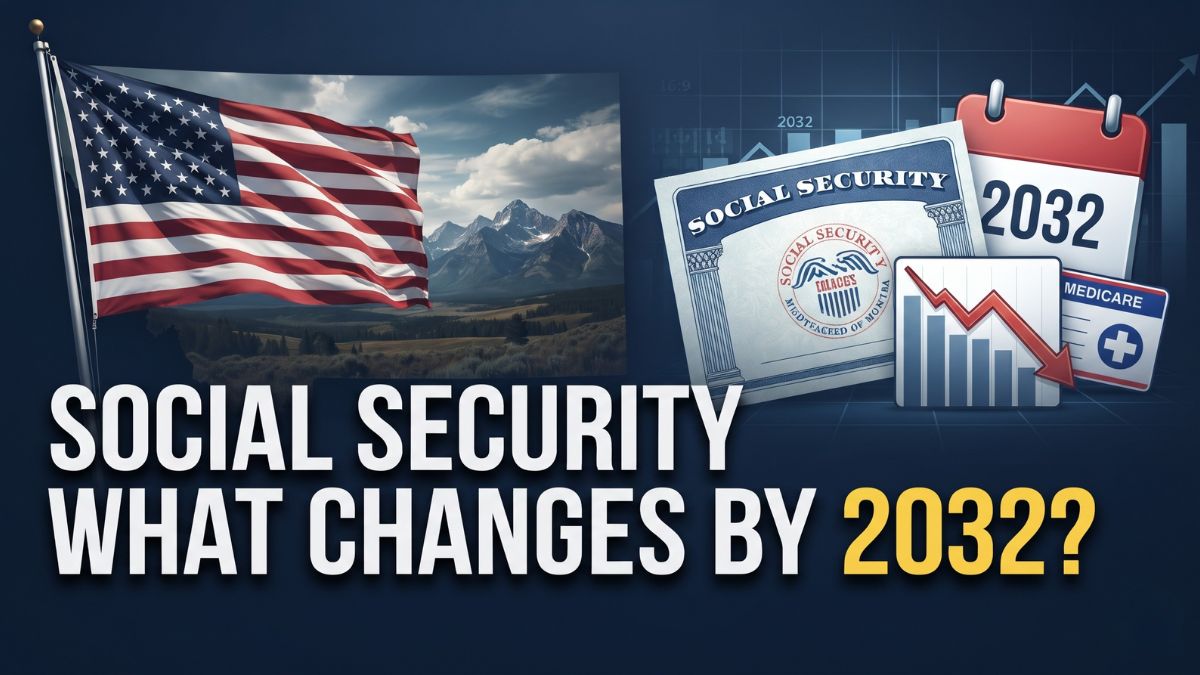
According to the Social Security Administration’s 2026 Trustees Report, the program’s trust fund reserves are projected to be depleted in 2032 under the report’s assumptions. If that happens, continuing income would be insufficient to pay all scheduled benefits in full. The report estimates that approximately 78% of scheduled benefits could be payable at that point under the relevant projection.
The issue has become part of Montana’s election debate, with candidates discussing how to maintain retirement benefits, address program funding, and protect access to medical care. Advocacy groups have also endorsed candidates based on their positions on Social Security, Medicare, Medicaid, and prescription drug costs.
For Montana voters, the debate involves more than a future federal budget challenge. Social Security provides a significant source of income for retirees, while Medicare helps many older Americans pay for healthcare. The decisions Congress makes in the coming years could affect household budgets, local businesses, and the long-term financial security of future retirees.
Concerns
Montana has a higher proportion of older residents than the United States overall. Census figures cited in the original report indicate that more than 22% of Montana’s population is aged 65 or older, compared with approximately 18% nationally.
That difference helps explain why Social Security and Medicare feature prominently in the state’s political discussions. Many older residents depend on retirement benefits to cover regular expenses, including housing, food, transportation, utilities, and medical care.
According to the Social Security Administration’s published state statistics, approximately 226,293 Montana residents aged 65 and older receive Social Security benefits. The total number of beneficiaries across all age groups is estimated at 270,750.
Montanans receive approximately $6.07 billion annually in Social Security payments, according to figures cited by the National Committee to Preserve Social Security and Medicare. Those payments support individual households and contribute to economic activity throughout the state.
Retirees often use their monthly benefits to pay for essential goods and services in their communities. As a result, changes to Social Security payments can have implications beyond the recipients themselves, particularly in smaller towns where local businesses depend on consistent consumer spending.
Official information about Social Security beneficiaries and program statistics is available through the Social Security Administration’s state statistics.
Funding
The most significant concern surrounding Social Security is whether the program will have sufficient funding to pay all scheduled benefits in the coming years.
The Social Security Administration’s 2026 Trustees Report projects that the relevant trust fund reserves could be depleted in 2032 if current laws remain unchanged. The precise financial outlook depends on economic conditions, demographic trends, employment, wages, and other assumptions used in the report.
Trust fund depletion does not mean Social Security would immediately stop paying benefits. Payroll taxes and other continuing income would still flow into the program. However, those revenues would not be sufficient to cover the full amount of benefits scheduled under current law.
The report estimates that continuing income could cover approximately 78% of scheduled benefits under the applicable projection. That would leave a funding gap equivalent to roughly 22% of scheduled payments.
For a retiree who receives $2,000 per month, a hypothetical 22% reduction would amount to $440 monthly, leaving $1,560. This is an illustration of the potential impact, not a prediction of the exact benefit any individual would receive.
The actual effect would depend on future legislation and the circumstances of each beneficiary. Congress could change taxes, benefits, or other program rules before the projected depletion date.
The official report provides detailed projections and explains the financial outlook for the program. Readers can review the 2026 Social Security Trustees Report for the underlying estimates and assumptions.
Candidates
Social Security has become a focus in Montana’s western congressional district, where Democrat Sam Forstag is challenging Republican Aaron Flint.
Forstag, a smokejumper and union leader, has received endorsements from four organizations that advocate for older Americans and the protection of retirement benefits. The organizations include Social Security Works PAC, the National Committee to Preserve Social Security and Medicare PAC, the Montana Chapter of the Alliance for Retired Americans, and Big Sky 55+.
At a rally outside the Missoula County Courthouse, representatives of advocacy groups discussed the importance of retirement security and explained their support for Forstag. The event included a symbolic presentation of boxing gloves, representing the candidate’s stated commitment to advocating for seniors.
Jon “Bowzer” Bauman, president of Social Security Works PAC, said Forstag submitted a strong questionnaire addressing Social Security, Medicare, Medicaid, and prescription drug prices. Bauman also noted that Flint had not returned the organization’s questionnaire.
Flint’s campaign website states that seniors should not face higher income taxes on Social Security benefits and that he would protect the program. A spokesperson for his campaign did not respond to requests for additional comment about his position, according to the original report.
The endorsements reflect the advocacy groups’ assessment of the candidates and the competitiveness of the western district race. They do not determine what federal policy will ultimately be adopted, as any significant changes to Social Security would require action through the federal legislative process.
Senate
Social Security has also featured in discussions among candidates seeking Montana’s U.S. Senate seat.
Independent candidate Seth Bodnar has argued that increasing the amount of income subject to Social Security payroll taxes could help improve the program’s long-term finances. Under the current structure, earnings above the annual taxable maximum are generally not subject to Social Security payroll taxes.
Bodnar has said that this arrangement means workers earning higher incomes pay Social Security taxes on a smaller proportion of their total earnings than many lower- and middle-income workers. He has proposed raising or removing the income cap to increase contributions from higher earners.
Democratic candidate Alani Bankhead has also supported removing the income limit. Her campaign website describes Social Security as an important anti-poverty program, and she has argued that higher-income earners should contribute more toward maintaining its funding.
Although both candidates support changing the taxable income limit, the details of any legislation would matter. Policymakers would need to consider how additional contributions would affect program revenue, benefit calculations, and the long-term financial outlook.
Republican candidate Kurt Alme has emphasized reducing waste and improving government efficiency as part of his approach to strengthening Social Security. He has also said that he would not support benefit cuts for seniors.
The candidates’ positions illustrate the different approaches under consideration. Some proposals focus on increasing revenue, while others emphasize government efficiency and the management of public resources.
The broader debate is not limited to Montana. Social Security’s long-term funding outlook is a national issue that will require decisions by Congress, regardless of which candidates win individual races.
Endorsements
The organizations supporting Forstag have focused their endorsements on races where they believe their preferred candidates have a realistic chance of winning.
The National Committee to Preserve Social Security and Medicare PAC endorsed Forstag in Montana’s western House district. Chairman Max Richtman said the organization viewed the race as one where its endorsement could make a meaningful difference.
Social Security Works PAC also concentrated its support on the western district rather than making endorsements across all of Montana’s federal races.
In the eastern congressional district, Big Sky 55+ endorsed independent candidate Michael Eisenhauer. Republican incumbent Troy Downing and Democrat Brian Miller were also candidates in that race, according to the original report.
The Senate race has a different political landscape, with Bodnar running as an independent alongside Democratic nominee Bankhead and Republican candidate Alme. Richtman said the presence of the Democratic nominee made an independent victory more difficult, despite his organization’s favorable view of Bodnar.
These decisions demonstrate that advocacy groups weigh both policy positions and electoral prospects when deciding where to direct their support. An endorsement can draw attention to a candidate’s stated priorities, but it does not guarantee that the candidate’s proposals will become law.
Medicare
Medicare is closely connected to the retirement security debate because many older Americans rely on the federal health insurance program to help pay for medical services.
In Montana, access to healthcare can be particularly challenging for people living in rural areas. Long travel distances, limited medical facilities, and financial pressures on hospitals can make it more difficult for residents to obtain timely treatment.
At the Missoula rally, advocates raised concerns about senior homelessness and the financial challenges facing older residents. Montana Representative Connie Keogh said senior homelessness was on track to increase substantially by 2030.
Forstag also highlighted the reported financial difficulties facing rural hospitals, stating that 19 facilities were at risk of closure. Potential hospital closures can affect access to emergency care, routine appointments, specialist services, and other forms of treatment.
The connection between Social Security and Medicare is important for household finances. Social Security provides income that many retirees use to meet everyday expenses, while Medicare helps eligible people manage healthcare costs. Changes affecting either program can put additional pressure on older households.
However, the programs have different funding structures and eligibility rules. Addressing Social Security’s projected trust fund shortfall would not, by itself, resolve every challenge facing Medicare or rural healthcare providers.
Voters evaluating candidates’ healthcare positions may therefore want to consider their proposals for Medicare funding, prescription drug prices, hospital access, and the availability of services in rural communities.
Economy
Social Security payments represent a substantial flow of income into Montana’s economy. The estimated $6.07 billion distributed annually supports beneficiaries and contributes to spending in communities across the state.
Recipients use their benefits to pay for basic expenses, and much of that money circulates through local businesses. Grocery stores, pharmacies, landlords, utility providers, transportation services, and healthcare businesses can all be affected by changes in household spending.
The National Committee to Preserve Social Security and Medicare has highlighted the economic importance of benefits paid to residents of Montana’s western congressional district. According to figures cited at the rally, those payments contribute more than $3.1 billion to Montana’s economy each year.
A potential reduction in scheduled benefits could therefore affect both retirees and the businesses that serve them. The scale of any economic impact would depend on the size of the reduction, the number of people affected, and how households adjusted their spending.
Younger workers also have a stake in the debate. People currently paying Social Security payroll taxes may depend on the program when they retire. Changes to contribution rules, benefit formulas, or retirement policy could influence the balance between what workers pay during their careers and what they receive later.
For households approaching retirement, the discussion also highlights the importance of understanding personal finances. Social Security is a key part of retirement planning for many Americans, but the amount received varies according to earnings history, claiming age, and other program rules.
Outlook
Montana’s election debate reflects a broader national challenge: maintaining dependable retirement benefits while addressing the financial pressures facing Social Security and the healthcare system.
The projected 2032 trust fund depletion date has increased attention on the issue, but the outcome is not predetermined. Congress can consider legislative changes before the deadline, and the program’s financial outlook may also change as economic and demographic conditions evolve.
Candidates have presented different ideas, including raising the payroll tax income cap, removing the cap entirely, improving government efficiency, and protecting current benefits. Each approach raises questions about funding, fairness, and the long-term structure of the program.
For Montana voters, these decisions carry particular significance because the state has a relatively large older population and billions of dollars in annual Social Security payments. Medicare access, rural hospital stability, and the cost of living add further dimensions to the discussion.
As Election Day approaches, voters can compare candidates’ stated positions with official program information and examine whether proposed solutions explain how changes would be funded and implemented. The central question is how lawmakers will preserve retirement security while ensuring that Social Security can meet its obligations to current and future beneficiaries.
FAQs
When could Social Security benefits face a reduction?
The 2026 Trustees Report projects trust fund depletion in 2032 without legislative changes.
How many Montanans receive Social Security?
Approximately 270,750 Montana residents receive benefits across all age groups.
How much Social Security income enters Montana annually?
The state receives approximately $6.07 billion in annual Social Security payments.
How do candidates propose addressing Social Security funding?
Proposals include raising the taxable income cap and improving government efficiency.