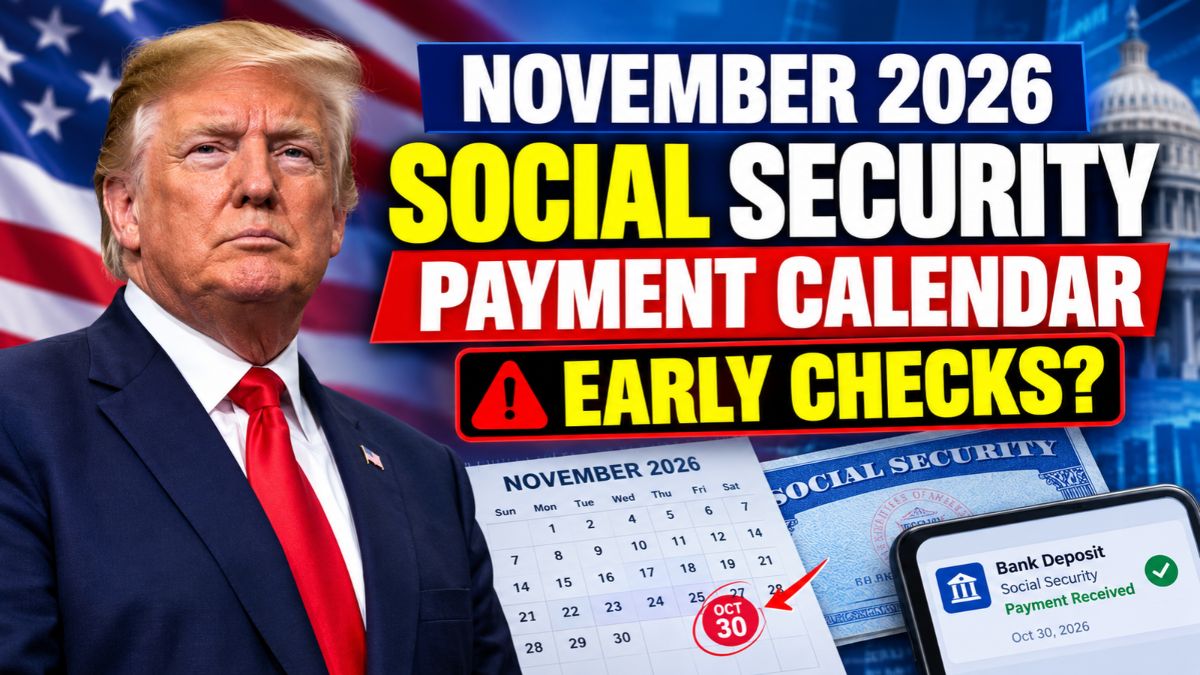
Millions of Americans rely on Social Security benefits to help cover monthly expenses, including housing, groceries, utilities, transportation, and medical care. Knowing when payments are scheduled can help recipients organize their finances and prepare for upcoming bills. In November 2026, the calendar creates an important distinction for beneficiaries: some will receive their benefits before November begins, while others will follow the regular monthly payment schedule.
Supplemental Security Income (SSI) recipients are scheduled to receive their November benefit on October 30 because November 1 falls on a Sunday. Meanwhile, Social Security retirement, disability, and survivor beneficiaries generally receive payments according to their established payment group. The timing depends on factors such as when benefits began and the recipient’s date of birth.
However, one detail deserves attention this month. Veterans Day falls on Wednesday, November 11, 2026, which coincides with the usual payment date for beneficiaries born between the first and tenth of a month. Recipients should consult the official Social Security Administration (SSA) calendar to confirm the applicable date rather than assume that every payment follows the usual Wednesday pattern.
Knowing these differences can help beneficiaries determine when to expect their money, avoid confusion about early deposits, and plan for the period between payments.
Schedule
The Social Security Administration uses different payment schedules for different categories of beneficiaries. SSI payments generally arrive on the first day of the month, while most Social Security retirement and disability benefits are distributed on Wednesdays according to the beneficiary’s birth date.
People who started receiving Social Security benefits before May 1997 generally follow a separate schedule. The same monthly payment date typically applies to people who receive both Social Security and SSI, although their individual benefit arrangements may differ.
Here is the November 2026 payment schedule based on the standard calendar and the dates provided for this month’s benefits.
| Payment date | Beneficiary group |
|---|---|
| October 30 | November SSI benefits, scheduled early because November 1 falls on Sunday |
| November 3 | Beneficiaries who began receiving Social Security before May 1997 and certain people receiving both Social Security and SSI |
| November 11 | Usual second-Wednesday payment date for beneficiaries born from the 1st through the 10th, subject to official holiday scheduling |
| November 18 | Beneficiaries born from the 11th through the 20th |
| November 25 | Beneficiaries born from the 21st through the 31st |
Important: November 11 is Veterans Day, a federal holiday. The November 11 entry reflects the ordinary second-Wednesday schedule, not a confirmed payment date adjusted for the holiday. Check the official SSA payment calendar to establish whether the first birth-date group will receive its November payment on November 10 or another applicable date.
For official information, visit the Social Security Administration’s payment schedule. This publication explains the standard payment arrangements and helps beneficiaries identify the schedule that applies to them.
SSI
Supplemental Security Income is a federal program that provides financial assistance to eligible people who are older, blind, or have qualifying disabilities and limited income and resources. Unlike Social Security retirement benefits, SSI eligibility is primarily based on financial need rather than an individual’s earnings history.
For eligible recipients, monthly SSI payments can help cover essential expenses such as rent, food, clothing, and medical costs. Because many households use these benefits to meet recurring obligations, changes to the payment calendar can affect how they manage their budgets.
SSI payments are normally scheduled for the first day of each month. When that date falls on a Saturday, Sunday, or applicable federal holiday, the payment is generally issued on the preceding business day.
In November 2026, the first day of the month falls on Sunday. As a result, the November SSI payment is scheduled for Friday, October 30.
Recipients should understand that this earlier deposit represents their regular November benefit. It is not an additional payment, a bonus, or an increase in the monthly amount. The next regular SSI payment is expected on December 1, 2026, assuming no further scheduling changes.
This distinction matters because receiving the money in October means recipients may need to make it last until the next scheduled deposit. Anyone planning rent payments, utility bills, or other recurring expenses should account for the longer interval between deposits.
For eligibility requirements and program information, beneficiaries can consult the official SSI information page. It explains the program’s purpose, basic eligibility rules, and application process.
Eligibility
The November payment calendar covers several groups, but not everyone receiving federal benefits follows the same schedule.
Social Security retirement benefits are generally available to eligible workers who have earned sufficient work credits. The amount a person receives depends on factors that include their earnings record and the age at which they claim benefits.
Social Security Disability Insurance, commonly known as SSDI, supports eligible workers whose medical conditions meet the program’s disability requirements and who satisfy the applicable work-credit rules. Payments are generally scheduled according to the Social Security payment system.
Survivor benefits may be available to qualifying spouses, children, and other eligible family members following the death of a worker. Their payment arrangements depend on the benefit category and applicable SSA rules.
SSI operates differently. It is a needs-based program for eligible individuals with limited income and resources. Some people receive SSI alongside retirement or disability benefits when they meet the requirements for both programs.
The type of benefit a person receives is therefore an important starting point when identifying a payment date. Birth date alone does not determine the schedule for every beneficiary.
For example, a person who began receiving Social Security before May 1997 generally follows the earlier monthly payment arrangement. A beneficiary who started later will usually fall into a birth-date payment group, unless another scheduling rule applies.
Beneficiaries who are uncertain about their category can review their notices or use their online Social Security account to check their benefit information.
Holidays
Federal holidays can affect when payments are processed, particularly when a holiday falls on a scheduled payment day.
Veterans Day is observed annually on November 11. In 2026, it falls on a Wednesday, the same weekday used for the second-Wednesday Social Security payment group.
Under the usual schedule, people born between the first and tenth of a month are assigned the second Wednesday as their payment date. However, the holiday creates a reason to verify the precise date before relying on it for budgeting.
The October 30 SSI payment follows a different calendar adjustment. November 1 falls on a Sunday, so the November benefit is scheduled for the preceding business day. This is a routine scheduling arrangement rather than a special increase in benefits.
It is also important to distinguish between the date the SSA schedules a payment and the time money becomes visible in an individual’s bank account. Financial institutions may have different deposit-processing procedures, so the availability of funds can vary.
Recipients should use official government information when checking holiday adjustments. The SSA’s Social Security benefits page provides information about retirement, disability, survivor, and other benefits, including resources for existing beneficiaries.
Deposits
Most beneficiaries receive their payments electronically. Depending on their arrangements, funds may be deposited directly into a bank account or delivered through another available government payment method.
Direct deposit allows recipients to receive payments without waiting for a paper check to arrive in the mail. However, a scheduled payment date does not necessarily mean that a deposit will appear at the same time of day for every recipient.
If a payment is not visible immediately, beneficiaries can first review their bank account and confirm the date that applies to their benefit category. They should also check whether their bank has posted a notice about processing delays.
If the scheduled date has passed and the payment remains missing, contacting the financial institution is a reasonable first step. If the bank cannot identify the issue, beneficiaries can contact the SSA for assistance.
People should be cautious about messages or websites that claim they need to pay a fee to release Social Security benefits. Official benefit payments do not require recipients to pay a third party to access their scheduled money.
Keeping bank account details, mailing information, and contact information current can also help reduce payment-related problems. Any changes should be made through official SSA channels or the beneficiary’s financial institution, as appropriate.
Budgeting
The timing of a Social Security payment can matter as much as the amount, especially for households that rely on benefits for regular expenses.
Recipients scheduled to receive SSI on October 30 should remember that the deposit is intended to cover November’s benefit period. Although the money arrives before the month begins, it does not provide an additional month of income.
A practical approach is to list essential expenses according to their due dates. Housing, electricity, water, insurance, medication, and groceries may need to be prioritized before discretionary purchases.
Beneficiaries can also consider dividing the monthly benefit into weekly spending amounts. This approach may help prevent an early deposit from being spent too quickly, particularly when the next payment is several weeks away.
People who receive Social Security on a Wednesday may find it helpful to arrange automatic bill payments around their confirmed deposit date. However, bills should not be scheduled on the assumption that a payment will arrive earlier than the official calendar indicates.
The same principle applies to anyone who receives multiple benefits. A household receiving both SSI and Social Security should identify the separate dates and amounts rather than treating all deposits as a single payment.
A written budget or basic spreadsheet can make these dates easier to track. Recording expected deposits, bill due dates, and essential spending can help beneficiaries identify potential shortfalls before they occur.



Verification
Before relying on the November calendar, beneficiaries should verify their individual payment dates through official sources. This is particularly important for the birth-date group whose usual Wednesday payment date coincides with Veterans Day.
The SSA website provides information about benefit types, payment arrangements, eligibility, and online account services. Beneficiaries can also review their personal records through my Social Security.
An online account can help users access information about their benefits and review details relevant to their individual circumstances. It is a useful resource when a general payment calendar does not answer a specific question.
Recipients should also remember that a change in the date of a deposit does not automatically indicate a change in the amount of benefits. Payment timing and benefit calculations are separate matters.
For people who have recently applied for benefits, changed their banking details, or received an SSA notice, the information in their personal account or official correspondence may be more relevant than a general calendar.
Checking these details ahead of time can help beneficiaries avoid unnecessary uncertainty and make more informed decisions about upcoming expenses.
November 2026 includes an early SSI deposit and a federal holiday that overlaps with the regular Wednesday Social Security schedule. The October 30 payment is intended to cover November SSI benefits, while most other beneficiaries will follow their established payment groups. Confirming the precise date for the November 11 group is especially important before planning bills around that deposit. With the correct schedule, beneficiaries can better manage their monthly expenses and distinguish routine calendar adjustments from changes to their benefits.