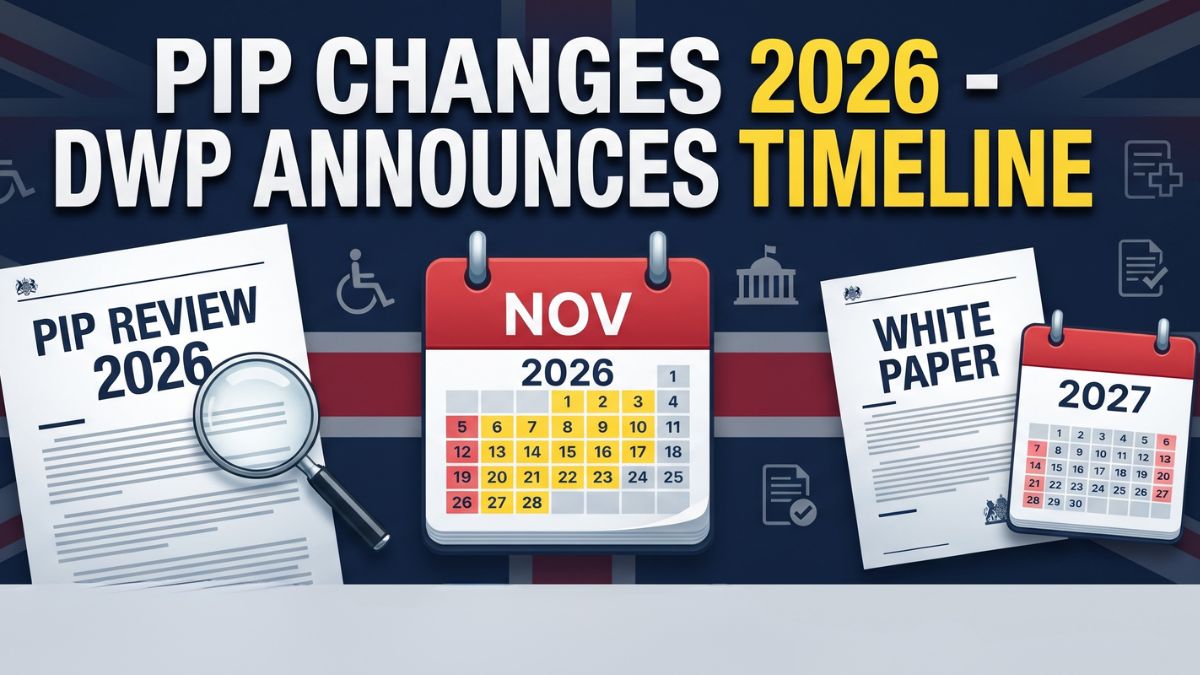
The UK Government has provided a clearer timeline for proposed changes to Personal Independence Payment (PIP), with the final report of an independent review expected in November 2026. The announcement gives people receiving disability benefits a better idea of when decisions about the future of PIP could become clearer.
The review, led by social security minister Sir Stephen Timms, is examining how PIP works, whether assessments reflect the additional costs faced by disabled people, and how the system could better support those who need assistance with daily activities and mobility.
According to the Budget announcement described in the source report, the government intends to publish its response in a White Paper by the end of 2026, with legislation expected to follow in 2027. These steps could shape the future of disability benefits, although the final details will depend on the review’s recommendations and the government’s subsequent decisions.
The announcement comes amid wider discussion about rising disability benefit expenditure and whether the current system adequately reflects the needs of claimants. While some proposals could change how support is assessed or delivered, no specific recommendation should be treated as a confirmed change to existing PIP entitlement until the government publishes its decisions and the relevant rules are established.
Timeline
The latest Budget announcement sets out three important stages in the process of reviewing PIP.
First, the final report of the Timms Review is expected in November 2026. This document should provide a fuller account of the review’s findings and recommendations concerning eligibility, assessments and the support provided to disabled people.
Second, the government plans to publish its response in a White Paper by the end of 2026. This will explain which recommendations it intends to accept, reject or consider further. It should provide greater clarity about the direction of future policy, although a White Paper does not automatically bring legislative changes into force.
Third, legislation is expected to follow in 2027, according to the announcement. Any measures requiring changes to the law would need to proceed through the relevant legislative process.
For current claimants, these dates are important because they distinguish the review stage from actual policy implementation. An announcement about possible reforms does not, by itself, change how existing claims are assessed or paid.
The government is also preparing to publish a review led by Alan Milburn into young people who are not in education, employment or training. That work is separate from the PIP review, although both form part of wider discussions about social security and public policy.
Purpose
Personal Independence Payment is intended to help eligible people with the additional costs associated with long-term health conditions or disabilities.
Unlike benefits that primarily replace earnings, PIP is designed around the effects of a person’s condition on everyday life. It can help recipients meet expenses associated with personal care, mobility, transport, equipment and other needs arising from their disability.
Eligibility is generally assessed through two components: daily living and mobility. Each component has different levels of support, and entitlement depends on how a person’s condition affects specific activities rather than simply the name or diagnosis of their medical condition.
This distinction is important because two people with the same diagnosis may experience different limitations and have different support needs.
The Timms Review is examining whether the existing assessment system captures these differences adequately. It is also considering whether the benefit provides support in a way that reflects the varied experiences of disabled people, including those with fluctuating conditions or changing care requirements.
The government has not yet confirmed the full set of reforms that will emerge from the review. Claimants should therefore continue to follow the existing eligibility rules and official guidance while the review process continues.
Official information about current eligibility, assessment criteria and payment rates is available on the GOV.UK PIP guidance page.
Spending
Rising expenditure on PIP is one of the central issues behind the debate about reform.
Figures cited in the source report show that PIP spending stood at approximately £16.3 billion in 2019-20 when adjusted for inflation to current prices. Spending increased to around £27.3 billion in 2024-25.
The same figures indicate that expenditure is forecast to reach £41.5 billion by 2030-31 if the existing trends and assumptions continue.
These figures have intensified discussion about the long-term affordability of disability support. However, rising expenditure does not, on its own, establish that individual claims are incorrect or that recipients do not need assistance.
Spending can be influenced by several factors, including the number of people claiming benefits, demographic changes, the prevalence of long-term health conditions, changes in assessment outcomes and the average amount paid.
The policy challenge is to ensure that eligible people receive appropriate support while maintaining a system that can operate sustainably over time.
The review is expected to consider how the assessment process can better identify the additional costs people face and whether alternative forms of support could meet particular needs more effectively.
Eligibility
One of the most closely watched questions is whether future reforms will change the way PIP eligibility is determined.
The current system assesses how a person’s health condition or disability affects their ability to complete specified daily living and mobility activities. Points are awarded according to the level of difficulty and assistance required, with the final assessment determining whether the claimant meets the relevant threshold.
The Resolution Foundation, a UK economic think tank, has examined whether the existing system consistently identifies people who face additional disability-related costs.
Its research, as described in the source report, suggests that approximately 16% of PIP recipients may not face additional costs of the type considered in its analysis. The think tank has argued that some of these cases could be affected by changes to the way support is provided.
It has also estimated that as much as £4.4 billion could be saved if payments were reduced or stopped for people identified under its proposed approach.
These figures represent research findings and potential savings under a particular reform scenario. They do not mean that 16% of claimants have been found ineligible, nor do they establish that the government will introduce payment cuts of this scale.
PIP eligibility is based on the applicable assessment rules, not simply whether someone reports a particular expense. The government’s final position will become clearer when the review and its response are published.
Proposals
The Resolution Foundation has suggested several ways to change how PIP support is assessed and delivered.
One proposal involves asking claimants more directly about the additional costs they face because of their disability and the assistance that would help them participate more fully in society.
This could give decision-makers a clearer understanding of individual circumstances. However, any system that places greater emphasis on reported costs would need to account for people whose needs are difficult to quantify or whose expenses vary over time.
The think tank has also suggested using one-off payments for certain expenses rather than relying exclusively on ongoing payments. Examples could include mobility equipment, home adaptations or modifications to a vehicle.
Such an approach could help with specific purchases, but it would raise questions about how recurring costs are handled. Many disabled people face regular expenses that cannot be resolved through a single payment.
Another recommendation involves more frequent but lower-stakes check-ins with claimants. The aim would be to understand changing circumstances without relying entirely on infrequent assessments that can create uncertainty and stress.
The Timms Review’s expert committee has also considered replacing some cash awards with services or other forms of non-cash support, while retaining cash payments as a central part of the system.
These ideas remain proposals rather than confirmed government policy. The final report and subsequent White Paper should clarify which approaches the government intends to pursue.
Assessments
The way PIP assessments are conducted is another major area under consideration.
For some claimants, conditions remain broadly stable over time. Others experience fluctuating symptoms, periods of improvement or deterioration, or progressive conditions that gradually increase their support needs.
A system that does not adequately account for these differences can create difficulties for both claimants and administrators.
The review has considered reducing unnecessary reassessments for people with lifelong or degenerative conditions. The aim would be to avoid repeatedly asking people to demonstrate limitations that are unlikely to change substantially.
Fewer unnecessary reviews could reduce administrative work and the stress associated with preparing evidence. At the same time, any assessment framework would need to ensure that decisions remain accurate when circumstances do change.
Another issue concerns claimants whose PIP payments are suspended after spending more than 28 consecutive days in hospital. The review has considered whether these rules create avoidable difficulties for disabled people receiving inpatient treatment.
Changes in this area could affect how support is managed during hospital stays, but the final policy position has not yet been confirmed.
Until the government announces changes and establishes any necessary legal rules, claimants should continue to follow the existing requirements that apply to their award.
Payments
PIP rates depend on whether a claimant qualifies for the daily living component, the mobility component or both, and on the level of support awarded for each component.
The source report lists weekly rates ranging from £30.30 to £194.60, depending on the award level and the components received. These figures should be checked against the official rates applicable to the relevant benefit year, as payment amounts can change through annual uprating.
A person’s payment is not determined solely by their diagnosis, income or employment status. Instead, the assessment focuses on the functional effects of their condition and the relevant eligibility criteria.
The proposed reforms could eventually affect assessment procedures, the types of support offered or the way some awards are structured. However, it would be premature to conclude that every current claimant will receive less money or that all awards will be reassessed under a new system.
People receiving PIP should keep relevant medical and supporting evidence up to date and report changes when required under the existing rules. They should also check official announcements before making financial decisions based on speculation about future reforms.
The GOV.UK PIP guidance remains the appropriate starting point for information about current entitlement and application procedures.
Outlook
The Budget announcement has provided a timetable for the next stages of the PIP review, with the final Timms Review report expected in November 2026, the government’s response planned by the end of the year and legislation anticipated in 2027.
The review is taking place amid concerns about rising disability benefit expenditure, the effectiveness of current assessments and the need to provide appropriate support to people with long-term health conditions.
Possible changes include adjustments to eligibility assessments, fewer unnecessary reviews for people with stable conditions, alternative support for specific disability-related expenses and changes to how some awards are delivered. These options remain subject to the review process and the government’s final decisions.
For claimants, the distinction between proposals and confirmed policy is particularly important. The Budget announcement does not, by itself, change existing PIP payment rates or eligibility rules. The final report and White Paper should provide a clearer picture of what the government intends to change and when any new arrangements could take effect.
Until then, people receiving PIP should continue to follow current guidance, keep relevant records and rely on official announcements when assessing how future reforms may affect them.
FAQs
When will the final PIP review report be published?
The final Timms Review report is expected in November 2026.
When will the government respond to the PIP review?
The government plans to publish its response by the end of 2026.
Will PIP payments change immediately?
No immediate changes are confirmed by the review timetable announcement.
When could PIP reform legislation follow?
Legislation is expected to follow in 2027, according to the announcement.