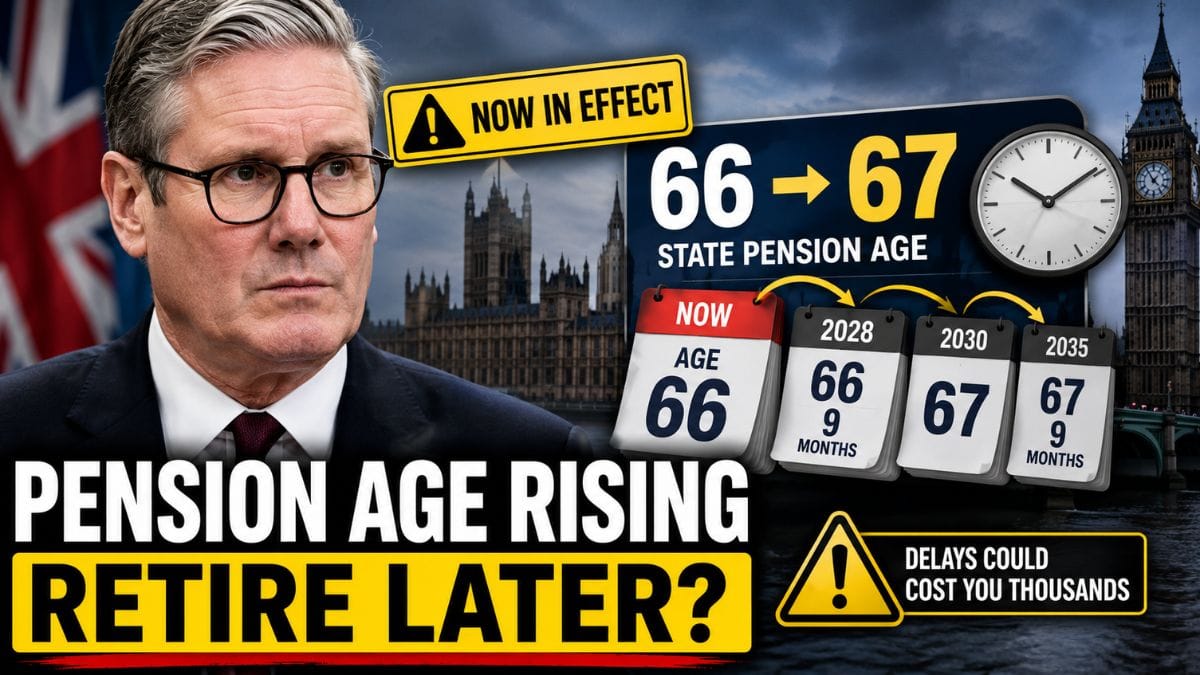
Millions of people across the UK are being advised to check their State Pension age as the planned increase from 66 to 67 is now underway. The change began in April and will continue gradually until March 2028, meaning some people approaching retirement may have to wait longer than they previously expected to claim their State Pension.
The Department for Work and Pensions (DWP) says the rise affects people born in the early 1960s, with eligibility now determined by an individual’s exact date of birth rather than a single fixed age.
What is Changing
The State Pension age is rising from 66 to 67 over a two-year period. This phased increase applies to people born between 6 April 1960 and 5 March 1961.
For those affected, the State Pension age will fall somewhere between 66 and 67. In practical terms, this means some people will need to wait several extra months before they can start receiving payments.
The DWP has stressed that the change is already in progress and is not a future proposal.
Who is Affected
Anyone born on or after 6 April 1960 should check their State Pension age, as they may not qualify at 66.
| Date of birth range | State Pension age |
|---|---|
| Before 6 April 1960 | 66 |
| 6 April 1960 to 5 March 1961 | Between 66 and 67 |
| After 5 March 1961 | 67 |
The exact age depends on the individual’s date of birth, which is why the DWP is urging people to confirm their details online.
Why Checking Matters
State Pension payments do not start automatically. People must actively claim their pension once they reach State Pension age.
The Pension Service usually sends an invitation letter around four months before someone reaches their State Pension age. This letter explains how to submit a claim, either online, by phone, or by post.
However, relying solely on the letter is not recommended. The DWP advises people to check their State Pension age themselves to avoid delays or confusion.
How to Check your State Pension age
The quickest way to confirm eligibility is through the official State Pension age calculator on GOV.UK. The tool is free to use and requires only a date of birth.
The calculator shows:
- the exact date you reach State Pension age
- your Pension Credit qualifying age
People can also use the State Pension forecast tool to see how much they are likely to receive and whether they can increase it by filling gaps in their National Insurance record.
How much the State Pension pays
The full New State Pension is currently £241.30 per week. This equals £995.20 for each four-week payment period.
The amount someone receives depends on their National Insurance Contributions record.
| National Insurance record | Outcome |
|---|---|
| Around 35 qualifying years | Full State Pension |
| Fewer than 35 years | Reduced amount |
| Fewer than 10 years | No entitlement |
People with gaps in their record may be able to boost their entitlement by making voluntary contributions.
Long-Term Plans
The increase to 67 is part of a wider government strategy to reflect longer life expectancy and rising pension costs. Further changes are already planned, with the State Pension age expected to rise again to 68 in the mid-2040s. The exact timing of that increase is still under review.
For now, the DWP says its focus is on ensuring people nearing retirement understand when they can claim and what steps they need to take.
FAQs
Who is affected by the State Pension age rise?
People born on or after 6 April 1960.
Is the State Pension age now 67?
It is rising gradually to 67 by March 2028.
Does the State Pension start automatically?
No. You must actively make a claim.
How can I check my State Pension age?
Use the free calculator on GOV.UK.