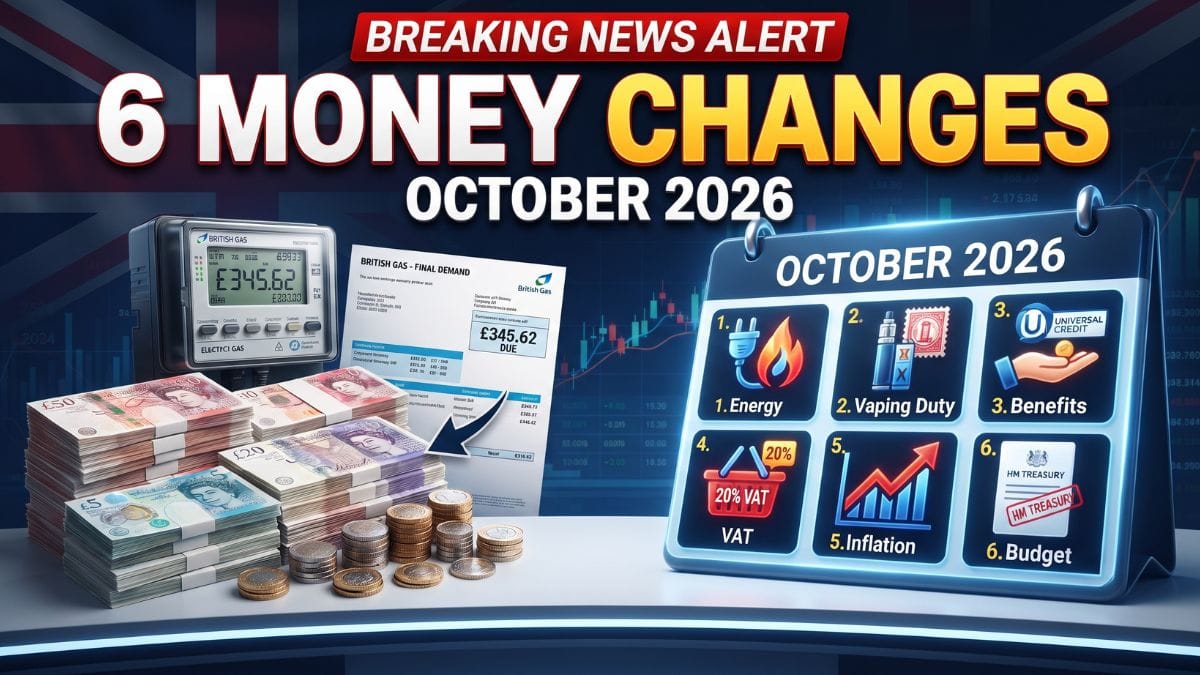
October 2026 brings several changes that could affect household finances across the UK. The month includes a new vaping duty, changes to benefit-debt enforcement, an Ofgem energy price cap update, the latest inflation figures and a scheduled Budget.
Some of the claims circulating about October changes, however, need to be distinguished from confirmed government policy, proposed measures and political announcements. In particular, claims about removing VAT from domestic electricity bills and new DWP enforcement powers should be checked against official government and regulatory information.
Here are the main financial developments to watch in October.
Energy
The Ofgem energy price cap is due to change on Oct. 1. The cap sets maximum unit rates and standing charges that suppliers can charge customers on standard variable and default tariffs, rather than placing a single limit on every household’s total bill.
The amount a household actually pays depends on energy consumption, tariff and payment method.
The latest cap follows changes in wholesale energy costs and other factors included in Ofgem’s calculation. Households should therefore check their own unit rates and standing charges rather than assuming the headline annual figure will match their bill.
Ofgem publishes the official price-cap information on its energy price cap page.
Vaping
A new Vaping Products Duty is scheduled as part of the government’s changes to tobacco and vaping taxation.
The duty is designed to apply to vaping liquids, with the government setting out a rate of £2.20 per 10 millilitres. The measure is separate from VAT and other taxes that may already apply to products.
Tobacco duty is also being adjusted. The government has said the changes are intended to address the affordability of vaping products while maintaining a financial difference between smoking and vaping.
For consumers, the practical effect will depend on how manufacturers, wholesalers and retailers pass the additional duty through to retail prices.
The UK government’s guidance on tobacco and vaping taxation provides the official tax information.
Benefits
Changes involving benefit debt and enforcement are another area to watch in October.
The Department for Work and Pensions has been given powers intended to help recover certain benefit debts. The measures are part of wider government efforts to reduce losses associated with fraud, error and outstanding benefit debt.
Some reporting has described measures involving deductions, access to bank information and restrictions relating to driving licences. However, the rules involve specific legal conditions and processes, so they should not be interpreted as meaning that anyone with a benefit overpayment will automatically lose their driving licence or have money taken from their account.
The government has said the measures are aimed at people with outstanding debts who do not engage with repayment arrangements.
The DWP’s official benefits information provides information about benefits, overpayments and related rules.
VAT
Claims about VAT being removed from domestic electricity bills should be treated carefully.
Domestic energy supplied to households is generally subject to the reduced 5% VAT rate. Any permanent change to that tax treatment would require the appropriate government and legislative measures.
A proposed or announced policy should not be confused with a change that has already taken effect. Consumers should check official HM Treasury and HM Revenue & Customs information when assessing whether a tax change will actually reduce their electricity bill.
The potential effect on household costs would also depend on the precise policy design and how it interacts with energy prices and the Ofgem price cap.
Inflation
The Office for National Statistics is scheduled to publish its latest consumer price inflation figures during October.
The inflation release will provide an updated picture of how prices have changed over the previous 12 months. The figures cover measures including the Consumer Prices Index, which is widely used to track changes in consumer prices.
Inflation data can affect household finances in several ways. It can influence expectations for interest rates, wage negotiations, savings returns and the cost of goods and services.
However, the headline inflation rate does not represent the experience of every household. Spending patterns differ, so a household that spends more on energy, rent or food may experience a different change in its own cost of living.
The Office for National Statistics publishes the latest UK inflation data.
Budget
The UK Budget is another major financial event scheduled for October.
The Chancellor’s statement can affect household finances through decisions on taxation, benefits, public spending and other fiscal measures. The impact of any announcements will depend on the policies ultimately introduced and their implementation dates.
A Budget announcement itself does not necessarily mean that every measure takes effect immediately. Some changes require legislation, consultations or later commencement dates.
For households, the important details will therefore be the final policy announcements, eligibility rules and dates on which individual measures begin.



Planning
October’s financial calendar includes several developments that could affect household budgets, but their impact will vary considerably from one person to another.
Energy customers should check the latest Ofgem rates and their supplier’s tariff. People who use vaping or tobacco products may see changes related to new duties. Anyone with a DWP overpayment or benefit debt should pay attention to official correspondence and repayment options.
Inflation figures and the Budget could also provide important information about the direction of the wider economy and future household costs.
The safest approach is to separate confirmed changes from proposals and forecasts. Government departments, Ofgem and the ONS publish the primary information needed to understand when a change takes effect and who it affects.