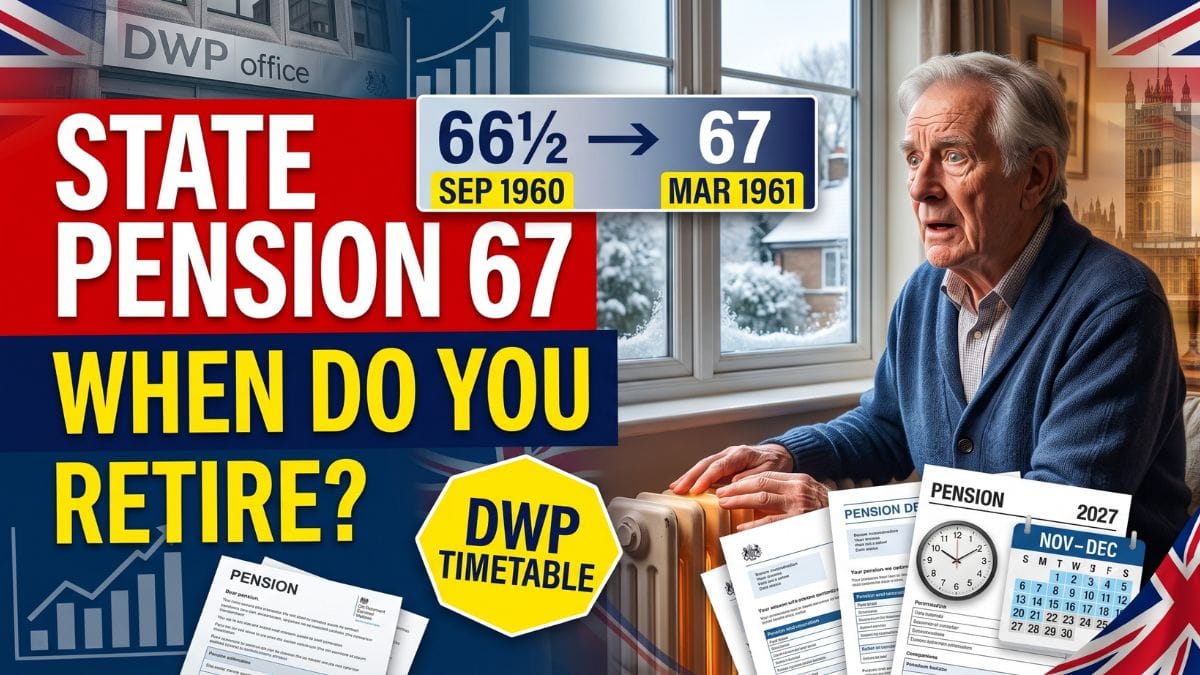
The UK State Pension age is changing as part of a phased increase from 66 to 67. Under the timetable set out by the Department for Work and Pensions (DWP), people born during certain periods between September 1960 and April 1961 will reach State Pension age at 66 years and a specified number of months.
The change is part of legislation introduced under the Pensions Act 2014. The increase is being phased rather than taking effect for everyone on one date, meaning the exact State Pension age depends on a person’s date of birth.
The government also provides an online State Pension age calculator that people can use to check when they are expected to qualify.
Changes
The State Pension age for men and women is increasing from 66 to 67 between 2026 and 2028.
The DWP explains that the Pensions Act 2014 brought forward the timetable for the increase to 67 by eight years. Rather than moving everyone to the new age at the same time, the government introduced a gradual system based on dates of birth.
This means two people born in the same year can have different State Pension ages if their birthdays fall in different parts of the year.
For people born between April 6, 1960 and March 5, 1961, the State Pension age is set at 66 plus a specified number of months. Those born later will move to the full State Pension age of 67 under the timetable.
Timetable
The DWP’s timetable shows how the State Pension age increases month by month for people born from September 6, 1960.
| Date of birth | State Pension age |
|---|---|
| Sept. 6, 1960 – Oct. 5, 1960 | 66 years, 6 months |
| Oct. 6, 1960 – Nov. 5, 1960 | 66 years, 7 months |
| Nov. 6, 1960 – Dec. 5, 1960 | 66 years, 8 months |
| Dec. 6, 1960 – Jan. 5, 1961 | 66 years, 9 months |
| Jan. 6, 1961 – Feb. 5, 1961 | 66 years, 10 months |
| Feb. 6, 1961 – Mar. 5, 1961 | 66 years, 11 months |
| Mar. 6, 1961 – Apr. 5, 1977 | 67 years |
The phased timetable means people approaching retirement should check their individual State Pension age rather than relying only on their year of birth.
Eligibility
Reaching State Pension age does not by itself determine how much State Pension a person will receive. The amount depends largely on their National Insurance record and the rules applicable to their circumstances.
People can check their State Pension forecast through the government’s services to see how much they may receive and whether there are gaps in their National Insurance record.
This is important because the State Pension age tells you when you can start receiving the pension, while your National Insurance history helps determine the amount you are entitled to.
Review
The State Pension age is not permanently fixed. The government reviews it periodically, taking factors such as life expectancy and wider demographic changes into account.
This means the timetable currently published by the DWP could potentially be followed by further changes in the future.
For people planning retirement several years ahead, this is an important consideration. Retirement plans can depend on the age at which State Pension income begins, so checking official government information regularly can help avoid relying on outdated figures.
Timeline
The increase from 66 to 67 is being introduced over a two-year period between 2026 and 2028. People born during the transitional period do not all reach State Pension age at exactly 67.
Instead, the age increases in stages, beginning with 66 years and several months before eventually reaching 67.
For people born after April 5, 1969 but before April 6, 1977, the State Pension age was already set at 67 under the Pensions Act 2007.
This provides an important distinction between the current phased increase and the rules that already apply to later birth dates.



Planning
Anyone approaching retirement should check their exact State Pension age using the government’s official calculator. A person’s date of birth is the key factor in determining when they reach the relevant age under the current timetable.
It is also worth checking a State Pension forecast and National Insurance record separately. Knowing the expected payment and the date it can begin gives a clearer picture of retirement income.
The increase to 67 is being introduced gradually, with people born between September 1960 and early 1961 facing State Pension ages ranging from 66 years and six months to 66 years and 11 months. From March 6, 1961 under the timetable provided, the State Pension age moves to 67.
The rules can be reviewed by the government in the future, so those planning retirement should rely on the latest DWP and GOV.UK information when making long-term decisions.