Millions of people receiving benefits and pensions will get their payments earlier than usual at the end of August because of the bank holiday.
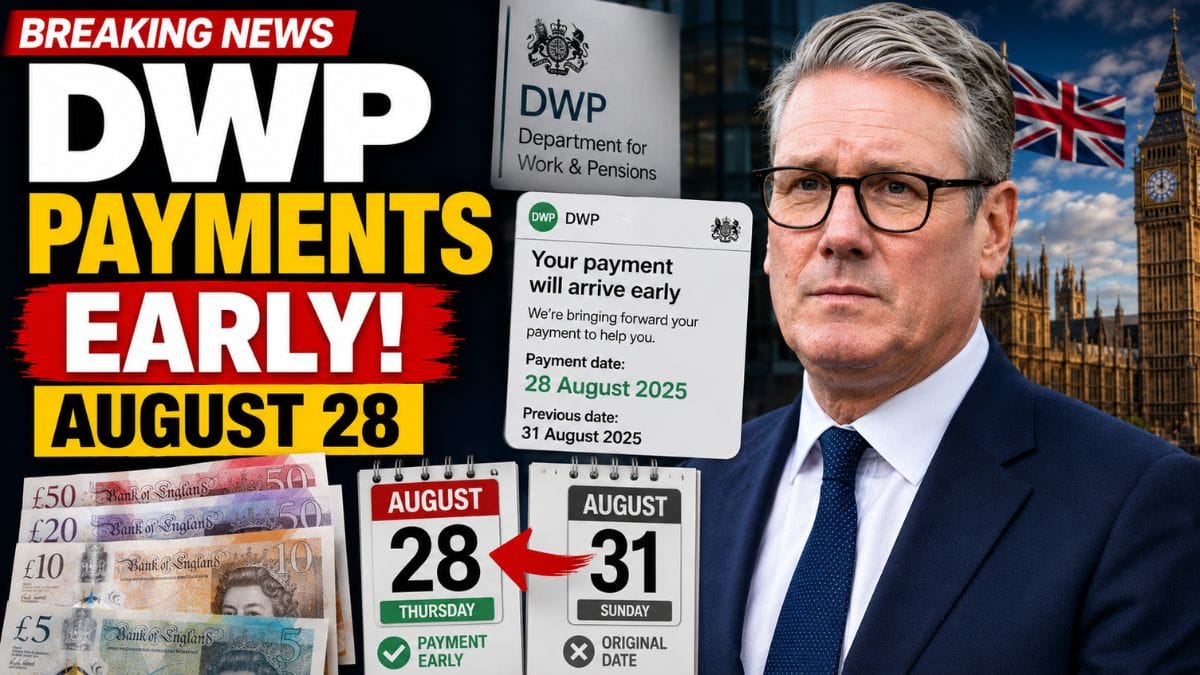
The Department for Work and Pensions (DWP) has confirmed that payments normally due on Monday, August 31, 2026, will instead be made on Friday, August 28.
The change applies to a range of benefits and pension payments across the UK. It is intended to prevent recipients from having to wait until the next working day because of the bank holiday.
For households that budget closely around their payment dates, the three-day change could be useful, particularly as families prepare for the start of the new school year.
Payment
The key date to remember is Friday, August 28.
Anyone whose regular DWP payment date falls on Monday, August 31 should receive the money on the previous working day, Friday, August 28.
The arrangement does not mean recipients are receiving an additional payment. It is simply a change to the date on which the scheduled payment is made.
| Original payment date | Revised payment date |
|---|---|
| Monday, August 31, 2026 | Friday, August 28, 2026 |
The DWP says the arrangement applies across the UK, including Scotland.
Recipients should therefore check their bank account on the revised date if they normally expect a payment on August 31.
Benefits
The early-payment arrangement covers several major benefits and pension payments.
These include State Pension, Universal Credit and Pension Credit, as well as a number of disability and carer-related benefits.
The payments being brought forward include:
- State Pension
- Universal Credit
- Pension Credit
- Carer’s Allowance
- Personal Independence Payment (PIP)
- Disability Living Allowance (DLA)
- Attendance Allowance
- Employment and Support Allowance (ESA)
- Jobseeker’s Allowance
- Income Support
- Industrial Injuries Compensation Scheme
The precise payment arrangements can depend on the benefit a person receives, so anyone who is unsure about their individual payment date should check their usual DWP information or contact the relevant service.
Reason
The change is linked to the August bank holiday.
Monday, August 31 is a bank holiday, meaning normal banking and government payment arrangements are affected. Rather than allowing payments scheduled for that day to be delayed until the following working day, the DWP brings them forward.
This is a routine approach used when benefit payment dates coincide with bank holidays.
The purpose is to make sure recipients have access to their scheduled money before the holiday period rather than having to wait several additional days.
For people managing household finances from one payment to the next, the timing can matter. A delay of even a few days can affect when bills are paid or when essential purchases are made.
Statement
Sir Stephen Timms, Minister for Social Security and Disability, said the government was pleased to confirm that benefit payments due on the August bank holiday would be paid earlier.
He said the change would help ensure families and older people received their money without disruption during the bank holiday period.
The government also pointed to wider measures intended to support household finances, including changes involving energy costs, the National Minimum Wage and policies aimed at reducing child poverty.
These measures are separate from the early payment arrangement itself.
Families
The timing of the payment change comes shortly before the start of the new school year.
For families receiving Universal Credit and other benefits, late August can bring additional expenses, including school uniforms, transport, meals and other back-to-school costs.
Receiving a scheduled payment on August 28 rather than August 31 could therefore give some households access to their money before the bank holiday and before schools return.
The government has also highlighted plans involving free school meals, childcare support and breakfast clubs as part of its wider approach to household finances.
In addition, the government says its £1 billion Crisis and Resilience Fund will provide local authorities with funding to support households facing financial difficulties.
Scotland
The early payment arrangement also applies to recipients in Scotland.
Bank holidays and payment arrangements can vary across different parts of the UK, so the DWP’s confirmation is relevant for Scottish recipients whose normal payment date falls on August 31.
As with recipients elsewhere in the UK, the important point is that a payment scheduled for Monday, August 31 is being brought forward to Friday, August 28.
Planning
Recipients do not need to apply for the early payment. The change is made automatically for payments that would otherwise have been due on the bank holiday.
It is worth remembering that the money arriving early does not represent extra support or an additional benefit payment. The next payment will generally remain on its normal schedule, meaning recipients should budget accordingly.
For anyone relying on a regular DWP payment, checking the revised date can help avoid confusion when reviewing bank statements or planning direct debits.
The main date to remember is August 28, 2026. If your benefit or pension payment was due on Monday, August 31, the DWP says it will be paid on Friday, August 28 instead. The change is intended to prevent bank holiday disruption and applies to a wide range of benefits and pension payments across the UK.
FAQs
When will August payments arrive early?
Payments due August 31 will arrive on August 28.
Why are DWP payments being made early?
August 31 is a bank holiday in 2026.
Does the early payment mean extra money?
No, it is the usual payment made earlier.
Which benefits are paid early?
Many DWP benefits and State Pension payments are included.