In a year marked by persistent pressure on household budgets, many retirees have been closely watching projections for the 2027 Social Security cost-of-living adjustment, commonly known as COLA. Earlier estimates pointed to a relatively strong increase, raising hopes that benefits would meaningfully offset rising prices. More recent economic developments, however, suggest that the adjustment may be somewhat smaller than initially expected. While this change reflects easing inflation rather than a loss of benefits, it does affect expectations for next year.
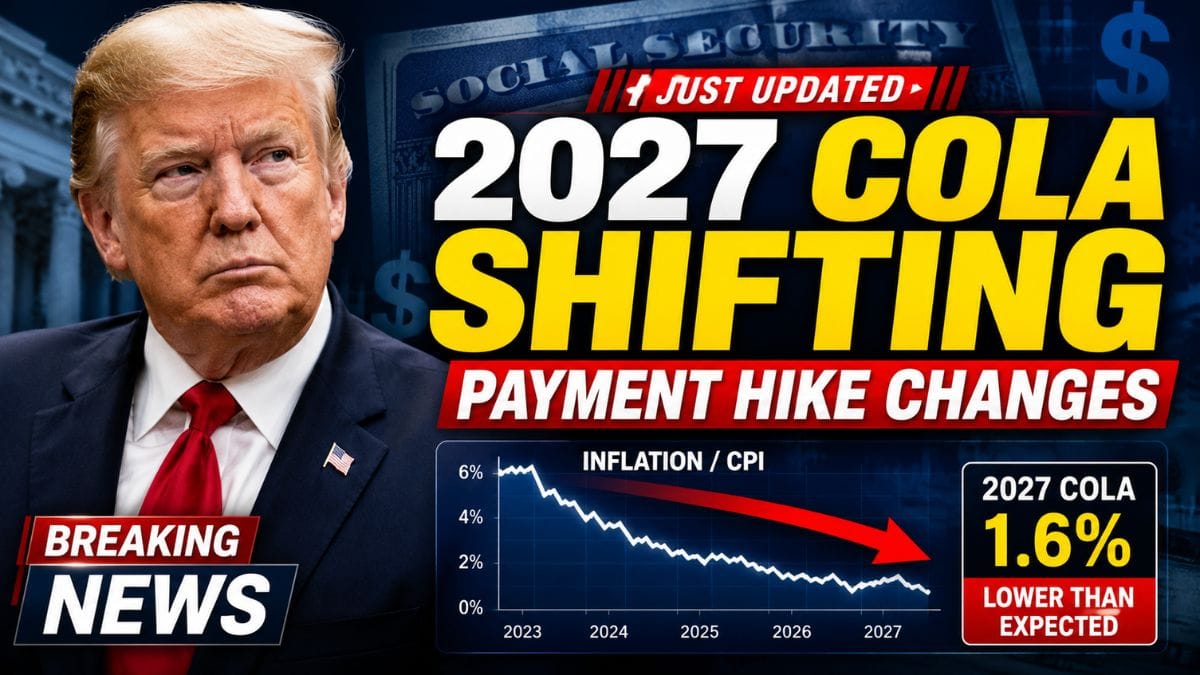
Social Security COLAs are intended to help benefits keep pace with inflation. They are not designed to increase purchasing power, but rather to prevent it from eroding as prices rise. Earlier in the year, projections from organizations such as The Senior Citizens League suggested that the 2027 COLA could reach about 3.9%. That estimate stood out as higher than both earlier forecasts and the long-term historical average.
As inflation trends have shifted, those projections are being revised. Current estimates are modestly lower, signaling that while benefits are still expected to rise, the increase may not be as large as once anticipated.
Inflation
The Social Security Administration calculates COLAs using inflation data from the third quarter of the year, specifically July, August, and September. For the 2027 COLA, this means inflation data from the third quarter of 2026. Because that period is just beginning, any estimate remains preliminary.
Earlier optimism around a higher COLA was driven in part by rising energy prices. Geopolitical tensions, including conflict involving Iran, contributed to higher fuel costs, which tend to push up inflation across multiple sectors of the economy.
More recently, those tensions have eased, at least for now, and fuel prices have begun to decline. Lower energy costs typically reduce inflationary pressure. If this trend continues through the remainder of the third quarter, overall inflation readings could come in lower than previously expected.
Estimates
Recent forecasts reflect this shift. Projections that once suggested a 3.9% COLA have edged closer to 3.8%. While the difference appears small, it can still affect monthly benefit amounts over the course of a year.
The table below illustrates how a small change in the COLA percentage can affect monthly payments:
| Monthly Benefit | 3.9% COLA | 3.8% COLA |
|---|---|---|
| $1,500 | $1,558.50 | $1,557.00 |
| $2,000 | $2,078.00 | $2,076.00 |
| $2,500 | $2,597.50 | $2,595.00 |
For beneficiaries who rely heavily on Social Security income, even modest differences can influence budgeting decisions.
Timing
The timeline for the official announcement has not changed. The Social Security Administration is scheduled to announce the 2027 COLA on Oct. 14, 2026. This date coincides with the release of September 2026 inflation data, which completes the third-quarter figures used in the calculation.
After the announcement, beneficiaries can estimate their new benefit amounts by applying the COLA percentage to their current payments. Personalized notices will be mailed in early December, outlining exact benefit amounts for 2027. These notices also include information about Medicare Part B premiums, which may offset part of the increase for some recipients.
Planning
Even if the final COLA is slightly lower than earlier forecasts, it still represents an increase. The final months of 2026 provide an opportunity for beneficiaries to review their budgets and prepare for the year ahead. Knowing expected benefit changes can help with planning for fixed expenses such as housing, utilities, and healthcare.
This period may also be a good time to reassess broader retirement decisions. Claiming strategies and benefit coordination, particularly for married couples, can have long-term effects on total retirement income.
Context
COLAs are only one component of Social Security income, but they play an important role in preserving purchasing power over time. A lower COLA often reflects slowing inflation, which can reduce day-to-day expenses even as benefit increases moderate. While the final 2027 adjustment will not be known until later in 2026, following inflation trends and planning accordingly can help beneficiaries manage expectations and financial decisions.
FAQs
When will the 2027 COLA be announced?
The announcement is scheduled for Oct. 14, 2026.
What data is used to calculate COLA?
Third-quarter inflation data from the prior year.
Why are COLA estimates changing?
Shifts in inflation, especially energy prices, affect projections.
Does a lower COLA mean benefits are cut?
No, it still represents an increase, just a smaller one.