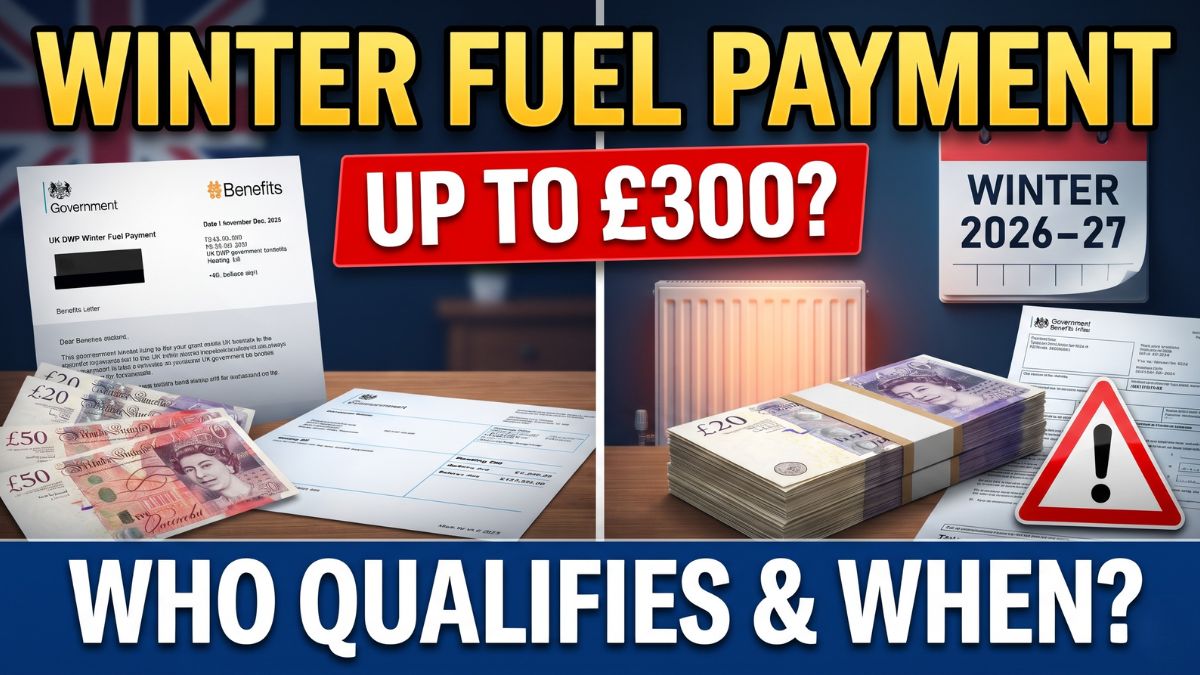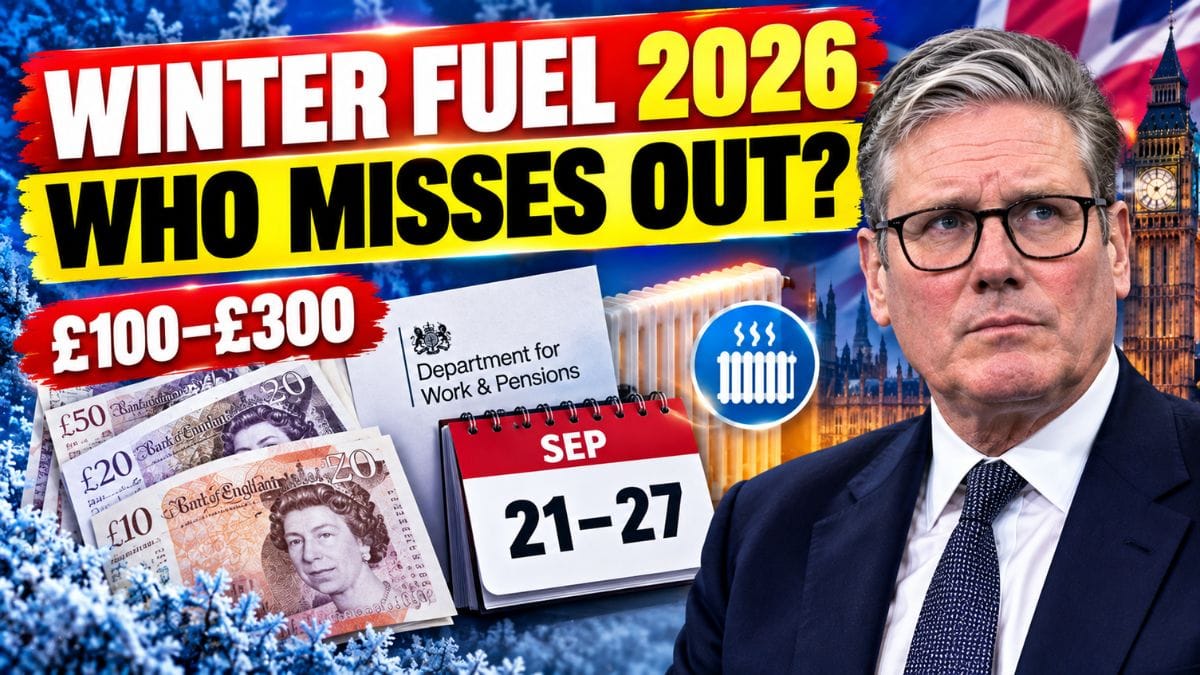
The Department for Work and Pensions (DWP) is preparing to make Winter Fuel Payments for winter 2026 to 2027, with eligible pensioners in England and Wales due to receive information about the amount they can expect.
The payment is intended to help with heating costs during the colder months. Depending on age and individual circumstances, eligible people can receive between £100 and £300.
For most people who qualify, the payment will be made automatically. However, the rules include specific conditions relating to where someone normally lives, their circumstances during the qualifying week and whether they receive certain benefits.
Eligibility
For winter 2026 to 2027, people who live in England or Wales and were born on or before June 27, 1960 may qualify for a Winter Fuel Payment.
The government says the payment can be between £100 and £300, with the exact amount depending on factors including age and circumstances during the qualifying period.
The official GOV.UK Winter Fuel Payment guidance provides the current eligibility requirements and payment information.
Most eligible pensioners do not need to make a new claim. The DWP will normally use information it already holds to determine eligibility and arrange payment.
Qualifying
The qualifying week for winter 2026 to 2027 is September 21 to September 27, 2026.
Circumstances during this period can affect whether someone qualifies and how much they receive. This makes the qualifying week an important date for people checking their entitlement.
The government says people who normally live outside England, Wales or Northern Ireland may not qualify simply because they were temporarily visiting during the qualifying week. Their normal country of residence is relevant.
Other circumstances during the qualifying week can also affect eligibility.
Letters
People who qualify are expected to receive a letter in October or November explaining how much Winter Fuel Payment they should receive.
Payments are then expected to be made during the final two months of 2026.
The amount depends on the person’s date of birth and circumstances during the qualifying week. As a result, two people of similar ages may not necessarily receive exactly the same amount.
Exceptions
There are several circumstances in which someone may not receive the payment.
The government says a person may be excluded if they were:
- Normally living outside England, Wales or Northern Ireland
- In hospital receiving free treatment throughout the qualifying week and the corresponding qualifying week in the previous year
- In prison for the whole qualifying week
- Subject to immigration conditions that prevent access to public funds
- Required to obtain permission to enter the UK and unable to meet the relevant conditions
These rules are separate from the general age requirement, so reaching State Pension age does not by itself guarantee a payment.
Care
People living in a care home can qualify for Winter Fuel Payment in some circumstances.
However, there are additional restrictions. A person generally will not receive the payment if they have been living in a care home for the entire period from June 29, 2026, or earlier, and they receive certain means-tested benefits.
These include Universal Credit, Pension Credit, Income Support, income-based Jobseeker’s Allowance and income-related Employment and Support Allowance.
This means care home residents should consider both their living arrangements and the benefits they receive when checking eligibility.
Benefits
For many pensioners, the Winter Fuel Payment will be made automatically if the DWP has the necessary information.
The government says people receiving certain benefits generally do not need to make a separate Winter Fuel Payment claim. These include:
- State Pension
- Pension Credit
- Universal Credit
- Attendance Allowance
- Personal Independence Payment (PIP)
- Carer’s Allowance
- Disability Living Allowance (DLA)
- Income-related Employment and Support Allowance
- War Pensions Scheme awards
- Industrial Injuries Disablement Benefit
- Incapacity Benefit
- Industrial Death Benefit
Receiving one of these benefits does not by itself guarantee a Winter Fuel Payment. The person must still satisfy the relevant Winter Fuel Payment conditions.
Income
The Winter Fuel Payment rules also include an income threshold.
For the 2026 to 2027 winter, people in England and Wales with income of £35,000 or less can receive the payment if they meet the other eligibility requirements.
Where someone has income above the threshold, the payment can still be issued initially but the amount may subsequently be recovered through the tax system by HM Revenue and Customs.
The government has said eligible pensioners do not need to register separately with HMRC for this recovery process.
Claims
Although most eligible people will receive the payment automatically, some people may need to make a claim.
This can apply if someone has never received a Winter Fuel Payment before or if they deferred their State Pension after their previous Winter Fuel Payment.
The distinction is important because a person should not assume that being over State Pension age automatically means no claim is required in every circumstance.
People who believe they should qualify but do not receive a letter should check the official guidance and contact the relevant government department for assistance.


Payments
Around nine million people in England and Wales are expected to receive Winter Fuel Payment for winter 2026 to 2027.
For couples, payment arrangements can depend on whether one person is receiving a qualifying means-tested benefit. Where there is no means-tested benefit in payment, the government says a shared payment can be made to a couple.
The payment is intended to help with heating costs rather than cover a specific energy bill. Recipients can generally use the money toward their household expenses as they choose.
The important dates to remember are the September 21 to September 27 qualifying week, followed by letters expected in October and November and payments scheduled toward the end of 2026. Anyone whose circumstances fall into one of the exclusion categories should check the official rules rather than assuming they will receive the payment.