Oct. 18, 2026

Social Security Earnings Limits Are Rising in 2027 – What Retirees Who Work Need to Know
For retirees who rely on Social Security to cover everyday expenses, even a small increase in the amount they can earn from a job can

Oct. 18, 2026
For retirees who rely on Social Security to cover everyday expenses, even a small increase in the amount they can earn from a job can
Oct. 16, 2026

Millions of Americans receiving Social Security benefits are set to see higher monthly payments in 2027 following a reported 3.6% cost-of-living adjustment (COLA). The increase
Oct. 15, 2026

Social Security benefits play a central role in retirement planning for millions of Americans, helping cover everyday expenses such as groceries, housing, utilities, and medical
Oct. 12, 2026

Social Security beneficiaries are waiting for the next annual cost-of-living adjustment (COLA), which helps their monthly payments keep pace with inflation. With the 2027 adjustment
Oct. 11, 2026

Social Security provides an important source of retirement income for millions of Americans, but only a small share of retirees qualify for the program’s maximum
Sep. 10, 2026

A married couple could receive as much as $10,362 a month in Social Security in 2026 if both spouses qualify for the maximum retirement benefit.
Jul. 4, 2026
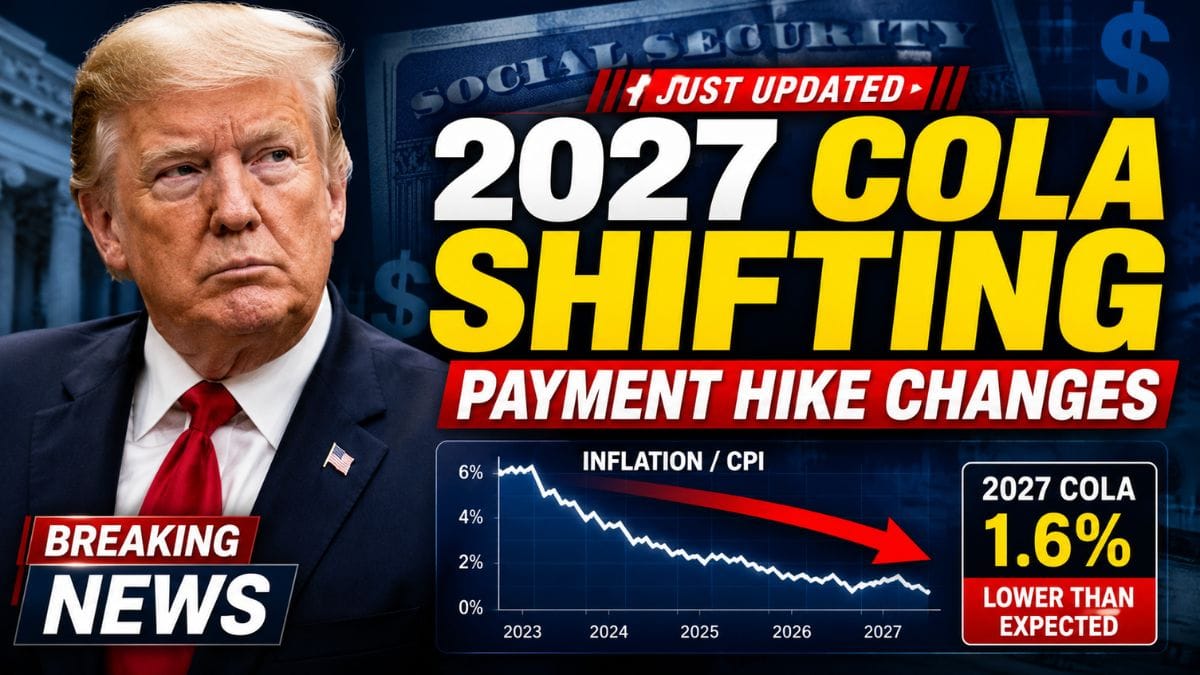
In a year marked by persistent pressure on household budgets, many retirees have been closely watching projections for the 2027 Social Security cost-of-living adjustment, commonly
Jun. 16, 2026

Many Americans plan to work in retirement, whether to stay engaged, supplement income, or offset rising living costs. But for those who claim Social Security
Jun. 14, 2026

For many retirees, rising prices have slowly reduced the buying power of a monthly Social Security check. Housing, healthcare, food, and utilities now cost more
May. 24, 2026

Retirement policy has returned to the center of economic debate following several changes introduced during President Donald Trump’s second term. While many retirees may see
May. 18, 2026

Many Americans choose to claim Social Security benefits as soon as they become eligible at age 62. For some retirees, starting benefits early helps cover
May. 15, 2026

A projected funding shortfall in Social Security could reduce monthly retirement benefits by roughly 24% beginning around 2033 to 2034 if Congress does not act,