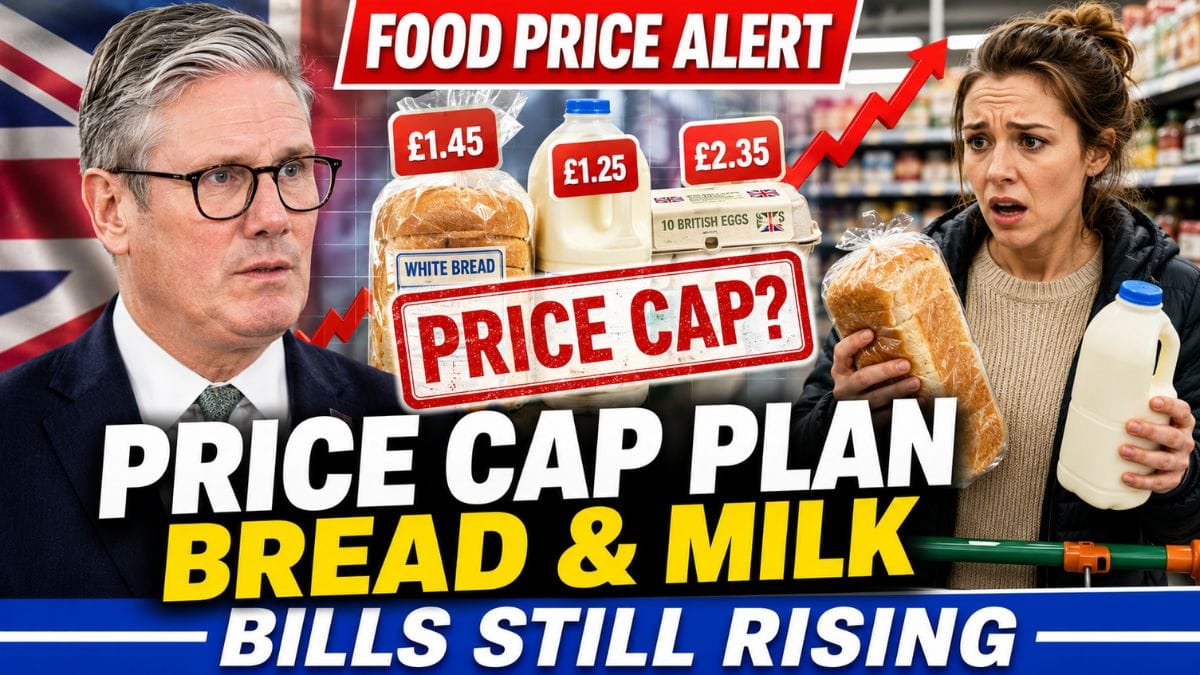
The UK Government is exploring new measures to ease pressure on household budgets as food inflation continues climbing. Chancellor Rachel Reeves has reportedly asked supermarkets to voluntarily cap prices on essential groceries such as bread, milk, and eggs in exchange for possible regulatory relief.
The proposal has already sparked debate across the retail industry, with supermarket groups warning that price controls could backfire if businesses are forced to absorb rising costs.
The move comes at a time when millions of families across Britain are struggling with higher grocery bills, energy costs, and broader inflation pressures.
Proposal
According to reports from the Financial Times, the Treasury has discussed a voluntary agreement with supermarkets that would freeze or limit prices on basic food staples.
Products potentially included in the plan are:
- Bread
- Milk
- Eggs
- Other essential groceries
In return, supermarkets could receive incentives from the Government, including:
| Possible Government Incentives | Purpose |
|---|---|
| Easing packaging regulations | Reduce retailer costs |
| Delaying healthy food rule changes | Avoid extra compliance expenses |
| Regulatory flexibility | Encourage price freezes |
The Government reportedly wants retailers to pass any savings from relaxed regulations directly to consumers through lower food prices.
Inflation
The discussions come as UK food inflation rose to 3.7% in April, increasing pressure on policymakers to address the rising cost of living.
Food prices have been heavily affected by:
- Higher energy costs
- Supply chain pressures
- Commodity price increases
- Global geopolitical tensions
- Increased domestic business costs
For many households, grocery spending has become one of the largest monthly financial burdens.
Criticism
Retail leaders have strongly pushed back against the idea of supermarket price caps.
Helen Dickinson, chief executive of the British Retail Consortium (BRC), warned that “1970s-style price controls” could damage the industry and potentially force retailers to sell products at a loss.
She argued that the Government should instead focus on reducing policy-driven costs that retailers already face.
Dickinson said rising prices are being fueled by two major forces:
| Key Cost Drivers | Impact |
|---|---|
| Middle East conflict | Higher energy and commodity prices |
| UK domestic policies | Increased operating expenses |
She also defended competition within the UK grocery market, stating that Britain already has some of the most affordable supermarket prices in Western Europe because of intense rivalry between chains.
Farmers
One concern surrounding the proposal is the potential impact on British farmers and food producers.
According to reports, the Treasury asked supermarkets for assurances that farmers would not lose income as a result of capped grocery prices.
This issue is especially sensitive because farmers are already facing:
- Rising fuel costs
- Higher fertilizer prices
- Labour shortages
- Increased transportation expenses
If supermarkets absorb the price freeze themselves, profit margins could shrink. But if suppliers are pressured to lower prices, farmers could face financial strain instead.
Treasury
The Treasury has not confirmed full details of the discussions but indicated that additional cost-of-living measures are coming soon.
A Treasury spokesperson said:
“The Chancellor has been clear we want to do more to help keep costs down for families, and will set out more detail in due course.”
Rachel Reeves is expected to announce further support measures aimed at easing financial pressure on households.
In comments published by The Times, Reeves also warned businesses against exploiting inflationary conditions for excessive profits.
“I will not tolerate anyone exploiting a crisis to make a quick buck off the back of hardworking people,” she wrote.
The Chancellor also pledged stronger powers for regulators to investigate and publicly identify companies accused of price gouging.
Crisis
The food inflation debate is unfolding alongside growing global concerns about supply disruptions.
Foreign Secretary David Lammy recently warned of the risk of “sleepwalking into a global food crisis” because of tensions involving Iran and the Strait of Hormuz.
The Strait is one of the world’s most important energy and shipping routes. Any disruption could increase fuel, transport, and food costs worldwide.
That uncertainty adds another layer of pressure to already fragile grocery supply chains.
Competition
Supporters of free-market pricing argue that supermarket competition naturally keeps prices lower without Government intervention.
The UK grocery sector is dominated by fierce competition among chains including:
- Tesco
- Sainsbury’s
- Aldi
- Lidl
- Asda
- Morrisons
Retail groups warn that direct price intervention may discourage investment or create supply shortages if businesses cannot cover rising costs.
Critics compare the idea to placing a lid on a boiling pot – pressure may temporarily appear controlled, but underlying costs continue building underneath.
Outlook
The Government now faces a difficult balancing act between helping consumers and protecting businesses, farmers, and food supply chains.
For households battling rising grocery bills, lower prices on essentials would provide welcome relief. However, retailers argue that long-term solutions require reducing inflationary pressures at their source rather than relying on price caps alone.
As food inflation remains elevated and global tensions continue affecting supply chains, the debate over supermarket pricing is likely to remain a major political and economic issue in the months ahead.
FAQs
What food items could face price caps?
Bread, milk, eggs and other essentials.
Why is the Government proposing this?
To help households facing rising food costs.
What is UK food inflation now?
Food inflation reached 3.7% in April.
Why are retailers criticizing the plan?
They fear forced losses and higher costs.