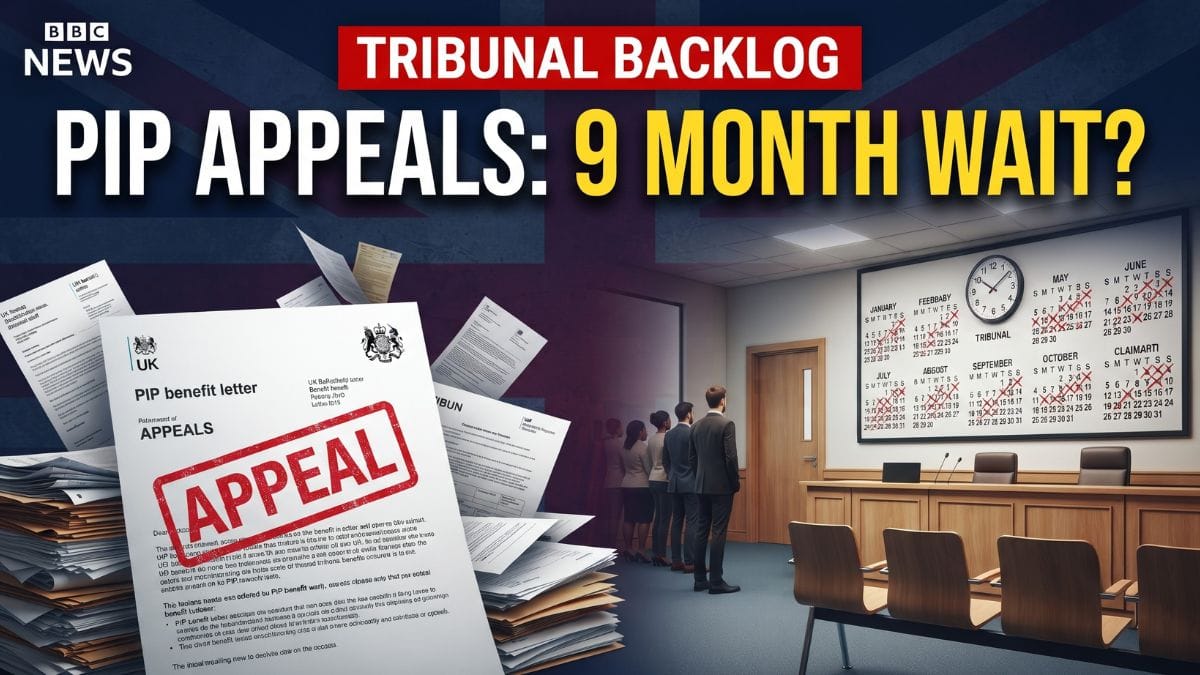
For people applying for Personal Independence Payment (PIP), receiving a decision from the Department for Work and Pensions (DWP) may not be the end of the process. Some claimants who are refused or awarded a lower rate can challenge the decision, but the appeal process can take many months.
Recent figures highlighted by disability rights charity Z2K show the scale of the problem. According to the report cited in the original account, 74% of PIP decisions that reached a tribunal were overturned in favour of claimants. The figures have renewed questions about the accuracy of initial decisions and the length of time people can spend waiting for financial support.
For people living with disabilities or long-term health conditions, the delay can have practical consequences. PIP is intended to help with additional costs associated with a disability or health condition, so waiting for an award can affect household finances, care arrangements and everyday expenses.
Appeals
The PIP appeals process generally begins after the DWP makes a decision on a claim. If the claimant disagrees, they normally need to ask the department for a mandatory reconsideration before appealing to an independent tribunal.
Mandatory reconsideration gives the DWP an opportunity to review its original decision. However, the rate at which decisions are changed at this stage has been considerably lower than the success rate reported for later tribunal appeals.
The GOV.UK guidance on challenging a benefit decision explains how claimants can request a mandatory reconsideration and what happens during the process.
The difference between the two stages is significant. A claimant may first receive a decision that does not provide the expected support, then have that decision reconsidered without success, before finally taking the case to tribunal.
That can turn what should be a route to correcting a decision into a lengthy process.
Delays
Tribunal waiting times have become another concern.
The figures cited in the report indicate that around 129,000 cases were waiting to be heard by the Social Security and Child Support Tribunal, with almost 90,000 involving PIP appeals.
The average wait for a decision on benefit appeals was reported at around nine months. For some claimants, the wait can be substantially longer.
One claimant featured in the original report, Varia, described spending more than two years pursuing her PIP entitlement. After an initial refusal and an unsuccessful mandatory reconsideration, she waited eight months for a tribunal hearing.
During that period, the DWP offered her a standard PIP award, which she accepted because she needed financial support. She subsequently continued with her appeal after receiving advice that she might qualify for the enhanced rate.
She eventually received the higher award after a further 18 months, based on the same evidence.
Payments
When an appeal results in a higher award, the financial consequences can extend beyond future payments.
Depending on the circumstances, a successful appeal can lead to arrears covering the period from the relevant start date of entitlement. This is particularly important for claimants who have spent months or years waiting for the correct level of support.
In Varia’s case, the backdated payment was reported as £7,692.
The amount of arrears varies according to the claimant’s circumstances, the level of PIP awarded and the period covered. It should therefore not be assumed that every successful appeal will result in a similar payment.
For someone managing a disability-related condition, however, a delayed award can represent a significant amount of money.
Decisions
The high proportion of successful tribunal appeals has raised questions about how initial PIP decisions are made.
Z2K has argued that the difference between mandatory reconsideration outcomes and tribunal outcomes suggests that some claimants may not receive an effective review of their case until they reach an independent tribunal.
The charity has called for an independent review mechanism rather than relying solely on the DWP to reconsider its own decisions.
The issue is not simply about individual decisions. A lengthy appeals process also creates additional administrative work for the benefits system and the tribunal service.
The HM Courts & Tribunals Service is responsible for administering tribunals, including the Social Security and Child Support Tribunal. The scale of the backlog means more cases must be processed while new appeals continue to enter the system.
Reform
PIP is also undergoing wider scrutiny.
The benefit has more than four million claimants and has become a major focus of the government’s plans for reform of disability benefits.
An independent review led by Sir Stephen Timms has examined how PIP operates and whether changes are needed to make the system more sustainable and effective.
Potential reforms discussed in the wider debate include changes to how support is provided, including the possibility of replacing some cash payments with aids or services.
The government’s final approach will determine how the benefit operates in the future.
The official PIP information on GOV.UK sets out the current eligibility rules, application process and payment information.
Backlog
The government has said it is taking steps to reduce the tribunal backlog, including increasing sitting days and opening a dedicated tribunal centre.
A government spokesperson has also said that the department wants to make correct decisions as early as possible and will continue learning from cases overturned on appeal.
That approach matters because resolving incorrect decisions earlier could reduce the number of cases reaching tribunal.
For claimants, however, the immediate concern remains the time involved. Someone who is unable to work or needs additional support because of a disability may have limited ability to absorb months of uncertainty.
The experience of claimants who eventually succeed at tribunal also raises a broader question about how decisions are reviewed before reaching that stage. If an independent tribunal frequently changes an initial decision, improving the earlier stages could potentially reduce both financial pressure on claimants and demand on the tribunal system.



Support
People who disagree with a PIP decision should check the official rules and deadlines carefully. Mandatory reconsideration is normally required before an appeal can be made to a tribunal, and the claimant should provide relevant evidence supporting their case.
Advice from a welfare rights organisation, disability charity or other qualified adviser may also be useful, particularly where the case involves complex medical or functional evidence.
The wider PIP debate is likely to continue as the government considers reforms. But regardless of what changes are eventually introduced, reducing unnecessary delays and ensuring decisions are properly assessed at the earliest stage will remain important for people who depend on disability-related support.
The reported tribunal success rate does not mean every refused PIP claim is incorrect, nor does it guarantee that an appeal will succeed. It does, however, highlight why the appeals process and its growing backlog remain significant issues for claimants and policymakers.