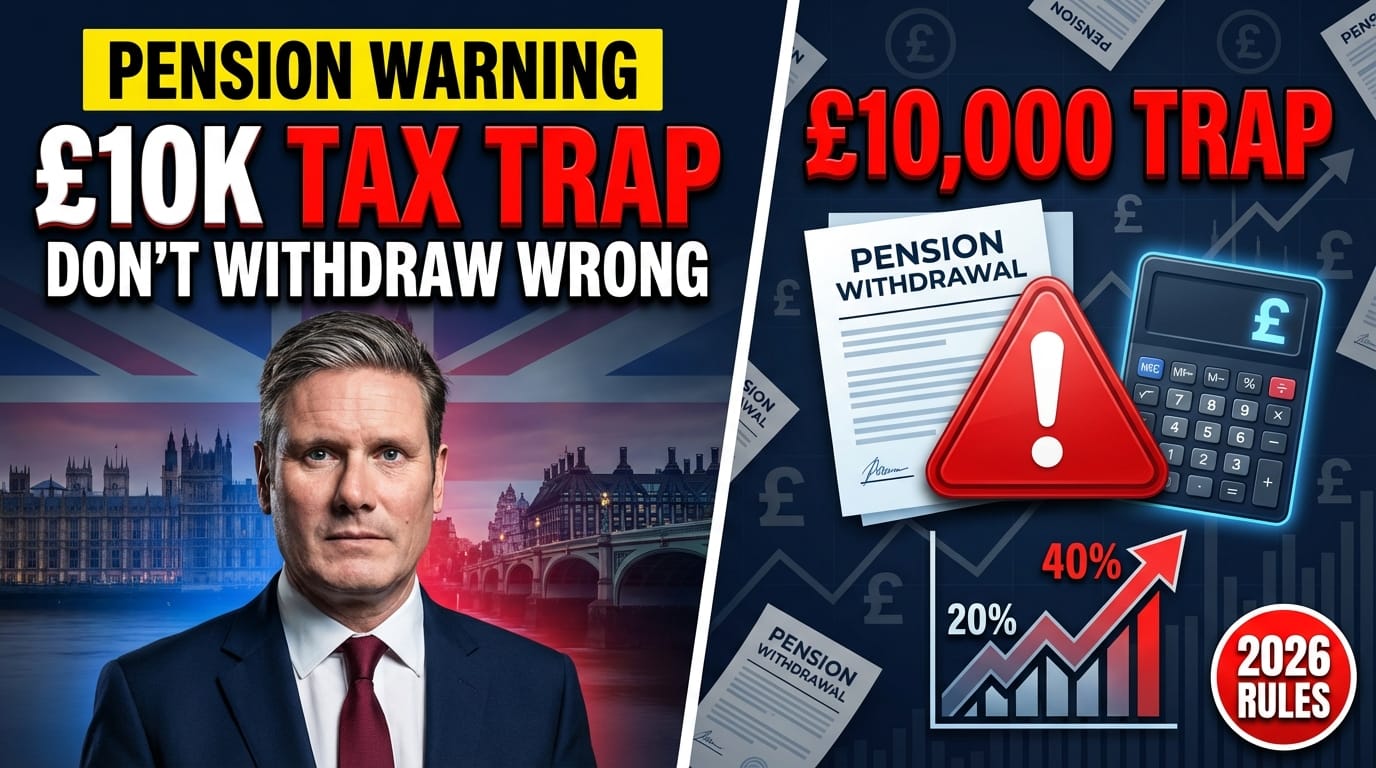
Pension withdrawals can appear straightforward, but the way money is taken from a pension can significantly affect how much tax is paid. Financial expert Martin Lewis recently highlighted what he described as a major tax trap that could affect people withdrawing money from their pension. His warning, shared through the Money Saving Expert platform and television programme, focuses on how withdrawal methods may lead to unnecessary tax payments.
Using a £10,000 example, Lewis explained that choosing the wrong approach could result in hundreds or even thousands of pounds being paid in tax that might otherwise have been avoided. Knowing the rules around pension withdrawals and taxation is therefore essential for anyone planning to access their retirement savings.
Access
Under current UK pension rules, individuals can generally access their private pension funds from the age of 55. However, this minimum age is scheduled to rise to 57 starting in April 2028.
Although early access is allowed, financial advisers often recommend caution. Withdrawing funds too early can reduce the amount available later in retirement, potentially affecting long-term financial stability.
Pension savings are designed to support individuals during retirement, so careful planning is important when deciding how and when to withdraw funds.
Taxation
One of the key rules governing pension withdrawals is the tax treatment of the money taken out.
In most cases, 25% of a pension withdrawal is tax-free. The remaining 75% is treated as taxable income and is subject to income tax based on the individual’s marginal tax rate.
The tax rate applied depends on the person’s total income during that tax year.
| Tax Band | Typical Rate |
|---|---|
| Basic Rate | 20% |
| Higher Rate | 40% |
| Additional Rate | 45% |
Because pension withdrawals count as income, taking a large amount in a single year could move someone into a higher tax bracket.
Example
Martin Lewis used a simple example involving a £10,000 withdrawal to explain the tax impact.
If someone withdraws £10,000 directly from their pension pot:
- £2,500 (25%) is tax-free
- £7,500 (75%) is taxable income
If the person is a higher-rate taxpayer at 40%, the taxable portion could result in a significant tax payment.
For instance:
| Withdrawal | Tax-Free | Taxable Portion |
|---|---|---|
| £10,000 | £2,500 | £7,500 |
Depending on the tax rate applied, a person could lose hundreds of pounds unnecessarily if they withdraw money in the wrong way.
Strategy
Lewis explains that how money is withdrawn matters just as much as how much is withdrawn. Many people take withdrawals directly from their pension pot, where each withdrawal includes both taxable and tax-free portions.
However, there is an alternative approach.
Instead of taking mixed withdrawals, individuals can withdraw their full 25% tax-free lump sum first and leave the remaining funds invested in an income drawdown plan or annuity.
This allows them to delay paying tax on the remaining funds until later, possibly when their income is lower.
For example, someone who currently pays 40% income tax might pay only 20% or even no tax in retirement if their income decreases.
Options
There are several ways people can access their pension funds, each with different financial implications.
| Method | Description |
|---|---|
| Cash Lump Sum | Withdraw the entire pension pot or smaller amounts as cash |
| Annuity | Convert the pension pot into guaranteed lifetime income |
| Income Drawdown | Withdraw money gradually while the remaining funds stay invested |
Each option offers different levels of flexibility and risk.
A lump sum provides immediate access to money but may trigger higher taxes. An annuity provides predictable income but usually cannot be changed once purchased. Income drawdown offers flexibility but requires careful management of investments.
Risks
The primary risk highlighted by Martin Lewis is paying more tax than necessary.
For example, withdrawing pension funds while still working and earning a higher income could lead to a higher tax rate being applied. Waiting until retirement, when income may be lower, could significantly reduce the tax burden.
In some cases, incorrect withdrawal strategies could cost individuals thousands or even tens of thousands of pounds over time.
Guidance
Financial organisations such as Citizens Advice recommend seeking professional guidance before making pension withdrawal decisions. Pension rules, tax rates, and personal financial circumstances vary, making tailored advice important.
People may also qualify for early access to pensions in specific situations, such as leaving work due to ill health. However, these cases usually require additional verification and planning.
Taking time to understand the available options can help individuals avoid costly mistakes.
Martin Lewis’s warning highlights the importance of planning pension withdrawals carefully. While pension funds can be accessed from age 55, the method used to withdraw money can significantly affect how much tax is paid.
By Knowing the difference between lump sum withdrawals, annuities, and income drawdown strategies, individuals can make more informed decisions about their retirement savings. Careful planning and professional guidance can help reduce unnecessary tax payments and preserve more of the pension income for retirement.
FAQs
What is the pension tax-free allowance?
Usually 25% of a pension withdrawal is tax-free.
At what age can pensions be accessed?
Normally from age 55, rising to 57 in 2028.
Why did Martin Lewis warn pension savers?
Incorrect withdrawals can lead to unnecessary taxes.
What is income drawdown?
A method of withdrawing pension while keeping funds invested.