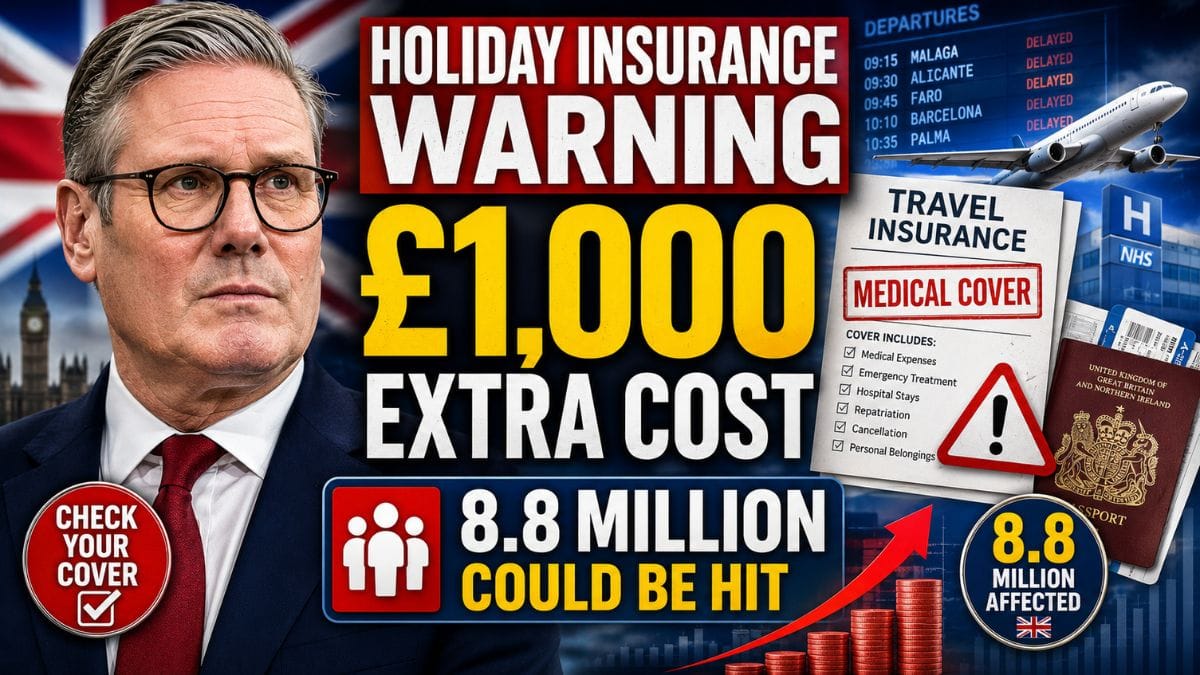
Millions of people waiting for NHS treatment could face significantly higher travel costs this year as rising insurance premiums make overseas holidays more complicated for those with medical conditions. New survey findings suggest that many people on NHS waiting lists are either paying substantially more for specialist travel insurance or choosing to travel without adequate cover altogether.
With more than 7.1 million adults currently waiting for consultant-led treatment and another 1.7 million awaiting a diagnosis, concerns are growing about the financial risks associated with travelling abroad while dealing with unresolved health issues.
Survey
A recent survey commissioned by Wellsoon from Practice Plus Group examined the experiences of adults on NHS waiting lists who are planning foreign holidays. The findings highlight the challenges many face when trying to obtain travel insurance that covers existing or suspected medical conditions.
Among respondents who were currently on, or had been on, an NHS waiting list during the past three years, the vast majority said they still intended to travel abroad despite their health concerns. However, securing suitable insurance often came at a significant cost.
Costs
The survey found that 15% of travellers on waiting lists had paid up to £1,000 extra for travel insurance to ensure their medical conditions were covered while overseas.
Many standard travel insurance policies exclude pre-existing medical conditions or charge substantially higher premiums to include them. As a result, people awaiting treatment or diagnosis may need specialist medical travel insurance, which can be considerably more expensive than standard policies.
| Travel Insurance Challenge | Survey Finding |
|---|---|
| Paid up to £1,000 extra for cover | 15% |
| Planning to travel without insurance | 20% |
| Waiting for diagnosis and travelling without correct cover | 25% |
| Avoided foreign travel due to insurance difficulties | 5% |
For some individuals, the additional cost can become a deciding factor when planning a holiday.
Risks
Travel insurance experts and consumer advocates continue to stress the importance of having appropriate cover, particularly for those with existing medical concerns.
Travelling without declaring a medical condition can create significant problems if treatment is required overseas. Insurance claims may be denied if insurers determine that relevant health information was not disclosed when the policy was purchased.
Medical treatment abroad can be expensive, especially in countries where healthcare costs are not subsidised. Without adequate insurance, travellers may be responsible for hospital bills, emergency treatment, or medical repatriation costs.
Conditions
The research also identified which medical conditions appear to create the greatest challenges when obtaining travel insurance.
According to the survey, individuals with hernias were among the most likely to travel without the correct insurance cover, followed by people dealing with cancer-related conditions.
Respondents reported that some of the most difficult conditions for obtaining affordable insurance included:
| Condition Type | Reported Difficulty |
|---|---|
| Heart and blood pressure issues | High |
| Arthritis and joint conditions | High |
| Hip and knee problems | High |
| Back pain | High |
| Neck and shoulder pain | High |
| Cancer-related conditions | Significant |
Those waiting for a diagnosis often face additional challenges because insurers may have limited information about the nature or severity of a potential condition.
Guidance
In April 2021, the Financial Conduct Authority introduced measures designed to help consumers with more serious pre-existing medical conditions navigate the travel insurance market more effectively.
Under these requirements, firms selling travel insurance must direct customers who have difficulty obtaining cover toward specialist providers. One of the resources available is the MoneyHelper directory, which is provided by the Money and Pensions Service.
These directories aim to connect consumers with insurers that specialise in covering pre-existing medical conditions and more complex health situations.
Disclosure
The Money and Pensions Service continues to advise travellers to fully disclose any medical conditions when applying for insurance.
Failing to provide accurate information could result in claims being rejected later, even if a policy has been purchased and premiums have been paid.
In some cases, insurers may request additional medical information or require a health assessment before offering coverage. While this can increase the application process, it helps insurers provide policies tailored to individual circumstances.
Specialist travel insurance may cost more, but it can provide protection against potentially substantial medical expenses if treatment is required while abroad.
Impact
The findings highlight the difficult choices facing many people who are waiting for NHS treatment or diagnosis. Some are paying significantly higher premiums to obtain suitable cover, while others are considering travelling without adequate insurance due to cost concerns.
With an estimated 8.8 million people either awaiting treatment or diagnosis, the issue affects a substantial portion of the UK population. As overseas travel continues to recover and healthcare costs abroad remain high, obtaining appropriate insurance is likely to remain an important consideration for travellers managing ongoing health conditions.
For anyone planning a trip abroad, experts continue to recommend reviewing policy details carefully, declaring all relevant medical information, and seeking specialist advice when necessary. While this may increase the cost of a holiday, it can help avoid much larger financial risks if unexpected medical care is needed overseas.
FAQs
Why are travel insurance costs rising for some travellers?
Medical conditions can require specialist insurance cover.
Can insurers reject claims for undeclared conditions?
Yes, claims may be refused if conditions are not disclosed.
Who needs specialist travel insurance?
People with pre-existing or ongoing medical conditions.
What is the MoneyHelper directory?
A resource listing specialist travel insurance providers.