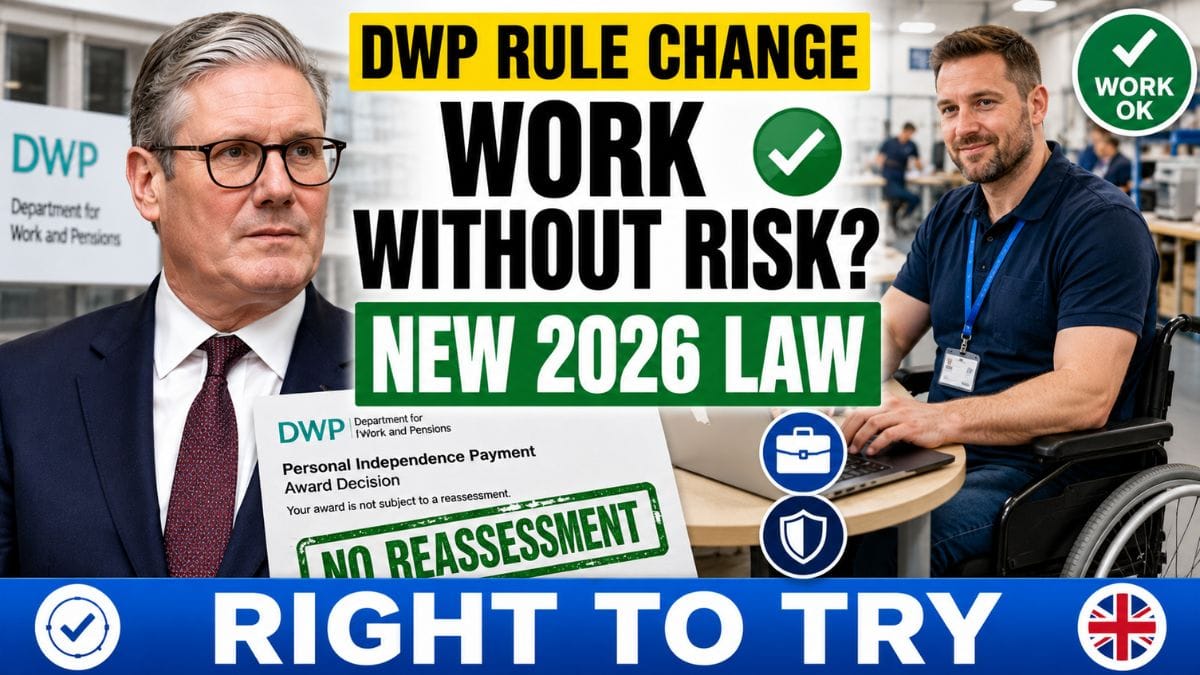
New rules introduced by the Department for Work and Pensions (DWP) are changing how some disability benefit claimants can approach work and volunteering. The updated legislation, known as the “Right to Try,” officially came into effect on April 30, 2026.
The measure is designed to give eligible claimants greater confidence to explore employment opportunities without automatically triggering a reassessment of their benefits. For many people receiving disability-related support, concerns about losing financial assistance have long been viewed as a barrier to trying work, even on a limited basis.
The new legislation applies to several major UK benefits, including Personal Independence Payment (PIP), Universal Credit (UC), and New Style Employment and Support Allowance (ESA).
The “Right to Try” legislation removes the automatic reassessment trigger that could previously occur when some claimants started work or volunteering.
Under the updated rules, eligible individuals can attempt employment or voluntary activity without an immediate review being launched solely because they entered work.
The DWP says the change is intended to support disabled people who want to test their ability to work while maintaining financial stability during the process.
Benefits
The legislation applies to the following groups:
| Benefit | Eligible Claimants |
|---|---|
| Personal Independence Payment (PIP) | Existing claimants |
| Universal Credit (UC) | Claimants with LCW or LCWRA status |
| New Style ESA | Claimants in the Work Related Activity Group or Support Group |
The changes focus specifically on people already assessed and receiving support under these categories.
Universal
For Universal Credit recipients, the rules apply to people classified as:
- Limited Capability for Work (LCW)
- Limited Capability for Work Related Activity (LCWRA)
These categories are used for individuals whose health conditions or disabilities affect their ability to work fully.
Previously, some claimants worried that accepting employment, even part-time or temporary work, could lead to a reassessment of their condition and benefit eligibility. The new rules aim to reduce that concern.
ESA
New Style Employment and Support Allowance claimants are also covered under the updated legislation if they belong to:
- The Work Related Activity Group
- The Support Group
These claimants may now try work or volunteering activities without automatically triggering another capability assessment simply because they attempted employment.
However, standard reporting obligations and existing eligibility rules still remain in place.
Exceptions
The “Right to Try” rules do not apply to everyone receiving Universal Credit or New Style ESA.
The legislation does not cover:
| Not Covered | Reason |
|---|---|
| New UC claimants awaiting first assessment | Eligibility still under review |
| New Style ESA applicants awaiting assessment | Initial decision not yet completed |
This means individuals who have not yet completed their first Work Capability Assessment remain subject to the standard assessment process.
Reviews
An important part of the new rules is that they do not stop reassessments that were already scheduled before a claimant began work or volunteering.
If a claimant already had a planned review date, the reassessment process will still continue as normal.
The legislation only removes the automatic trigger caused directly by starting work. It does not permanently suspend all future reviews.
Assessments
The DWP has also clarified that information about employment or volunteering may still be considered during future assessments if it is relevant to a claimant’s functional ability.
Examples could include:
- The type of work performed
- Hours worked
- Physical or mental demands of the role
- Workplace adjustments required
This means work activity may still form part of the wider evidence considered during future benefit reviews.
However, beginning employment alone should no longer automatically result in reassessment proceedings for eligible claimants.
Purpose
The government says the policy is intended to remove some of the uncertainty that disabled claimants face when considering employment opportunities.
For years, disability charities and advocacy groups argued that fear of losing benefits discouraged many people from attempting work, even when they wanted to explore flexible or limited employment options.
The “Right to Try” legislation attempts to address that concern by separating work attempts from immediate reassessment procedures.
Impact
The practical impact of the changes may vary depending on individual circumstances, benefit category, and future assessment outcomes.
Some claimants may feel more comfortable testing part-time work, supported employment, or volunteering opportunities knowing that the activity itself will not automatically reopen their claim review process.
Others may still choose to seek guidance before starting work to understand how earnings or work patterns could affect other parts of their benefit entitlement.
Claimants are generally encouraged to keep the DWP informed of relevant changes while also reviewing official guidance relating to their specific benefit type.
The introduction of the DWP’s “Right to Try” legislation marks a notable change for many disability benefit claimants across the UK. By removing the automatic reassessment trigger linked to employment or volunteering, the policy aims to provide greater flexibility and reassurance for people receiving PIP, Universal Credit, and New Style ESA.
While routine reviews and eligibility checks still remain part of the system, the new rules may help some claimants look into work opportunities with reduced concern about immediate benefit disruption.
FAQs
When did the Right to Try rules begin?
The legislation took effect on April 30, 2026.
Which benefits are covered by the new rules?
PIP, Universal Credit, and New Style ESA.
Will starting work trigger reassessment now?
Not automatically for eligible existing claimants.
Do scheduled reviews still continue?
Yes, existing reassessments still go ahead.