The future of the state pension triple lock has once again come into focus after a senior Department for Work and Pensions minister offered a concise response during a parliamentary session. The policy, which determines how pensions increase each year, remains a central part of the Government’s approach to retirement income.
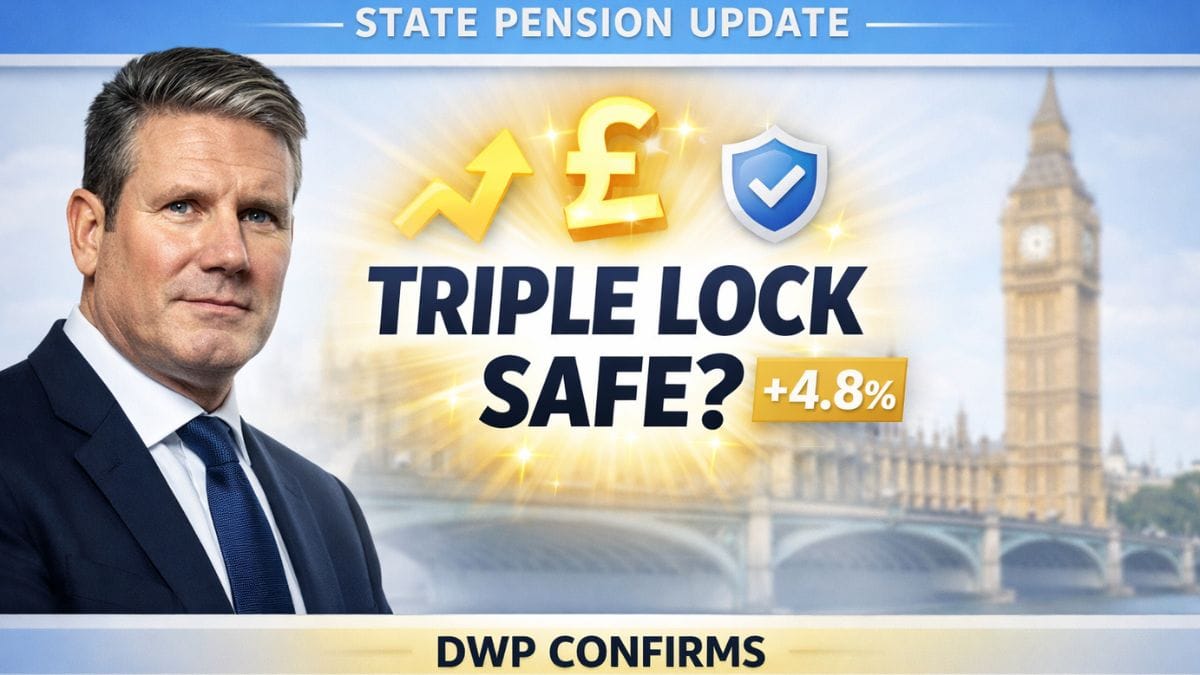
From April 2026, state pension payments are set to rise by 4.8 percent, continuing a trend of significant increases in recent years.
The triple lock guarantees that the state pension increases annually by the highest of three measures:
- Inflation
- Average earnings growth
- A minimum of 2.5 percent
This mechanism has led to notable rises in payments, particularly during periods of high inflation and wage growth. It is designed to protect pensioners’ income and maintain its value over time.
Statement
During a session with the Work and Pensions Committee, DWP minister Torsten Bell was asked directly whether the Government would maintain the triple lock policy.
His response was clear: the policy will remain in place for the duration of the current Parliament. When pressed further on its long-term future, he replied briefly, indicating that the Government’s position aligns with its election commitments.
This reflects Labour’s pledge during the General Election campaign to retain the triple lock throughout this parliamentary term.
Increase
The upcoming 4.8 percent increase will result in higher weekly and annual payments for pensioners.
| Pension Type | Current Weekly | New Weekly | Annual Amount |
|---|---|---|---|
| Full new state pension | £230.25 | £241.30 | £12,548 |
| Full basic state pension | £176.45 | £184.85 | £9,612 |
These increases continue a pattern of above-average growth in pension payments.
In recent years:
- 2023 saw a 10.1 percent increase due to high inflation
- 2024 brought an 8.5 percent rise linked to earnings growth
Impact
The continuation of the triple lock has led to a steady rise in pension spending. According to statements made during the committee session, the policy is expected to contribute to a £30 billion increase in state pension expenditure over the course of the current Parliament.
The Government has indicated that one of its objectives is to maintain a slightly higher level of state pension relative to average earnings.
This approach aims to support pensioners’ living standards, particularly during periods of economic uncertainty.
Concerns
Despite its benefits, the triple lock has raised questions about long-term affordability.
As the population ages and life expectancy increases, the cost of maintaining rising pension payments may place pressure on public finances. Analysts have suggested that if pension growth continues to outpace government revenue, policymakers may eventually need to review or adjust the system.
| Factor | Potential Impact |
|---|---|
| Ageing population | Higher pension costs |
| Rising life expectancy | Longer payment periods |
| Economic slowdown | Reduced tax revenue |
These concerns are not immediate but are part of ongoing discussions about fiscal sustainability.
Advice
Experts have also highlighted the importance of individual preparation for retirement.
One key step is reviewing National Insurance contribution records. Gaps in contributions can reduce the amount of state pension a person receives.
| Requirement | Years Needed |
|---|---|
| Full new state pension | 35 years |
| Full basic state pension | 30 years |
Filling gaps in National Insurance records, where possible, may help increase future entitlement.
Outlook
For now, the Government’s position is clear: the triple lock will remain in place for this Parliament. This provides short-term certainty for pensioners and those approaching retirement.
However, the longer-term future of the policy remains subject to economic conditions and public finance considerations. While no immediate changes are planned, the debate around sustainability is likely to continue in the coming years.
FAQs
What is the triple lock?
It increases pensions by inflation, earnings, or 2.5 percent.
Will the triple lock continue?
Yes, it will remain during this Parliament.
How much will pensions rise in 2026?
They will increase by 4.8 percent.
What is the full new state pension?
£241.30 per week from April 2026.