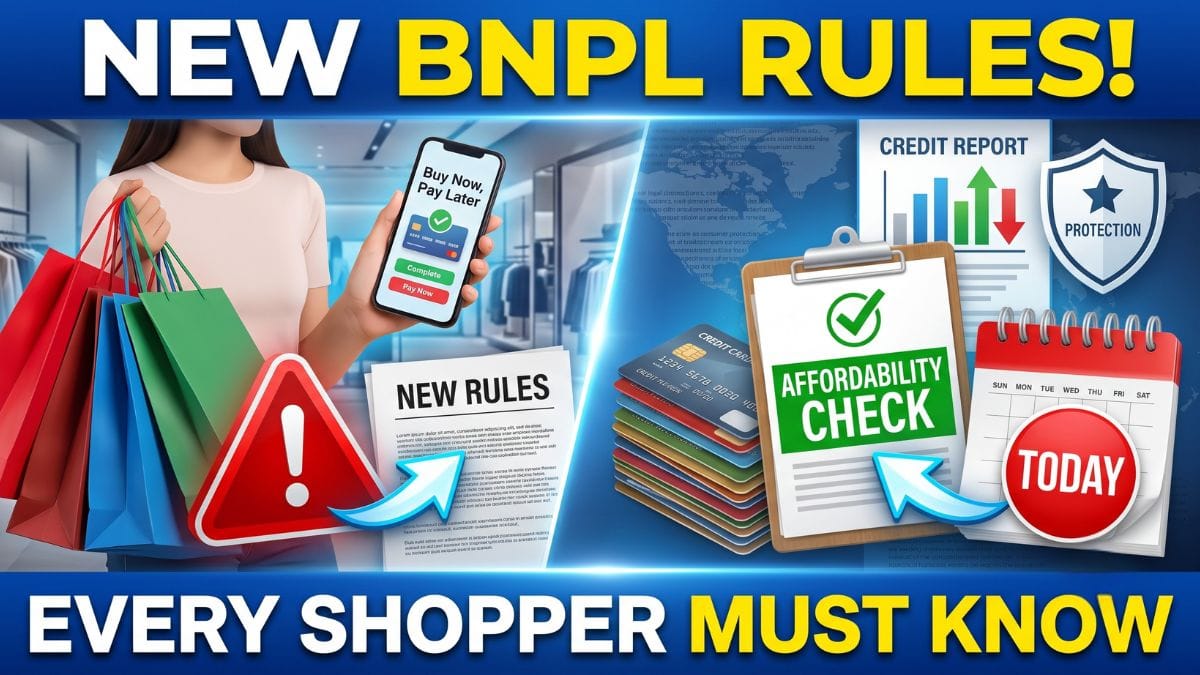
Millions of people who use buy now pay later (BNPL) services will see new consumer protections take effect from today as the sector comes under the supervision of the Financial Conduct Authority (FCA). The changes introduce new requirements for lenders, including affordability checks, clearer information about repayment terms and additional support for customers experiencing financial difficulties.
BNPL services have become a popular way to spread the cost of purchases without paying interest, but regulators say stronger safeguards are needed to help consumers make informed borrowing decisions.
Changes
From today, BNPL providers operating under the new rules must comply with FCA regulations designed to improve consumer protection.
The updated requirements include:
| New Requirement | What It Means |
|---|---|
| Clear agreement details | Customers must receive upfront information about payments and terms. |
| Affordability checks | Lenders must assess whether borrowers can afford repayments. |
| Financial support | Firms must assist customers facing payment difficulties. |
| Credit reporting | BNPL activity may be considered in future lending decisions. |
The FCA says these measures are intended to improve transparency and encourage responsible lending across the sector.
Protection
Under the new rules, customers should receive clearer information before agreeing to a BNPL loan. This includes details about payment amounts, due dates and the possible consequences of missing a payment.
Customers experiencing financial hardship must also be offered appropriate support. Where suitable, lenders should direct borrowers to free debt advice services.
Some consumers may also gain access to additional protections, including eligibility for complaints through the Financial Ombudsman Service and, where applicable, Section 75 protections.
Credit
Another significant change is that BNPL borrowing may appear on credit reports used by lenders when assessing future loan or credit applications.
This could affect borrowing decisions in different ways. Responsible repayment may support a positive credit history, while missed payments could have a negative impact depending on how lenders assess an individual’s financial record.
Consumers are encouraged to understand how BNPL borrowing fits into their overall financial commitments before taking on additional credit.
Response
Several major BNPL providers have welcomed the introduction of regulation.
Clearpay said the changes will help create consistent standards across the industry while giving consumers access to additional protections. The company noted that it already pauses customer accounts after a missed payment and limits late fees.
Klarna also welcomed the new framework, stating that it has supported regulation for several years. The company said many of the FCA’s requirements, including affordability checks, upfront cost information and reporting to credit reference agencies, already form part of its existing practices.
Advice
Debt charity StepChange advises consumers to carefully consider whether they would still make a purchase if a BNPL option were not available. Keeping track of multiple repayment dates and understanding each loan agreement can also help people manage their finances more effectively.
Anyone struggling to meet repayments should contact their lender as soon as possible. Free support is available from organisations including StepChange, Citizens Advice, Christians Against Poverty and National Debtline.
The introduction of FCA regulation marks a significant change for the buy now pay later market. While BNPL remains an interest-free payment option for many purchases, the new rules aim to provide greater transparency, stronger consumer protections and more responsible lending practices across the industry.
FAQs
When do the new BNPL rules begin?
They take effect from July 15.
Who regulates BNPL providers now?
The Financial Conduct Authority (FCA).
Will lenders check affordability?
Yes, affordability checks are now required.
Can BNPL affect my credit report?
Yes, it may be considered by future lenders.