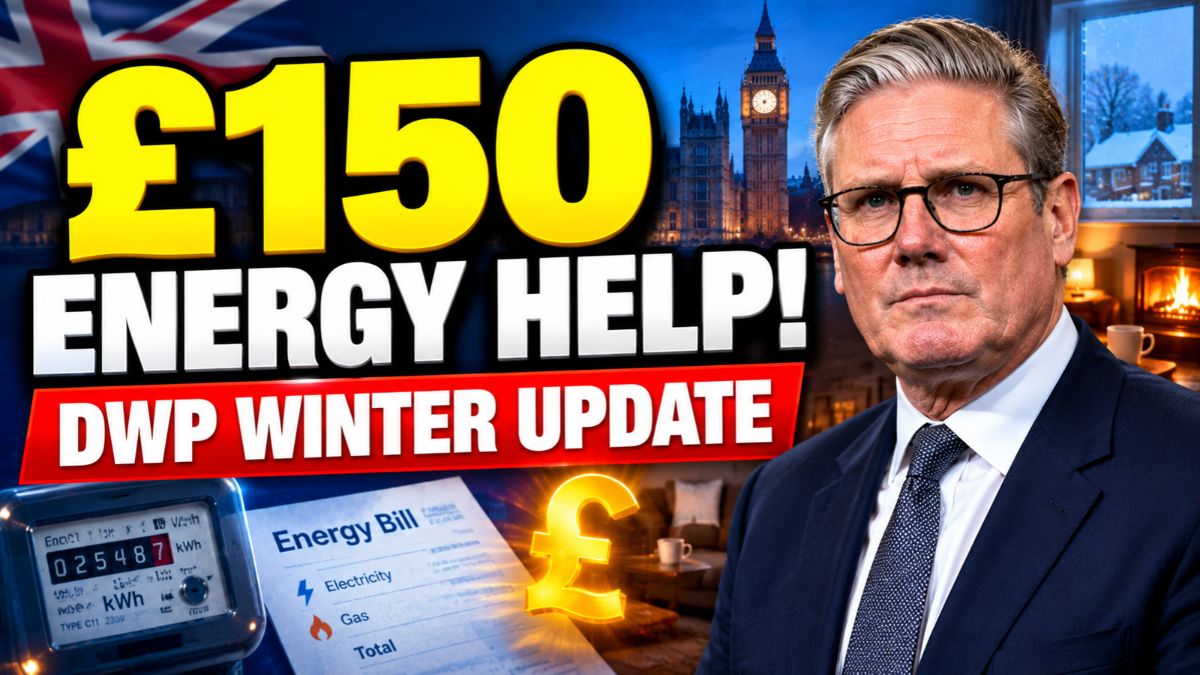
Millions of households across the UK are being urged to check whether they qualify for a £150 reduction on their electricity bills this winter, as the Department for Work and Pensions (DWP) begins notifying eligible customers about the Warm Home Discount scheme.
According to the supplied report, around six million households are expected to receive letters explaining how the support will be delivered. The letters are due to arrive from October 22, 2026, through January 2027. While many eligible households will receive the discount automatically, some people may need to contact a helpline or their energy supplier to confirm their eligibility.
The scheme is intended to help households on qualifying benefits manage energy costs during the colder months, when heating and electricity use often increase. Eligibility depends on several factors, including where a household lives, the benefits received, the electricity supplier and whose name appears on the electricity bill.
Although the £150 discount could provide useful relief, it is important to understand that the payment is generally applied directly to an electricity account rather than issued as cash. Households should also read any letter carefully because some recipients may need to take action before the stated deadline.
Discount
The Warm Home Discount is a government-backed scheme designed to help eligible households manage electricity costs during winter. Rather than providing a cash payment directly to recipients, the scheme generally applies a £150 reduction to an eligible household’s electricity bill.
The support is particularly relevant to people receiving certain means-tested benefits, pensioners on qualifying support and households facing additional financial pressures.
According to the supplied report, the Government has expanded eligibility so that more households receiving qualifying means-tested benefits can access the discount. The expansion followed changes intended to extend assistance to families that had previously missed out.
The scheme is administered through participating energy suppliers, with the DWP and other relevant government departments helping identify eligible households.
For many recipients, the process is automatic. However, not everyone will necessarily receive the discount without taking further steps. Some households may be asked to contact a helpline or provide additional information to establish eligibility.
The £150 reduction can help lower an electricity bill, but it does not cover all household energy expenses. People should continue to review their tariffs, payment arrangements and available support if they are struggling with heating costs.
Official information is available through the UK Government’s Warm Home Discount guidance.
Letters
The Government’s reported notification period runs from October 22, 2026, through January 2027. Letters are intended to explain whether a household qualifies for the discount automatically or whether further action is required.
Recipients should read the correspondence carefully rather than assume that every letter requires the same response.
Some households may simply need to wait for the reduction to be applied to their electricity account. Others may need to call the helpline before the deadline specified in the letter.
According to the supplied report, households asked to contact the helpline must do so before February 26, 2027, to provide the information needed to receive the support.
Missing a required response could delay or prevent a household from receiving the discount, depending on its circumstances and the scheme’s rules.
If you believe you qualify but have not received a letter, check the official eligibility guidance and contact the relevant government helpline or your energy supplier for clarification. Avoid relying solely on social media posts or unofficial messages, particularly if they ask for personal or banking information.
Eligibility
In England and Wales, eligibility is generally assessed using the household’s circumstances on a specified qualifying date. The supplied report identifies August 23, 2026, as the relevant date for this winter’s scheme.
Households may qualify if the applicable conditions are met, including having a participating electricity supplier, receiving a qualifying benefit and having the claimant’s or their partner’s name on the electricity bill.
The benefits listed in the supplied report include:
- Universal Credit
- Housing Benefit
- Income-related Employment and Support Allowance (ESA)
- Pension Credit
Receiving one of these benefits does not mean that every household automatically qualifies in every circumstance. The scheme’s conditions must also be satisfied.
The name on the electricity bill is particularly important. If a household member receives a qualifying benefit but another person’s name appears on the bill, the household should check the official rules to establish whether it meets the requirements.
Similarly, households that have recently changed energy suppliers or moved home may need to check whether their circumstances affect eligibility.
The qualifying date matters because eligibility may be assessed using information recorded at that point, rather than the household’s circumstances when the letter arrives.
England
For households in England, the expanded scheme is intended to make support available to a broader group of people receiving qualifying means-tested benefits.
The key considerations are whether the household meets the benefit conditions, whether its electricity supplier participates and whether the claimant or their partner is named on the electricity account.
Eligible households should check their benefit information and electricity bill if they are unsure whether they qualify.
People receiving Universal Credit should remember that entitlement to the benefit alone may not resolve every eligibility question. The scheme’s rules and the household’s circumstances on the qualifying date remain important.
Pension Credit recipients should also pay attention to correspondence, particularly if they have recently changed address or electricity supplier.
If a household meets the stated conditions but receives no notification, it is sensible to seek clarification through official channels rather than assume it has been excluded.
The Warm Home Discount is a reduction to an electricity bill, so recipients should also check how their supplier applies the credit and when it appears on their account.
Wales
Households in Wales are covered by the England and Wales eligibility arrangements described in the supplied report.
As in England, qualifying benefits, participation by the electricity supplier and the name on the electricity bill are central considerations.
The scheme can be particularly useful for households facing higher heating costs during winter. However, the £150 discount is not a separate payment that can necessarily be spent on other household expenses.
Households using prepayment meters should check their supplier’s instructions to understand how the discount is delivered. The method and timing of the credit may differ from those used for customers who pay by direct debit or receive regular bills.
People should also keep their contact details up to date so that official correspondence can reach them.
Scotland
The eligibility arrangements in Scotland differ in some respects from those in England and Wales.
Scottish households may qualify if their electricity supplier participates in the scheme, they or their partner receive a qualifying benefit, and the claimant or their partner is named on the electricity bill.
However, the route to receiving the discount depends partly on the benefit received and the household’s circumstances. Some qualifying groups receive the discount automatically, while others may need to apply directly to their electricity supplier.
According to the supplied report, automatic eligibility may apply where the claimant or their partner receives Pension Credit, receives an additional amount of Universal Credit because of a disability or health condition, or receives certain disability or pensioner premiums through income-related ESA.
The report also identifies some households with responsibility for a child under five who normally lives with them. Depending on the relevant conditions, these may include households receiving Universal Credit while unemployed, income-related ESA recipients, or people with a Support for Mortgage Interest loan.
These conditions are specific, and the list should not be treated as a guarantee of eligibility for every household in the categories mentioned.
Scottish residents should use the official government guidance to establish whether they qualify automatically or need to contact their supplier.
Deadlines
The notification period and any required response deadline are important parts of the process.
The supplied report states that letters will be sent through January 2027 and that households asked to contact the helpline should do so before February 26, 2027.
People who receive a letter should check three things:
- Whether the letter confirms automatic eligibility or requests further information.
- Whether a response is required and, if so, the exact deadline.
- Whether the electricity account details match the household’s current circumstances.
If a letter requests action, it is best not to leave the response until the final days. Delays in providing information could make it harder to resolve an eligibility issue before the deadline.
Households should also be alert to scams. A genuine government support scheme should not require people to disclose passwords or banking security codes in response to an unsolicited message.
If there is uncertainty about a letter’s authenticity, use contact details published on the official GOV.UK website rather than relying on a phone number or link in an unexpected message.
Support
The Warm Home Discount is one form of assistance available to households dealing with energy costs. People who remain worried about their bills may also benefit from contacting their energy supplier to ask about payment plans, debt support or other assistance.
Energy suppliers may have options for customers who are struggling to maintain regular payments, although the support available varies by supplier and individual circumstances.
Households can also explore energy-efficiency measures that may help reduce consumption over time. These could include improving insulation, addressing draughts where practical and checking whether heating controls are being used effectively.
Stew Horne of the Energy Saving Trust, quoted in the supplied report, encouraged people to read government letters carefully and understand what action may be required. Energy UK also urged households experiencing difficulties to contact their supplier to discuss available help.
These steps do not replace eligibility for the Warm Home Discount, but they may help people identify additional ways to manage costs.


Outlook
The Warm Home Discount is intended to provide targeted assistance during a period when many households face increased energy use and financial pressure. The reported expansion means more people may be able to benefit, but eligibility still depends on the scheme’s specific conditions.
For households expecting a letter, the most important steps are to check the correspondence, verify the name on the electricity bill and respond promptly if further information is requested. People who believe they qualify but remain uncertain should consult the official guidance or contact the relevant helpline.
The £150 reduction will not resolve every energy affordability problem, but it can help eligible households reduce their electricity costs during winter. Staying informed about deadlines and available assistance can make it easier to access the support for which a household qualifies.