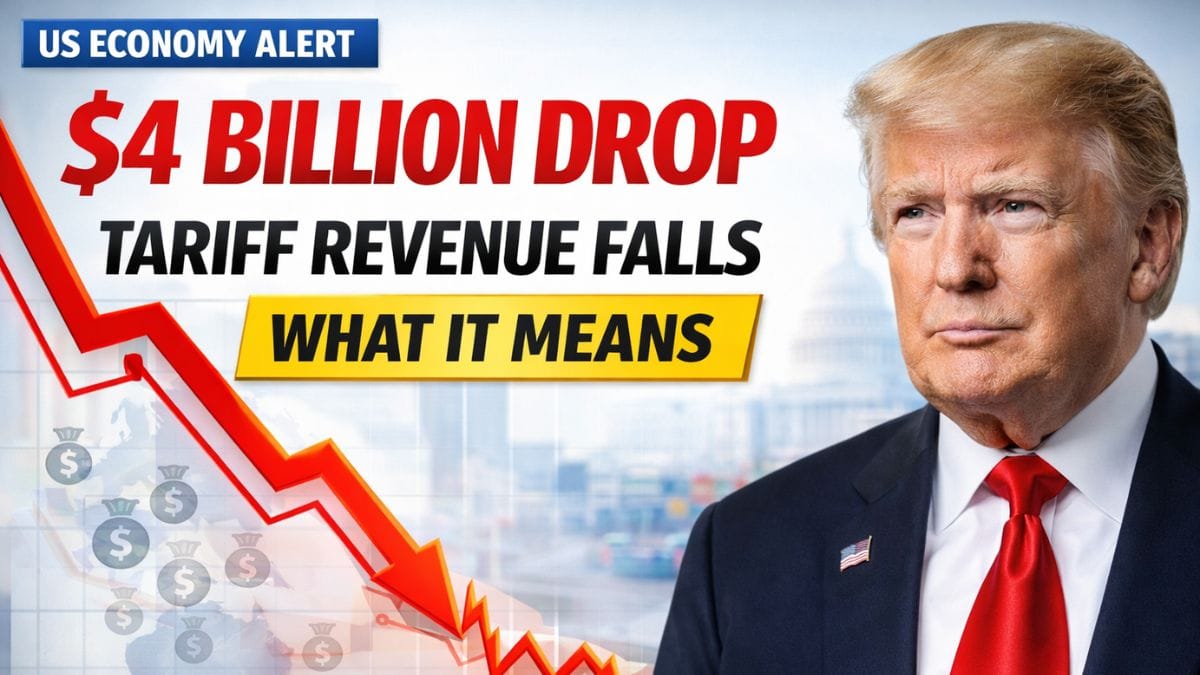
Tariff revenue in the United States is sliding – and not just a little. March 2026 brought in $22.15 billion, down more than $4 billion from February and nearly 30% lower than last October’s peak. That’s a steep drop in a short time, especially for a policy tool often promoted as a major revenue generator. So what’s actually happening here, and why does it matter?
Drop
The numbers tell a clear story. Tariff collections have now declined for five straight months.
Here’s how the recent trend looks:
| Month | Revenue (Billions) |
|---|---|
| October 2025 | $31.35 |
| February 2026 | $26.59 |
| March 2026 | $22.15 |
That’s a nearly $9 billion drop from the peak. In percentage terms, it’s close to a 30% decline—significant for any revenue stream, especially one tied to trade policy.
Causes
Why the decline? It’s not just one factor – it’s a mix of policy shifts and legal setbacks.
First, the rollback of certain tariffs played a big role. Duties on items like groceries were reduced or removed as concerns grew about rising consumer prices. When tariffs go down, so does the money collected.
Second, the Supreme Court struck down some tariffs imposed under the 1977 International Emergency Economic Powers Act. That ruling didn’t just stop future collections – it also opened the door for refunds.
Then there’s substitution. The administration replaced some invalid tariffs with new ones under a different law, but the transition hasn’t fully offset the losses.
Refunds
Here’s where things get more complicated. Tariff revenue isn’t just about what comes in—it’s also about what goes back out.
In March:
- gross tariff revenue was $24.02 billion
- refunds totaled $1.86 billion
- net revenue dropped to $22.15 billion
And this could be just the beginning. The government estimates that up to $166 billion in tariffs could eventually be refunded due to the court ruling.
That’s a huge number. Think of it like a store having to return months’ worth of sales—it doesn’t just slow income, it reverses it.
Deficit
Now compare tariff revenue to the federal deficit.
- March deficit: $164 billion
- fiscal year deficit (Oct–Mar): $1.169 trillion
- total tariffs collected so far: $166 billion
Even at their peak, tariffs weren’t enough to make a meaningful dent in the deficit. Now, with revenues falling, that gap looks even wider.
The idea that tariffs alone could balance the budget doesn’t hold up when you look at the scale. It’s like trying to fill a swimming pool with a garden hose.
Policy
Recent tariff adjustments also signal a shift in strategy.
For example:
- steel, aluminum, and copper tariffs were modified
- goods “substantially made” from these materials may face lower duties
- a new 10% global tariff was introduced under a different authority
These changes suggest a balancing act – maintaining trade pressure while avoiding economic side effects like inflation or supply chain disruptions.
Trade
Interestingly, tariffs haven’t significantly reduced the trade deficit either.
The US trade deficit:
- rose by 5% in February
- remains roughly unchanged from April 2025 levels
So despite aggressive tariff policies, the broader goal of shrinking the trade gap hasn’t materialized.
That raises a bigger question: if tariffs aren’t boosting revenue as expected and aren’t fixing the trade deficit, what’s their most effective role?
Outlook
Looking ahead, tariff revenue may remain volatile.
Key factors to watch:
- the rollout of refund programs
- future court rulings
- changes in trade policy
- global economic conditions
If large-scale refunds begin, monthly revenue figures could dip even further – or even turn negative in extreme cases.
At the same time, any new tariffs or stricter enforcement could stabilize collections, but likely at the cost of higher prices or trade tensions.
Impact
For everyday Americans, this isn’t just a government accounting issue.
Tariffs influence:
- prices on imported goods
- supply chains
- business costs
- inflation trends
When tariffs are reduced, prices may ease – but government revenue falls. When tariffs rise, the opposite can happen.
It’s a constant trade-off.
Tariff revenue dropping by billions might sound like a niche economic detail, but it reflects bigger shifts in policy, law, and global trade dynamics. And those shifts have ripple effects across the entire economy – from federal budgets to the price tag on everyday items.
FAQs
Why did tariff revenue drop?
Due to rollbacks, court rulings, and refunds.
How much fell in March 2026?
About $4 billion from February.
What are tariff refunds?
Repayments of invalid or excess duties.
Do tariffs reduce deficits?
Not significantly based on current data.