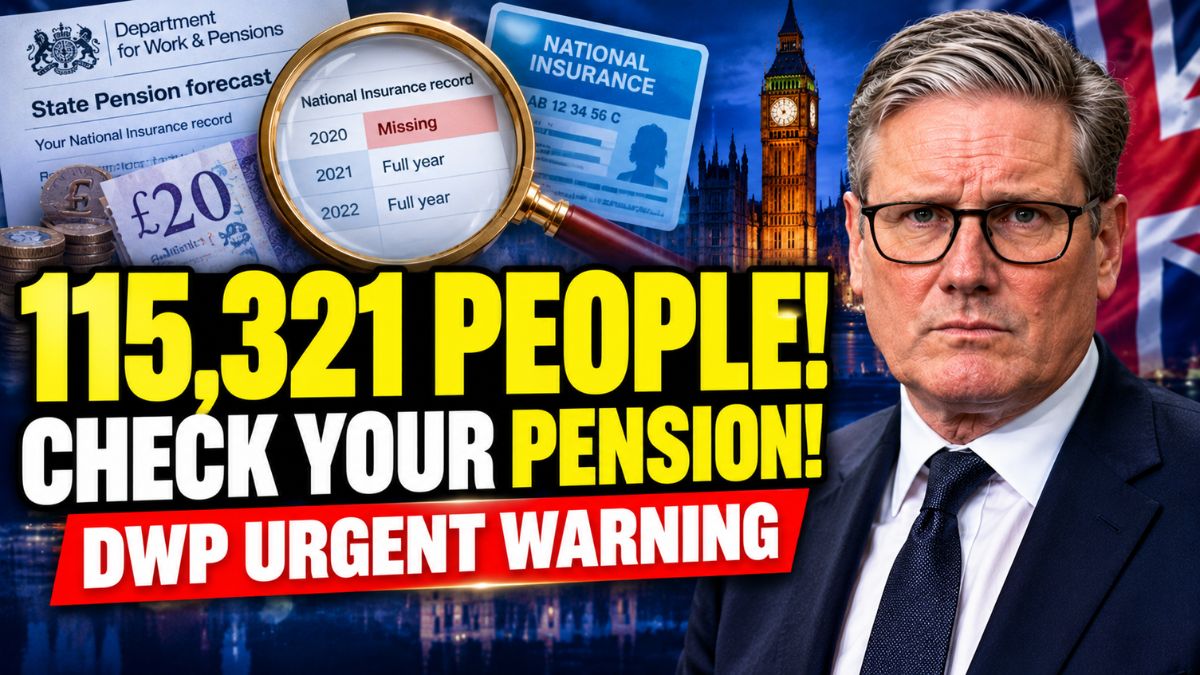
The Department for Work and Pensions (DWP) and HM Revenue and Customs (HMRC) are encouraging people to check their State Pension forecasts and National Insurance records to understand how much pension they may receive in retirement. New parliamentary figures show that more than 115,000 people made voluntary National Insurance contributions after checking their pension position, highlighting the potential value of reviewing records before reaching State Pension age.
The figures also underline an important point for workers approaching retirement: having a National Insurance gap does not automatically mean you need to pay to fill it. Whether voluntary contributions are worthwhile depends on your existing record, your eligibility for National Insurance credits, and how much an additional qualifying year would increase your State Pension.
Checking your forecast before making a payment can help you avoid spending money on contributions that do not improve your eventual pension.
Figures
Parliamentary figures cited in the report show that approximately 18 million people used the online State Pension forecast tool over a period of two and a half years.
Of those users, around 170,000 discovered gaps in their National Insurance records. A total of 115,321 subsequently made voluntary contributions to address gaps.
These figures indicate that the online service has helped many people identify potential issues with their pension entitlement. However, finding a gap does not necessarily mean that every person needs to make a payment. Some gaps may be covered by National Insurance credits, while others may have little or no effect on the amount of State Pension a person ultimately receives.
The figures also do not mean that everyone who made a voluntary payment will receive the same increase in retirement income. The financial benefit depends on individual circumstances and the rules governing State Pension entitlement.
Forecast
A State Pension forecast provides an estimate of the amount you could receive based on your National Insurance record and the current rules.
It can help you know whether you are on course to receive the full new State Pension, whether additional qualifying years might improve your entitlement, and how your existing record affects your expected payments.
The government provides an official online service where eligible people can check their forecast and review their National Insurance record.
You can access it through the GOV.UK State Pension forecast service.
Checking your forecast is particularly useful if you have changed jobs, spent time outside the UK, worked part-time, been self-employed, or taken periods away from paid employment.
It is also worth checking your record well before retirement. Identifying an issue early can give you time to investigate missing credits or determine whether voluntary contributions could help.
Gaps
National Insurance gaps can develop for several reasons. A person may have earned less than the relevant threshold in a tax year, been unemployed without receiving qualifying benefits, or spent time living or working abroad.
People who were self-employed may also have gaps depending on their earnings and contribution circumstances. Periods spent caring for children or relatives can affect a record, although some people may qualify for National Insurance credits during those periods.
A gap does not always mean that you have made a mistake or that you must pay money to correct it.
For example, someone who received certain benefits while unemployed may have been entitled to National Insurance credits. Similarly, eligible parents and carers may receive credits that help protect their State Pension entitlement.
If your record appears incomplete, check whether you should have received credits before deciding to make a voluntary payment.
The official GOV.UK National Insurance record service allows you to review your record and identify years that may need further investigation.
Eligibility
Under the new State Pension system, most people generally need at least 10 qualifying years of National Insurance contributions or credits to receive any new State Pension. Around 35 qualifying years are usually needed for the full amount for people with no National Insurance record before April 2016.
However, these figures are not universal rules for every individual. People with National Insurance records before April 2016 may have transitional calculations that affect how many additional years they need to qualify for the full rate.
Your State Pension entitlement depends on your individual record and the applicable rules. Having 35 qualifying years does not guarantee that every person will receive precisely the same amount, particularly where older pension rules or periods of contracting out affect the calculation.
This is why checking your personal forecast is more useful than relying solely on a general qualifying-year target.
Payments
Voluntary National Insurance contributions can sometimes help fill gaps and increase a person’s future State Pension. However, making a payment is not automatically financially beneficial.
Before paying, check whether the missing year would increase your forecast. If you are already on course for the full amount, additional contributions may not provide any extra benefit.
It is also important to establish which tax years you can fill and how much each payment would cost. The rules and deadlines for paying voluntary contributions can vary, so do not assume that every historic gap remains eligible.
Martin Lewis, the personal finance expert, has advised people to check their State Pension forecast before paying to fill gaps. The central message is to establish whether a contribution will improve your entitlement rather than paying simply because a gap appears on your record.
Some eligible gaps can cost relatively little to fill, but the price depends on the tax year, the type of contribution, and the person’s circumstances. Any quoted low-cost example should therefore not be treated as a standard rate available to everyone.
For detailed information about eligibility and contribution rates, consult the official GOV.UK guidance on voluntary National Insurance contributions.
Decisions
Before making a voluntary contribution, consider these steps:
- Check your State Pension forecast to see how much you are currently expected to receive.
- Review your National Insurance record and identify any incomplete years.
- Find out whether you qualify for National Insurance credits or whether a record correction is needed.
- Confirm with HMRC or the relevant pension service whether paying for a particular year would increase your forecast.
- Compare the cost of the contribution with the potential increase in pension income.
This approach can help you avoid paying for years that do not improve your entitlement.
It is particularly important for people approaching retirement, as the value of a contribution depends on how it changes their eventual pension rather than simply on the number of years added to their record.
Support
Treasury minister Torsten Bell said HMRC encourages people who are able to use digital services to check their State Pension forecasts online or through the HMRC app. He also acknowledged that online services are not suitable for everyone.
People who cannot use the online service can contact the DWP Future Pension Centre to request a forecast and discuss their position before reaching State Pension age.
Those who have already reached State Pension age should contact the Pension Service to establish whether voluntary contributions would improve their entitlement.
This distinction matters because the appropriate contact and options may differ depending on whether someone is still building their National Insurance record or has already reached pension age.



Outlook
The figures showing 115,321 voluntary contribution payments demonstrate that checking a State Pension forecast can prompt people to take action on their retirement planning. But the most important step is not necessarily making a payment. It is understanding what your National Insurance record means for your eventual pension.
A missing qualifying year may offer an opportunity to increase retirement income, but only if the applicable rules allow the payment and it improves your entitlement. Checking your forecast, confirming any missing credits, and obtaining guidance before paying can help you make a more informed decision.
For people who have not reviewed their records recently, an online check is a practical starting point. It can clarify whether you are on track for the State Pension you expect and whether any further action is worth considering.