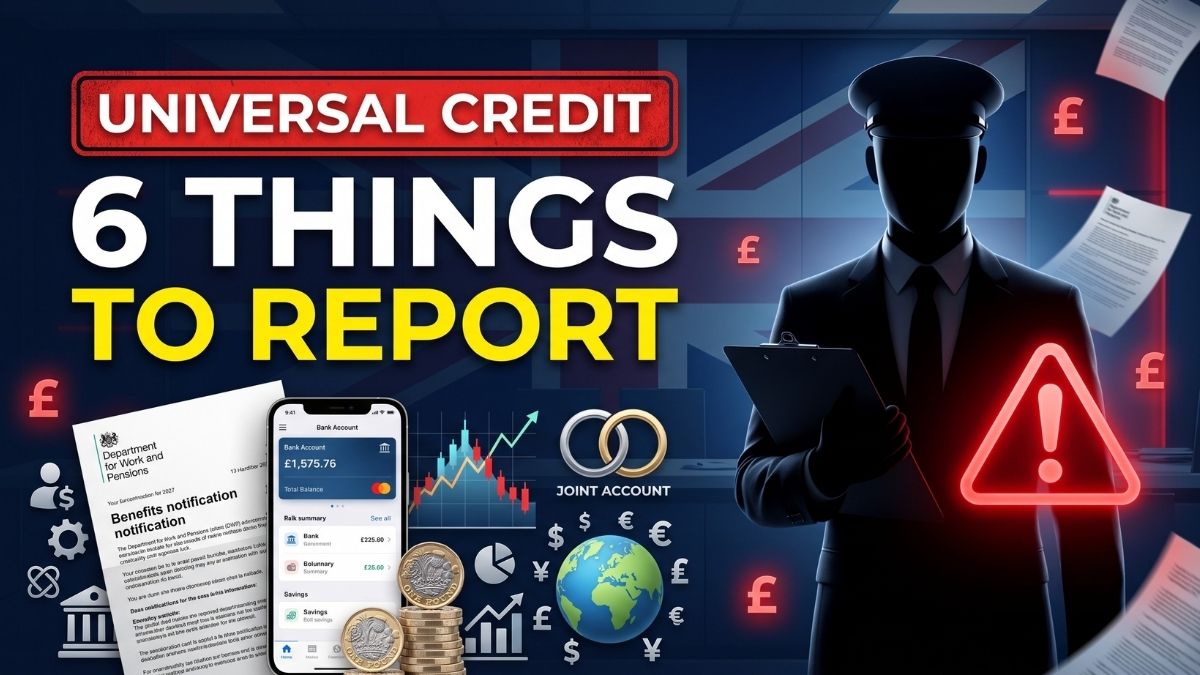
Universal Credit is a means-tested benefit, which means the Department for Work and Pensions (DWP) considers a claimant’s financial circumstances when deciding how much they may receive.
That includes income, savings and investments, commonly referred to as “capital”. The rules can apply to both the claimant and their partner, and financial assets held in the UK or overseas may need to be reported.
Some types of money or assets may eventually be disregarded when the DWP assesses a claim. Even so, claimants may still need to tell the DWP about them so the department can decide whether they should be included or excluded.
Keeping the DWP informed is therefore an important part of receiving Universal Credit. Here are six areas claimants should know about.
Savings
Savings can affect Universal Credit, depending on the total amount of capital held by you and your partner.
Capital can include money held in bank and building society accounts, as well as certain other financial assets. The DWP looks at the overall amount rather than simply one individual savings account.
For most claimants, having capital above £6,000 can affect the amount of Universal Credit received. People with capital above £16,000 are generally not eligible for Universal Credit.
These thresholds make it important to report changes in savings rather than assuming that only earned income matters.
Investments
Investments can also form part of your capital for Universal Credit purposes. Depending on the circumstances, this can include assets such as shares and other investments.
The DWP considers the value of relevant investments when assessing a household’s financial position.
Even where an asset may be treated differently under the rules, claimants should provide the information requested by the DWP. The department can then determine how the asset should be treated when calculating entitlement.
Accounts
Money does not have to be held in a traditional savings account to potentially count as capital.
Current accounts and other accounts containing funds may be considered as part of the household’s financial resources. The DWP can also consider money held jointly with another person.
This is why claimants should keep their financial information up to date and report relevant changes when they occur.
A joint account, for example, does not automatically mean the entire balance belongs solely to one person. The circumstances surrounding ownership can matter when the DWP assesses the claim.
Overseas
Financial assets held outside the UK can also be relevant to a Universal Credit assessment.
The DWP’s guidance states that savings and investments held in the UK and overseas can be taken into account. Claimants should therefore not assume that money held in another country falls outside the assessment.
Exchange rates and the value of overseas assets can also change over time, making accurate reporting important when the DWP requests updated information.
Assets
Capital is broader than cash sitting in a bank account. Depending on the circumstances, the assessment can involve different forms of money, savings, investments and other financial assets.
However, the Universal Credit rules contain exceptions and disregards. Some assets may not affect entitlement in the same way as ordinary savings or investments.
This does not necessarily remove the obligation to report them. Providing the DWP with the relevant information allows the department to decide whether a particular asset should be included in the calculation.
Claimants should avoid making their own assumptions about whether an asset matters. The treatment can depend on the type of asset, how it is held and the claimant’s circumstances.



Changes
Universal Credit claimants have a responsibility to report changes that could affect their claim. This can include changes to financial circumstances as well as other personal or household details.
The DWP can also reduce Universal Credit payments in certain situations, including recovering benefit overpayments or rent arrears.
Because Universal Credit is means-tested, a change in a household’s financial position can affect entitlement. Claimants should report relevant changes through the appropriate DWP channels and provide accurate information when asked.
The key point is that Universal Credit is assessed using more than just your monthly wages. Savings, investments and other capital can also be relevant, including assets held jointly or overseas. Some assets may be disregarded under specific rules, but claimants should still declare information when required so the DWP can make the correct assessment.