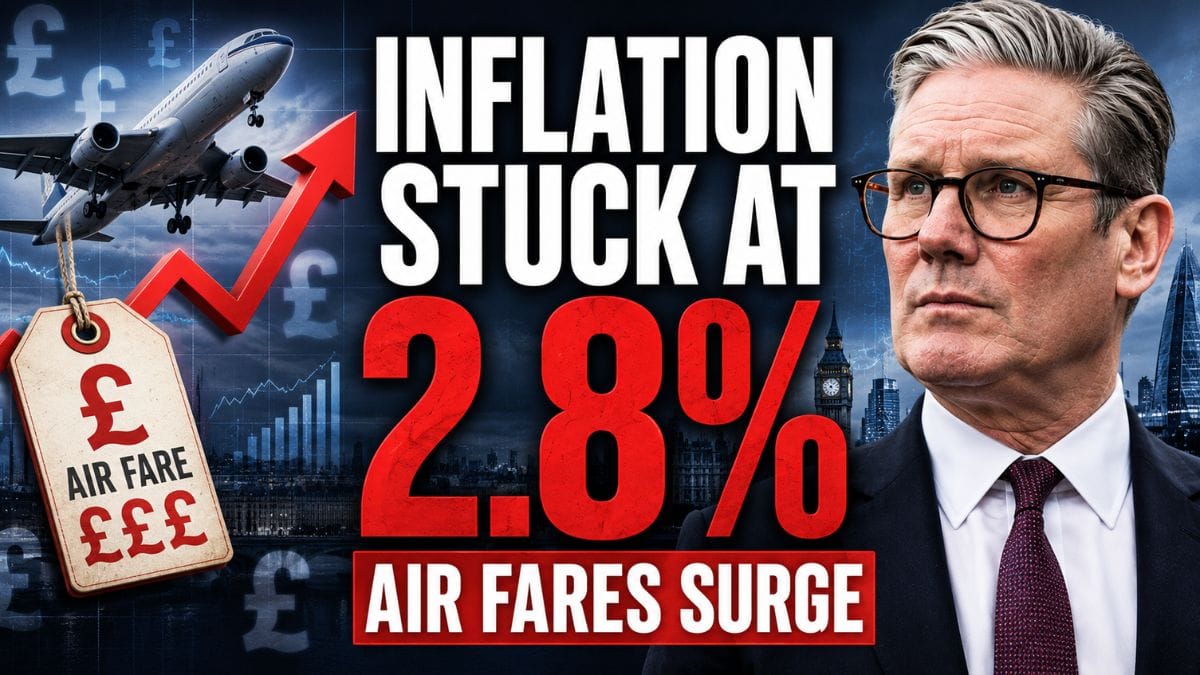
The UK’s inflation rate remained unchanged at 2.8% in the year to May, according to the latest data from the Office for National Statistics, surprising economists who had expected price growth to edge higher.
The steady reading comes despite sharp increases in transport costs, particularly air fares, which rose strongly during the month. Overall transport prices increased 6.8% year on year, marking the highest annual rise for the sector since December 2022 and making it the largest upward contributor to inflation in May.
Transport
Air fares alone climbed 10.3% between April and May, the ONS said. The rise was partly linked to the timing of Easter and school holidays, which can cause seasonal volatility in travel prices.
Motor fuel prices also moved higher as global oil prices rose, adding further pressure to transport costs. Together, higher air fares, fuel prices and vehicle taxes accounted for much of the inflationary momentum seen during the month.
Relief
Offsetting those increases, food and non-alcoholic beverage prices fell between April and May. On an annual basis, food inflation also slowed compared with previous months, making it the largest downward contributor to the overall figure.
ONS chief economist Grant Fitzner said falling prices across a range of meat, dairy and vegetable products helped ease inflationary pressure, alongside lower costs for domestic heating oil, which dropped back after rising sharply earlier in the year during the Iran conflict.
He said inflation remained steady as price increases and decreases across different sectors broadly balanced each other out.
Surprise
Most economists had expected inflation to rise to around 3% or higher, following its drop to 2.8% in April. The unchanged reading therefore came as a surprise to markets and policymakers.
The data may give the Bank of England additional confidence to keep interest rates on hold at 3.75% when it announces its latest decision later this week.
Grant Fitzner noted that while the annual cost of raw materials continued to rise, particularly chemicals, price growth for goods leaving factories slowed. That moderation was partly driven by falling prices for domestically produced cars.
Politics
Chancellor Rachel Reeves said inflation holding steady showed the government’s economic approach was working, despite ongoing global pressures.
She said the government was protecting households and businesses through measures such as cuts to energy bills and freezes on fuel duty and rail fares, arguing that these steps were helping to stabilise prices while maintaining economic momentum.
Outlook
Some analysts cautioned that the current stability may not last. Lindsay James, investment strategist at Quilter, said inflation was unlikely to fall further in the near term and could begin rising again later in the year.
She pointed to the scheduled 13% increase in the energy price cap from July, which reflects earlier increases in oil and gas prices. As a result, the benefits of easing geopolitical tensions may not be felt immediately by consumers.
James also warned that food prices could face renewed pressure as production costs remain elevated. Fertiliser, energy and transport costs are still constrained, and concerns are growing about the potential impact of a strong El Nino weather system on global harvests.
Savings
With inflation expected to remain elevated into 2026, financial experts continue to warn savers about the risk of holding cash in low-interest accounts.
Harriet Guevara, chief savings officer at Nottingham Building Society, said the latest figure should not be mistaken for the start of a downward trend. She warned that inflation does not need to return to earlier peaks to erode the real value of savings.
She urged consumers to review savings rates and ensure their money is earning a return that comfortably exceeds inflation.
Business
For businesses, cost pressures remain widespread. Manufacturers are dealing with rising input costs for energy, transport and packaging, while also facing pressure to keep prices competitive.
Karen Betts, chief executive of the Food and Drink Federation, said food inflation is expected to pick up again this year and into next as companies absorb higher production costs.
Retail and business groups have also called on the government to reduce non-commodity charges that contribute to high energy bills, arguing that such measures would give firms greater scope to pass on savings to consumers.
While May’s inflation data offers some reassurance, economists broadly agree that the path ahead remains uncertain, with energy prices, global supply conditions and weather risks likely to shape the outlook over the coming months.