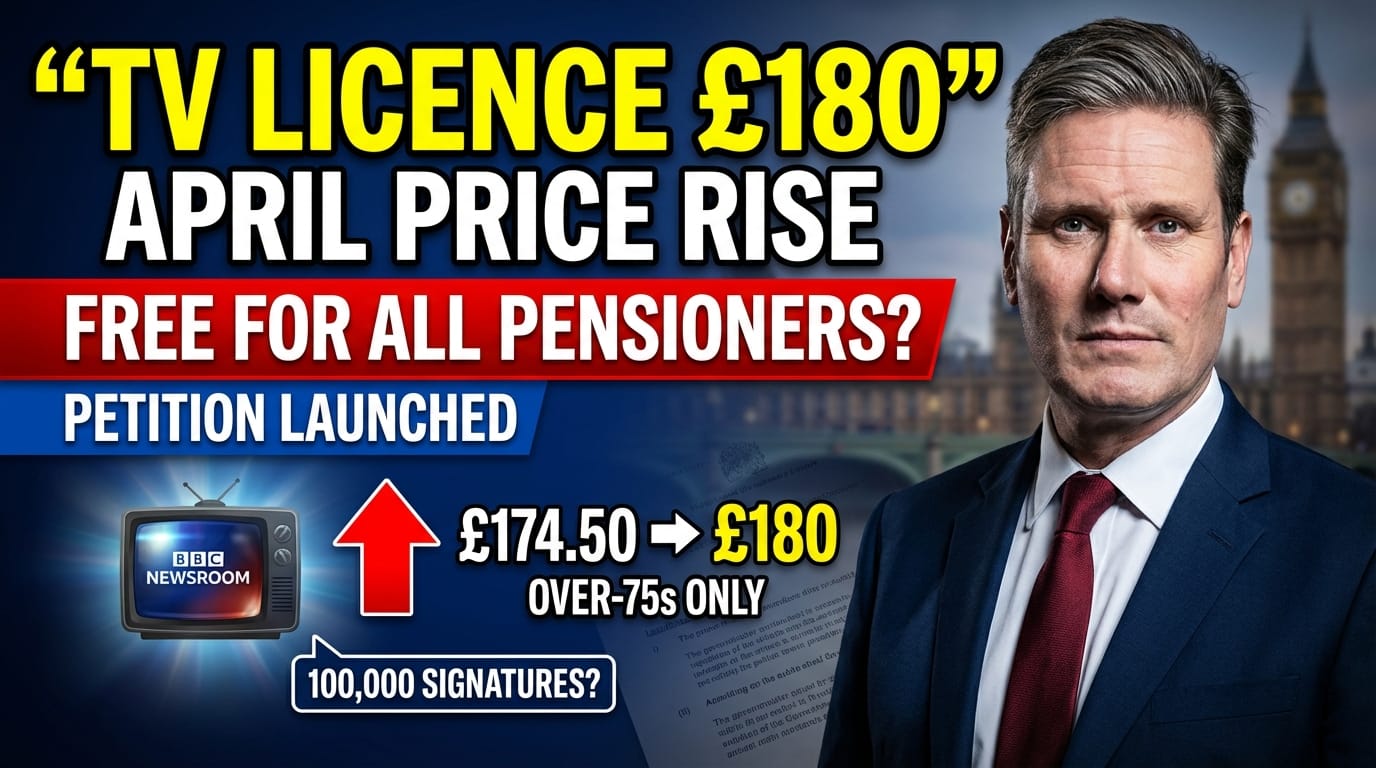
The TV licence fee will increase from £174.50 to £180 per year from April 1, following confirmation from the Department for Culture, Media and Sport. The £5.50 rise reflects inflation under the 2022 Licence Fee Settlement, with a further inflation-linked increase scheduled for April 2027.
As the fee rises, a new online petition is calling on the UK Government to fund free TV licences for all state pensioners, not just those who qualify under current rules.
Petition
The campaign, launched on the UK Government’s Petitions Parliament platform, argues that all pensioners should receive a state-funded TV licence upon reaching retirement age.
The petition states that many pensioners rely heavily on television for companionship and face rising food and energy costs. At present, only over-75s who receive means-tested Pension Credit qualify for a free licence.
If the petition reaches 10,000 signatures, the Government must issue a formal written response. Should it gather 100,000 signatures, the Petitions Committee will consider scheduling a parliamentary debate.
Increase
The DCMS said the £5.50 increase is in line with inflation and provides the BBC with stable funding to support programming and the wider creative industries.
A DCMS statement noted that the Government remains committed to the licence fee funding model for the remainder of the current BBC charter period. It also confirmed that support measures remain in place to help households manage payments.
For black and white television sets, the annual fee will increase from £58.50 to £60.50 for the 2026/27 period.
Exemptions
Currently, free TV licences are available only to over-75s who receive Pension Credit. Other discounts include:
- Half-price licence (£87.25) for people who are registered blind or severely sight impaired
- Reduced fees for eligible care home residents under the Accommodation for Residential Care scheme
The Government has not announced any plans to extend free licences to all pensioners.
Requirements
A TV licence is required in the UK to:
- Watch or record live television programmes on any channel
- Stream live content through online services such as BBC iPlayer, Sky Go, Amazon Prime Video or YouTube
- Use BBC iPlayer for on-demand viewing
Viewers can check their individual requirements through the official TV Licensing website.
Payment
The standard TV licence will cost £180 annually from April 1. Payment options include:
| Payment Method | Cost Breakdown |
|---|---|
| Annual payment | £180 upfront |
| Monthly Direct Debit | From £14.50 per month |
| Quarterly Direct Debit | Around £45 per quarter |
| Weekly payment card | From £6.50 per week |
Households eligible for concessions can apply for reduced rates through TV Licensing.
Over-75s
People aged 75 or over who receive Pension Credit can apply for a free TV licence. Those approaching their 75th birthday can apply at age 74, and payments will be adjusted until they qualify for the free licence.
Applicants who believe they are eligible but do not currently hold a licence can contact TV Licensing to request an application form.
Review
The Government is continuing its Charter Review Green Paper consultation, which includes exploring potential alternative funding models for the BBC in the future.
For now, the licence fee will increase to £180 from April, and eligibility for free licences remains limited to over-75s receiving Pension Credit and other specific groups.
The petition seeking to extend free licences to all pensioners remains open for signatures.
FAQs
How much will the TV licence cost from April?
£180 per year from April 1.
Who gets a free TV licence?
Over-75s receiving Pension Credit.
Do all pensioners get it free?
No, only qualifying over-75s.
Is a licence needed for streaming?
Yes, for live streaming and BBC iPlayer.