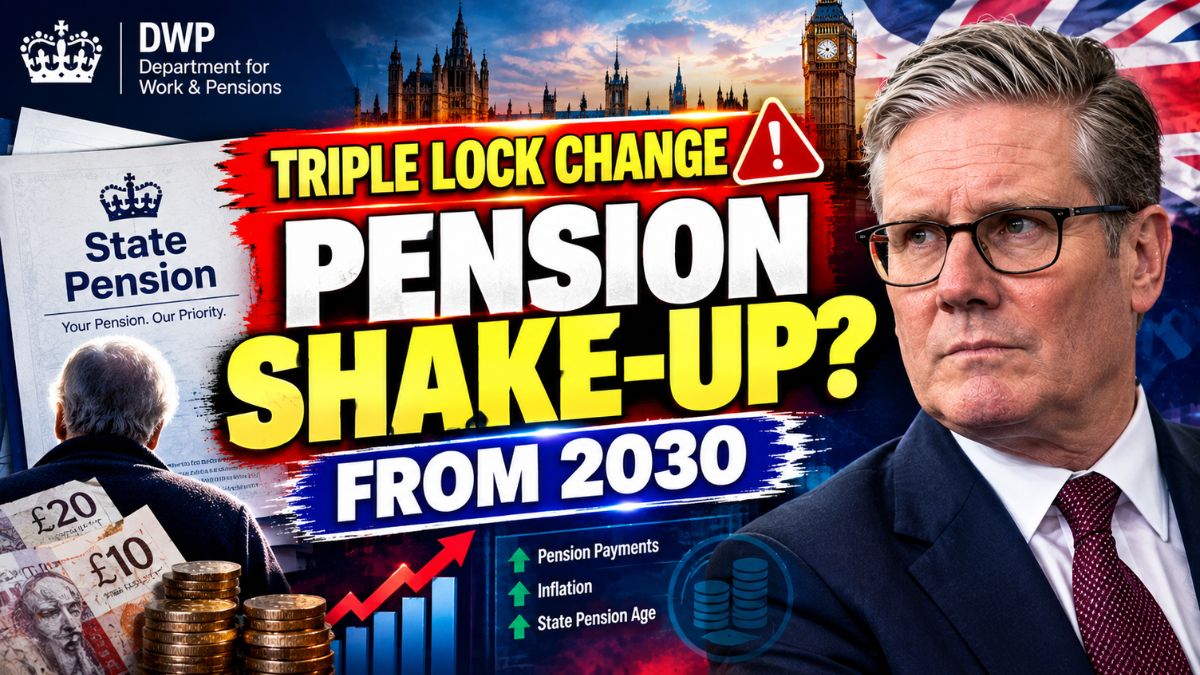
The future of the UK’s state pension triple lock has come under renewed scrutiny after a Department for Work and Pensions (DWP) minister said the government intends to retain the core principles of the system while changing how future increases are calculated.
The comments have added to confusion over proposed state pension reforms linked to Labour’s plans under Andy Burnham. While some reports have suggested that the triple lock could be scrapped, the minister responsible for the changes has argued that this is not an accurate description of what is being proposed.
Under the proposed system, pensioners would continue to receive protection against rising prices and benefit from economic growth. However, the government wants to remove what it describes as the permanent “ratchet effect” created by the current formula.
The changes are expected to begin from April 2030 if the proposals proceed as outlined.
Triple
The UK’s current state pension triple lock guarantees that the state pension increases each year by whichever is highest among inflation, average earnings growth or 2.5%.
The mechanism was introduced to provide pensioners with protection against rising living costs while ensuring that their income does not fall behind wider earnings growth.
For example, if inflation is 3%, earnings growth is 4% and the 2.5% floor is lower than both, the pension rises by 4%.
If inflation is particularly high, the inflation figure can determine the increase. If both inflation and earnings growth are below 2.5%, the minimum 2.5% increase applies.
The government is now proposing a different approach from April 2030.
Rather than completely removing the protection provided by the triple lock, ministers want to retain its core principles while changing how earnings-related increases affect future pension payments.
Reform
DWP under-secretary Mr Bell, the Swansea West MP described as a key figure behind the proposed changes, said there was widespread misunderstanding about the government’s intentions.
He said it was wrong to suggest that pensioners would have no triple lock after the reforms.
Under the proposed system, pension increases would continue to be based on protection against inflation, with an additional amount intended to ensure pensioners benefit as the economy grows.
The government’s stated objective is to maintain a meaningful annual increase while preventing the pension from benefiting permanently from the full effect of unusually strong earnings growth in one period.
Mr Bell said the government wanted to retain the core principles of the current arrangement while removing the permanent ratchet effect.
That means the debate is not simply about keeping or abolishing the triple lock. The more important question is how the replacement mechanism would work and how it would affect pension increases over time.
Earnings
Average earnings growth is one of the three elements currently used to calculate the triple lock.
This can create a significant increase in state pension payments when wages rise rapidly.
The proposed reforms are intended to preserve a link between pension increases and economic growth without allowing temporary earnings spikes to permanently raise the pension baseline.
The distinction matters because once the state pension has increased, the higher amount becomes the starting point for future increases.
This creates what the government describes as a ratchet effect.
For example, if unusually strong wage growth produces a large pension increase in one year, that higher pension becomes part of the base used for subsequent increases. Even if wage growth later returns to normal levels, the previous increase is not reversed.
The proposed reform aims to address this long-term effect.
Inflation
Protection against inflation is expected to remain an important part of the reformed system.
That means pensioners would continue to receive protection when prices rise significantly.
For many older households, this is particularly important because essential spending can account for a large share of retirement income. Housing, energy, food and healthcare costs can all affect household finances.
Maintaining an inflation-related element would therefore mean the reform does not simply remove protection against rising prices.
Instead, the government’s proposal is to change the way pension increases interact with earnings growth while retaining safeguards against increases in the cost of living.
The precise mechanism and legislative details will be important for determining how individual pensioners are affected.
Savings
The proposed reforms are also being justified on the basis of long-term public finances.
The government estimates that the changes could deliver savings of around £15 billion a year by 2040.
That figure is expected to rise to approximately £50 billion annually by 2050.
The argument is that the existing triple lock becomes increasingly expensive as the number of pensioners grows and state pension payments rise.
Population ageing creates additional pressure because more people are drawing the state pension for longer periods.
The government therefore wants to place the pension system on what it considers a more sustainable financial footing while continuing to provide protection for pensioners.
The size of the projected savings means the reforms could become an important part of future public spending plans.
Poverty
The DWP minister has also challenged claims about the impact of the triple lock on pensioner poverty.
Mr Bell said it was wrong to argue that the triple lock had reduced pensioner poverty, claiming that poverty levels actually increased after the mechanism was introduced in 2011.
This has become part of the wider political debate surrounding the reform.
Supporters of the current system argue that the triple lock has helped protect pensioners from inflation and ensured that their incomes keep pace with wider economic conditions.
Critics have questioned whether the mechanism is the most effective way of addressing pensioner poverty, particularly because pensioner households have different levels of wealth, housing costs and private income.
The disagreement highlights an important distinction between increasing the state pension for everyone and targeting additional support at pensioners who are financially vulnerable.
Politics
The future of the triple lock is also politically sensitive.
Conservative leader Kemi Badenoch has pledged to retain the existing system if her party is in government.
She told the BBC that the Conservatives’ policy is to maintain the triple lock unchanged.
This creates a clear political difference between maintaining the current formula and Labour’s proposed approach to reform.
For pensioners and people approaching retirement, the distinction could become important because the long-term value of the state pension depends not only on the amount paid today but also on how annual increases are calculated.
A change introduced in 2030 could affect pension income over many years because each annual increase builds on the previous year’s pension amount.
Timeline
The proposed changes are expected to take effect from April 2030.
That means the current triple lock arrangements would continue before the planned reform date unless the government changes the timetable or legislation is amended.
The four-year gap also provides time for further political debate and scrutiny.
Government policy can change before legislation is finalised, particularly when reforms affect millions of households.
People approaching retirement should therefore be cautious about treating projected pension figures for the 2030s as guaranteed amounts.
The safest source for confirmed state pension information is the GOV.UK State Pension service, which provides official information about eligibility, payments and related rules.
Impact
For current pensioners, the immediate effect of the proposed reform may be limited because the new system is not expected to begin until 2030.
For younger workers and people who will reach state pension age later, however, the long-term effect could be more significant.
The difference between retaining the existing triple lock and introducing a modified formula can compound over time.
A slightly smaller increase in one year does not only affect that year’s income. The following year’s increase is generally calculated from the new pension amount, meaning changes can accumulate.
This is why the exact design of the proposed formula matters more than the description of the policy as either keeping or scrapping the triple lock.
Sustainability
The central argument behind the reform is sustainability.
The state pension is funded through public finances rather than being a personal investment account in which each person’s contributions are simply returned to them.
As the population ages, governments face increasing pressure to finance pensions alongside healthcare and other public services.
The current triple lock can produce particularly large increases when earnings growth or inflation rises sharply.
The proposed system attempts to balance two competing objectives: protecting pensioners from losing purchasing power and limiting the long-term growth of pension spending.
Whether the proposed formula achieves that balance will depend on its final design and how the economy performs over the coming decades.



Outlook
The latest comments from the DWP minister suggest that the government’s position is more nuanced than simply abolishing the state pension triple lock.
The proposed reforms would retain protection against inflation and maintain a link between pension increases and economic growth, while seeking to remove the permanent ratchet effect associated with the current system.
The government says this approach could save around £15 billion a year by 2040 and £50 billion by 2050, helping put the state pension on a more sustainable financial footing.
At the same time, the Conservatives have pledged to retain the existing triple lock unchanged, ensuring that the issue is likely to remain politically important.
For pensioners, the key point is that the current system has not simply disappeared. The proposed change is scheduled for April 2030 and would need to be implemented through the appropriate policy and legislative process. Until then, people should continue to use official DWP and GOV.UK information when checking their state pension entitlement and future payment arrangements.
The debate over the triple lock ultimately comes down to how the UK balances pensioner protection with the cost of supporting an ageing population. The government’s proposed approach would keep the principle of annual protection but modify the formula, while opponents want the existing system preserved. For anyone planning retirement, the final rules and the way they are applied will be more important than the political labels attached to the reform.