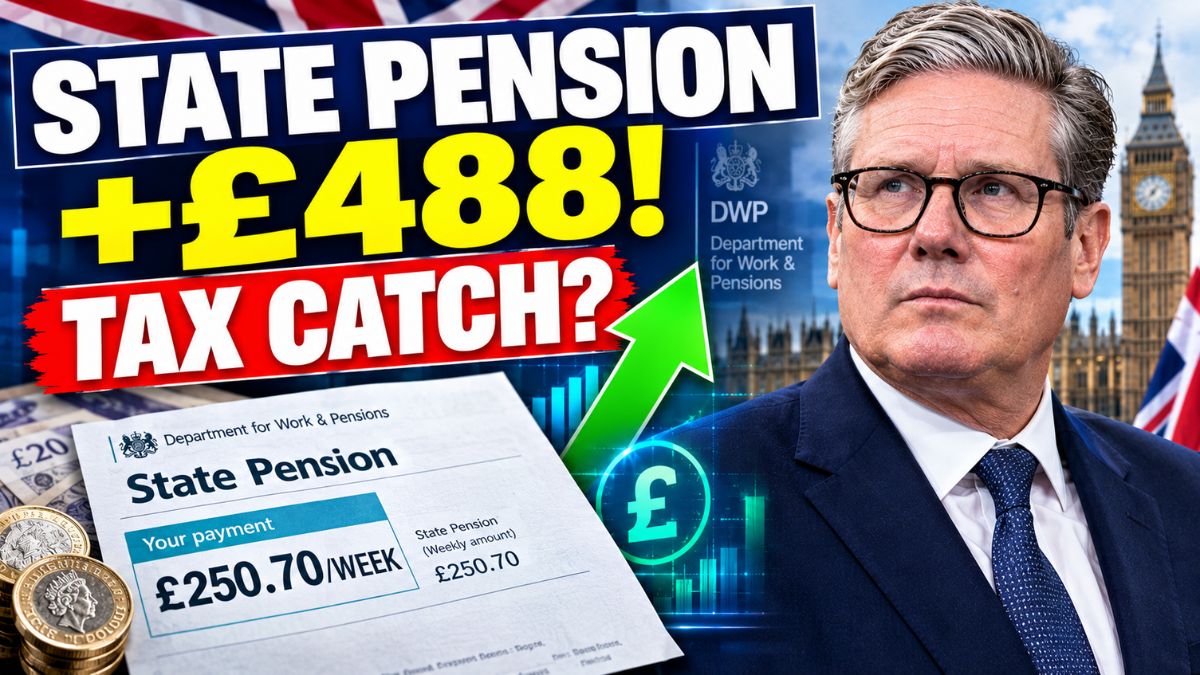
Millions of pensioners could receive an increase of almost £500 a year in their State Pension from next April, based on the latest earnings figures.
The new State Pension is currently £241.30 a week. A projected 3.9% increase would take the weekly payment to around £250.70.
That would bring the annual State Pension to approximately £13,036.40, representing an increase of about £488 a year.
The expected increase follows the latest official earnings figures, which showed average wages, including bonuses, rose by 3.9% between May and July.
Under the Government’s triple lock, State Pension payments increase each year by whichever is highest of average earnings growth, inflation or 2.5%.
With inflation currently at 2.9%, earnings growth is currently expected to determine the increase.
However, the final figure will not be confirmed until the relevant September inflation data is published next month.
Tax
The projected increase could create a tax issue for some pensioners.
A 3.9% rise would take the full new State Pension above the current £12,570 personal allowance. Someone receiving the full new State Pension would have annual income of around £13,036 based on the projected increase.
This does not necessarily mean every pensioner receiving the State Pension would suddenly have to pay income tax.
The amount of tax a person owes depends on their total taxable income and individual circumstances. Pensioners with other sources of income could already have tax obligations, while those relying solely on their State Pension could be affected differently.
The Government has previously said pensioners who rely solely on their State Pension would not have to complete a tax return or be pursued to pay tax as a result of the payment moving above the personal allowance.
Concession
Pension consultants LCP has questioned how many pensioners would actually benefit from the Government’s proposed approach.
Its analysis suggests that only around one in 16 pensioners could benefit from the proposed concession.
Steve Webb, a partner at LCP, said the earnings figure was likely to determine next year’s increase under the triple lock.
“Under the triple lock formula, the new state pension will rise next April by the highest of the growth in wages, prices or 2.5%. Based on today’s figures, it is highly likely that it will be average earnings growth which comes out on top.
“Those on the new state pension can expect to see an increase of nearly £500 per year next April. But the sting in the tail is that this will take the standard rate of the new state pension above the tax threshold.
“The Government’s plans to address this point are a mess, and likely to benefit only a small fraction of pensioners. They will also create unfairness between different groups of pensioners and between pensioners and low-paid workers, who do not qualify for any exemption.”
Cost
The expected increase has also renewed discussion about the long-term cost of the triple lock.
The policy means State Pension payments can rise faster than wages in some years, depending on which of the three measures is highest.
Ruth Curtice, chief executive of the Resolution Foundation, has criticised the policy and warned that it can create a “ratchet effect” in which pensioner living standards increase faster than those of typical workers.
Speaking to the BBC’s Today programme, Curtice argued that pensions rising faster than earnings creates additional pressure because earnings are an important part of the tax base.
She also said pensioners had experienced stronger growth in living standards than typical workers over the past two decades.
Pressure
Liam McLaughlin, an associate economist at the National Institute of Economic and Social Research, said the projected increase would add fiscal pressure while the triple lock is already being examined.
The Office for Budget Responsibility had previously assumed a 3.7% increase for next year. If the final rise is 3.9%, it would therefore be slightly higher than that earlier assumption.
The higher payment would increase the amount spent on State Pension benefits, adding to the Government’s overall spending commitments.



Outlook
Labour has pledged to retain the triple lock, meaning the policy remains the basis for determining the annual State Pension increase.
For now, a 3.9% increase is an expectation rather than a confirmed figure. The final calculation will depend on the relevant inflation data and the Government’s application of the triple-lock formula.
If the increase is confirmed at 3.9%, the full new State Pension would rise from £241.30 to around £250.70 a week, or approximately £13,036.40 a year.
The increase would provide higher payments for millions of pensioners, but the move above the current personal allowance could also create tax considerations for some people, particularly those with other taxable income.