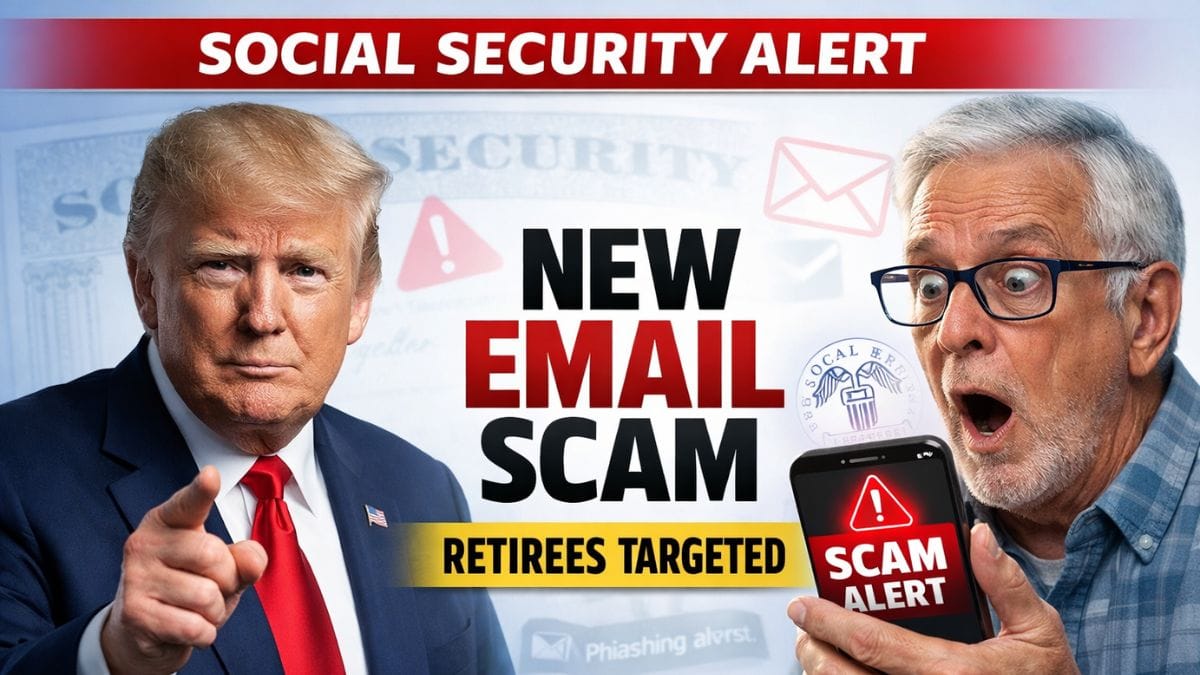
Retirees are being advised to remain cautious following a warning from the Social Security Administration (SSA) about a rise in sophisticated email scams. These fraudulent messages are designed to appear as official communications and may expose individuals to financial loss if handled without care. As more services move online, such scams are becoming increasingly refined, making awareness an essential line of defense.
The issue is not limited to isolated incidents. Authorities have observed a steady increase in phishing attempts targeting individuals who rely on Social Security benefits. Knowing how these scams operate can help reduce the risk of falling victim.
Rise
Recent reports indicate a noticeable uptick in scam emails that closely resemble legitimate SSA correspondence. These messages often include official logos, formal language, and structured formatting that mirrors genuine government communication.
In some cases, scammers incorporate publicly available information, such as employee names or department references, to enhance credibility. This level of detail can make it difficult for recipients to distinguish between authentic and fraudulent messages.
The trend reflects a broader shift in cybercrime, where attackers rely less on obvious deception and more on subtle imitation.
Tactics
The structure of these scam emails typically follows a consistent pattern. Most messages attempt to create urgency, prompting recipients to act quickly without verifying the source.
Common examples include notifications about account issues, benefit disruptions, or requests to access updated statements. The goal is to encourage immediate interaction, usually by clicking a link or downloading an attachment.
Once a user engages with the email, several risks may arise:
| Action Taken | Potential Outcome |
|---|---|
| Clicking a link | Redirect to a fraudulent website |
| Downloading attachment | Installation of malicious software |
| Entering personal data | Exposure of financial or identity details |
These steps are designed to capture sensitive information or gain access to financial accounts without the user’s knowledge.
Danger
The potential consequences extend beyond compromised login credentials. In more advanced cases, scammers deploy malware that operates in the background, collecting data or monitoring user activity.
This can result in unauthorized access to:
- Bank accounts
- Retirement savings
- Personal identification details
Such breaches may not be immediately apparent, which increases the risk of prolonged exposure. Over time, this can lead to significant financial loss or identity theft.
Signs
Identifying suspicious emails is an important step in prevention. While some messages appear convincing, certain indicators may suggest fraudulent intent.
Key warning signs include:
- Unsolicited emails requesting personal or financial information
- Language that emphasizes urgency or immediate action
- Links that do not clearly match official government domains
- Requests for payment through unconventional methods
It is important to note that legitimate SSA communications follow specific protocols. Official emails typically originate from “.gov” domains and do not request sensitive information through unsecured channels.
Safety
Adopting basic security practices can significantly reduce exposure to these scams. Individuals are encouraged to approach unexpected communications with caution and verify sources independently.
Recommended precautions include:
- Avoid clicking on links or downloading attachments from unknown emails
- Access Social Security accounts directly through the official website
- Use strong and unique passwords for financial services
- Enable two-factor authentication when available
The following table highlights safe and unsafe behaviors:
| Safe Practice | Risky Behavior |
|---|---|
| Typing official website URL | Clicking links in emails |
| Verifying sender authenticity | Assuming email legitimacy |
| Ignoring suspicious requests | Responding under pressure |
These measures are straightforward but effective in reducing vulnerability.
Response
If an individual suspects they have interacted with a fraudulent email, prompt action is recommended. Early intervention can limit potential damage.
Suggested steps include:
- Contacting financial institutions to secure accounts
- Updating passwords across relevant platforms
- Running a security scan on affected devices
- Reporting the incident to appropriate authorities
Timely reporting also helps agencies track emerging threats and issue broader warnings.
Awareness
Retirees are often targeted due to their reliance on fixed income sources and regular interaction with government agencies. Additionally, some individuals may be less familiar with evolving digital threats, making them more susceptible to well-crafted scams.
However, awareness and informed decision-making can significantly reduce this risk. Understanding how these schemes operate allows individuals to recognize and avoid potential threats.
Public education remains a key component in addressing this issue, as scammers continue to adapt their methods.
Reality
The Social Security Administration has clarified that it does not engage in certain practices commonly used in scams. Specifically, the agency will not:
- Request payments via email
- Demand immediate action under threat of penalty
- Ask for sensitive personal information through unsecured links
Any message that includes such elements should be treated with caution.
Maintaining a careful and methodical approach to digital communication can help protect personal and financial information. As these scams continue to evolve, consistent vigilance remains essential for safeguarding long-term savings and financial stability.
FAQs
What is the SSA email scam?
It is a fake email posing as SSA to steal data.
Does SSA ask for personal info by email?
No, SSA does not request sensitive data by email.
What happens if I click a scam link?
It may lead to malware or data theft.
How can I stay safe from scams?
Avoid links and use official SSA website.