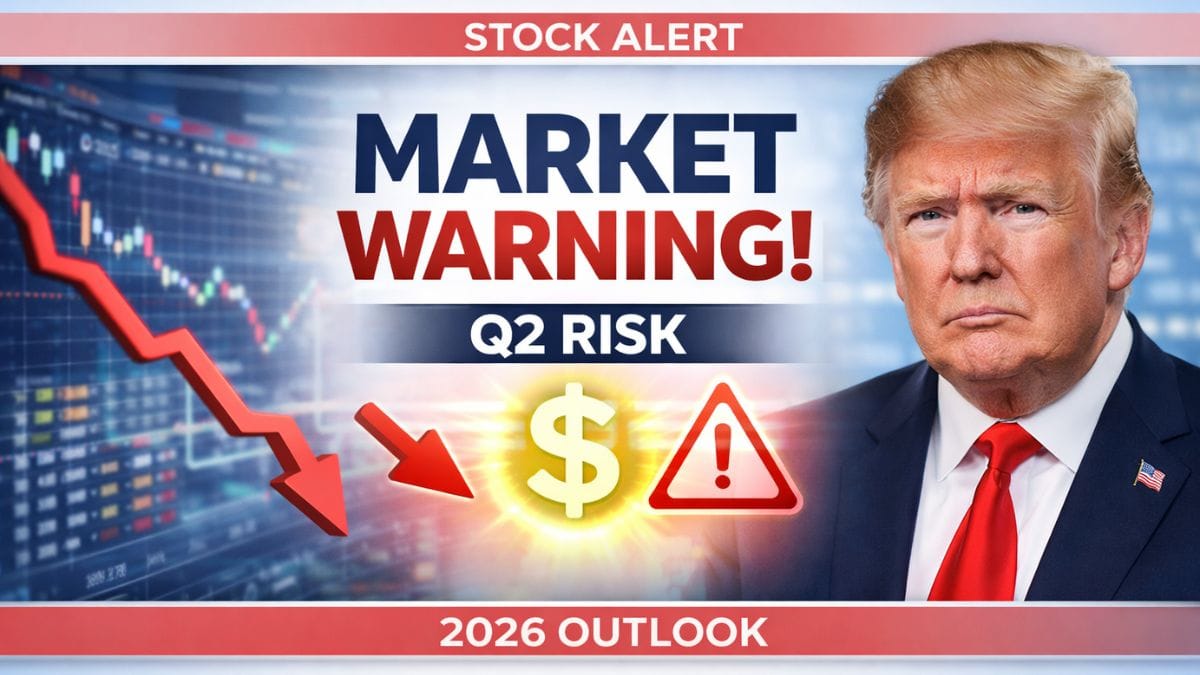
U.S. financial advisors are entering the second quarter of 2026 with growing concern as multiple economic and geopolitical risks converge. After a difficult first quarter, marked by declining markets and rising uncertainty, advisors say clients are finding it increasingly challenging to navigate the investment landscape.
The combination of inflation pressures, market volatility, geopolitical tensions, and structural shifts in traditional investment strategies is reshaping how risk is assessed and managed.
Outlook
The first quarter of 2026 set a cautious tone for investors. Despite a strong rally on the final trading day, major U.S. indexes ended the period with notable losses.
The S&P 500 declined by 4.6 percent, marking its weakest quarterly performance since 2022. This downturn reflects broader concerns about economic direction, policy clarity, and global stability.
Advisors note that while markets can typically absorb negative developments, uncertainty about future outcomes presents a more complex challenge. Without clear signals on interest rates, geopolitical developments, or fiscal policy, forecasting becomes increasingly difficult.
Volatility
Market volatility has been a defining feature of recent months. Daily price swings have increased, even as overall declines remain relatively orderly.
This pattern can create a misleading sense of stability. While markets may not appear to be in crisis, underlying fluctuations suggest heightened sensitivity to new information.
Advisors emphasize that volatility is no longer confined to equities. It is spreading across asset classes, complicating portfolio management and risk mitigation strategies.
Inflation
Inflation remains a central concern. While it may not reach previous peaks, expectations suggest it could remain above 4 percent in the near term.
Several factors are contributing to this outlook:
- Higher energy prices
- Ongoing supply chain disruptions
- Persistent global uncertainty
This environment raises the possibility of stagflation, where economic growth slows while inflation remains elevated. Although not the base case, advisors consider it a meaningful risk that could influence both markets and consumer behavior.
Bonds
One of the more notable developments is the simultaneous weakness in both stocks and bonds. Traditionally, bonds act as a stabilizing force during equity market declines. However, rising yields have reduced their effectiveness in this role.
The yield on the 10-year U.S. Treasury increased from approximately 4.01 percent to 4.44 percent during March. As yields rise, bond prices fall, leading to losses for investors who rely on fixed income for stability.
This shift has exposed limitations in the traditional 60/40 portfolio model, which allocates 60 percent to stocks and 40 percent to bonds.
| Asset Class | Traditional Role | Current Challenge |
|---|---|---|
| Stocks | Growth | Increased volatility |
| Bonds | Stability | Rising yields, price declines |
| Gold | Safe haven | Unexpected recent weakness |
Strategy
With traditional diversification under pressure, advisors are reassessing portfolio strategies. The long-standing assumption that asset classes will offset each other during downturns is being tested.
Advisors are increasingly focusing on:
- Liquidity management
- Alternative investments
- Active risk monitoring
At the same time, they are encouraging clients to maintain a long-term perspective, even as short-term conditions remain uncertain.
Geopolitics
Geopolitical risks are adding another layer of complexity. Ongoing tensions, including concerns about potential conflict involving Iran, are influencing energy markets and investor sentiment.
Higher oil prices can contribute to inflation while also slowing economic growth. In addition, global supply chains remain vulnerable to disruption, further complicating economic forecasts.
These factors make it more difficult for advisors and investors to model potential outcomes and prepare accordingly.
Behavior
Beyond market data, advisors are closely watching investor behavior. Some report that clients appear less responsive to communication, possibly reflecting uncertainty or fatigue.
There is concern that prolonged market stress could lead higher-income households to reduce spending. If this occurs, it may have broader implications for economic growth.
In this environment, maintaining clear communication and setting realistic expectations becomes increasingly important.
Risks
Advisors identify several key risks for the second quarter:
| Risk Factor | Potential Impact |
|---|---|
| Market Volatility | Unpredictable asset price movements |
| Inflation | Reduced purchasing power |
| Geopolitical Tensions | Energy price spikes, uncertainty |
| AI Dependence | Reliance on productivity gains |
| Consumer Behavior | Reduced spending, slower growth |
Some also warn of a potential two-phase market decline. The first phase could be driven by geopolitical events, while a second phase may emerge if economic growth weakens significantly.
The second quarter of 2026 presents a complex environment for investors and advisors alike. With multiple risks developing simultaneously, traditional strategies are being tested and expectations are being recalibrated. While uncertainty remains high, advisors continue to emphasize disciplined planning, diversification, and adaptability as key tools for navigating the evolving financial landscape.
FAQs
Why are advisors concerned about Q2 2026?
Due to volatility, inflation, and global risks.
What happened to the S&P 500 in Q1 2026?
It declined by about 4.6 percent.
Why are bonds underperforming?
Rising yields are reducing bond prices.
What is stagflation?
High inflation with slow economic growth.