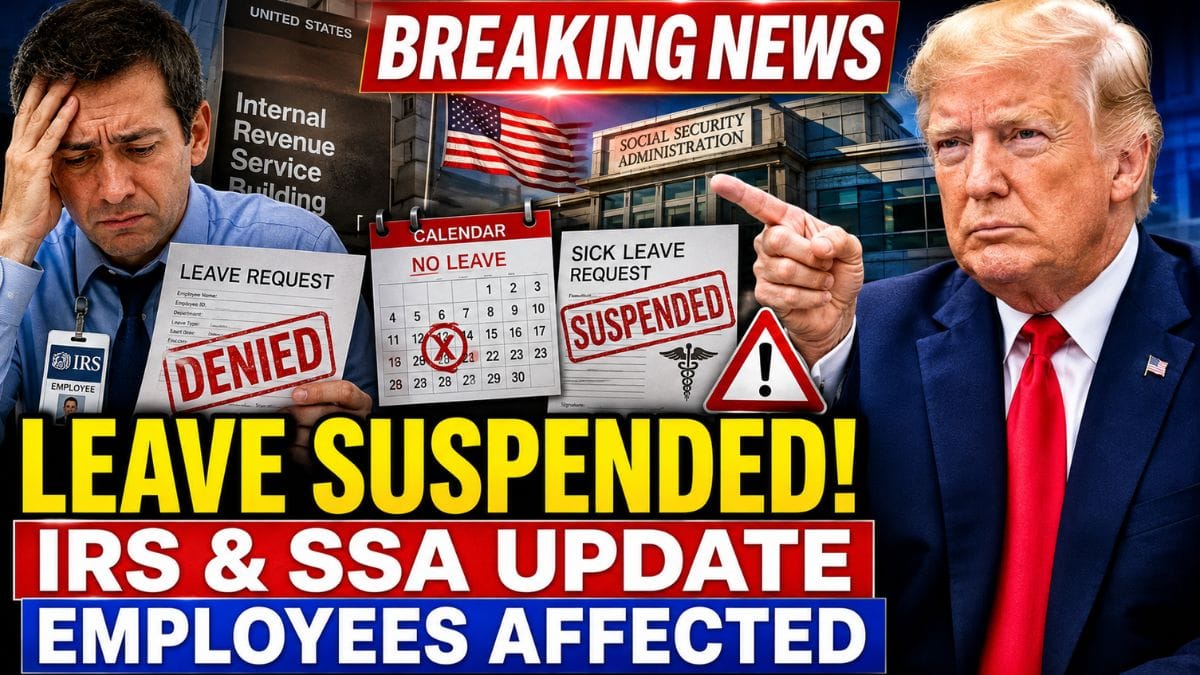
Employees at the Internal Revenue Service (IRS) and the Social Security Administration (SSA) can no longer use advanced annual or sick leave after both agencies announced a temporary suspension of the benefit. The change affects workers who have exhausted their accrued leave and previously relied on borrowing leave they would earn in the future.
Agency leaders say the move is intended to improve workforce availability and public service, while employee unions argue it could create financial hardship for workers dealing with medical emergencies or family care responsibilities.
The IRS and SSA have suspended approvals for advanced annual leave and advanced sick leave until further notice.
The nearly identical policy changes were communicated to employees through internal emails. Officials said the decision is aimed at reducing large outstanding advanced leave balances and ensuring employees are available to carry out agency operations.
The suspension applies to new and pending requests but does not affect employees’ ability to use leave they have already earned.
What Is Advanced Leave?
Advanced leave allows eligible federal employees to use annual leave or sick leave before it has been accrued. In effect, employees borrow against leave they are expected to earn through future service.
Federal agencies have traditionally approved advanced leave in situations such as:
- Serious medical conditions
- Extended illness or injury
- Family caregiving
- Bereavement of an immediate family member
Employees who later leave federal service with a negative leave balance are generally required to repay the value of the advanced leave.
Policy Change
Human resources officials informed employees that advanced leave requests will no longer be approved until further notice.
Pending applications will also be denied.
Employees may still:
- Use accrued annual leave.
- Use accrued sick leave.
- Request unpaid leave under the Family and Medical Leave Act (FMLA).
- Receive donated leave through the Voluntary Leave Transfer Program.
Agency officials said these options remain available despite the suspension.
Why the Agencies Made the Change
The IRS and SSA said they are working to reduce significant outstanding advanced leave balances.
According to the agencies, some employees have accumulated leave deficits that they may never fully repay through future service.
Internal communications stated that advanced leave represents work that has not yet been performed, creating obligations that affect agency resources and workforce planning.
The agencies said reducing these balances will help support mission delivery and improve customer service for the public.
Leadership Perspective
Both the IRS and SSA are led by Frank Bisignano, who serves as the Senate-confirmed SSA commissioner while also serving as the first chief executive officer of the IRS.
Speaking at a government conference, Bisignano described both organizations as businesses responsible for delivering essential public services.
He said the IRS focuses on tax collection and administration, while the SSA is responsible for delivering Social Security payments efficiently.
Employee Concerns
Some employees expressed concern that the policy could affect workers facing unexpected medical conditions or family emergencies.
Officials within SSA said employees who already have negative leave balances could face additional challenges under the new policy.
One employee with a chronic medical condition said a pending request for advanced leave was denied following the policy change, leaving unpaid leave as the remaining option.
Others said the change may affect employee morale, particularly for workers managing ongoing health conditions.
Union Response
Federal employee unions criticized the decision, arguing that advanced leave has served as an important safeguard for workers experiencing serious illness or family emergencies.
Jessica LaPointe, president of AFGE Council 220, said advanced leave has functioned similarly to short-term disability protection for many federal employees.
The American Federation of Government Employees (AFGE) has filed a grievance, alleging that the SSA violated provisions of its collective bargaining agreement.
The National Treasury Employees Union (NTEU), which represents IRS employees, also announced plans to challenge the policy, arguing that it conflicts with negotiated labor agreements.
Staffing Context
The policy change comes after both agencies experienced significant workforce reductions.
During the past year:
| Agency | Staffing Change |
|---|---|
| IRS | More than 25% workforce reduction |
| SSA | About 7,000 employees departed |
SSA is currently operating with its lowest staffing level in roughly five decades.
Despite these reductions, agency leadership has maintained that existing staffing levels can continue meeting public service expectations through workforce reassignment and operational changes.
Federal Leave Rules
According to the Office of Personnel Management (OPM), agencies may approve up to 240 hours of advanced sick leave under certain circumstances.
The exact amount depends on the employee’s situation and agency policies.
Employees who separate from federal service before repaying advanced leave generally must reimburse the government, with agencies authorized to recover the amount from the employee’s final paycheck when applicable.
Agency Statements
An SSA spokesperson said the suspension is intended to ensure employees remain available to provide the level of service the public expects.
The IRS stated that the change supports its goal of building a high-performing workforce while remaining responsible stewards of taxpayer resources.
The agency also emphasized that employees continue to have access to a comprehensive package of leave and employee benefits.
What Employees Can Do
Although advanced leave has been suspended, employees still have several options depending on their circumstances.
| Available Option | Status |
|---|---|
| Accrued annual leave | Available |
| Accrued sick leave | Available |
| FMLA unpaid leave | Available |
| Voluntary Leave Transfer Program | Available |
| Advanced annual leave | Suspended |
| Advanced sick leave | Suspended |
The suspension remains in effect until further notice, and neither agency has announced when or whether approvals for advanced leave will resume. As discussions continue between agency leadership and employee unions, the policy is expected to remain an important issue for thousands of federal workers who rely on leave benefits during medical or family emergencies.
FAQs
What is advanced leave?
Leave employees use before they earn it.
Who is affected by the change?
IRS and SSA employees seeking advanced leave.
Can employees still use earned leave?
Yes, accrued annual and sick leave remain available.
Is unpaid FMLA leave still available?
Yes, eligible employees may request FMLA leave.