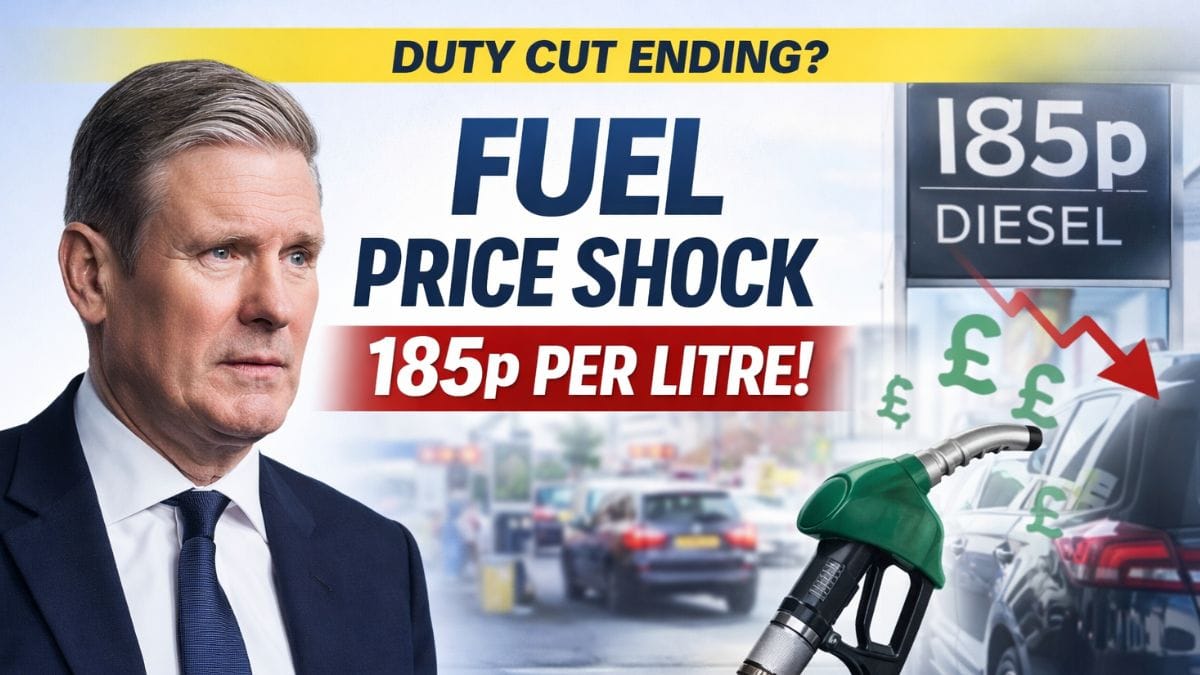
Rising fuel prices have brought renewed attention to the UK Government’s fuel duty policy, with calls growing to extend or expand existing tax relief measures. As diesel prices climb to an average of 185p per litre, policymakers are under increasing pressure to respond to the cost-of-living impact on households and businesses.
The current 5p per litre fuel duty cut, originally introduced in 2022, is scheduled to expire in September 2026. However, recent developments in global energy markets have prompted discussions about whether this reduction should continue.
Context
Fuel prices have increased significantly in recent months, driven in part by geopolitical tensions in the Middle East and disruptions to key shipping routes such as the Strait of Hormuz. These factors have contributed to higher global oil prices, which are now being reflected at UK forecourts.
According to the RAC, diesel prices have risen by around 30 percent since late February, while petrol prices have increased by approximately 16 percent over the same period. The average cost of petrol now stands at 154.5p per litre.
These increases are placing additional strain on consumers already facing higher living costs.
Policy
The UK Government had previously extended the 5p fuel duty reduction until August 2026, with plans to gradually return rates to pre-2022 levels over the following years. However, this trajectory is now under review.
Lord Richard Walker, appointed as a cost-of-living adviser, has suggested that the Government should consider extending or even increasing the current fuel duty cut. His comments reflect a broader debate about how best to balance fiscal responsibility with immediate economic pressures.
The Prime Minister has indicated that the planned increase will remain under review, particularly in light of ongoing international developments.
Comparison
Other countries have already taken more aggressive steps to reduce fuel costs. Australia, for example, has implemented a larger temporary cut to fuel taxes.
| Country | Fuel Tax Cut | Status |
|---|---|---|
| United Kingdom | 5p per litre | Ends September 2026 |
| Australia | 14p per litre | Recently implemented |
This comparison has been cited by policymakers and industry figures as evidence that further action may be possible.
Arguments
Supporters of extending the fuel duty cut argue that it would provide immediate relief to households and businesses. Higher fuel costs affect transportation, logistics, and everyday expenses, making them a key driver of inflation.
Some have also suggested that rising fuel prices increase government tax revenues, creating an opportunity to adjust duty rates without significantly affecting overall public finances.
Critics, however, may raise concerns about the long-term fiscal impact of maintaining lower fuel taxes, particularly given broader budgetary pressures.
Politics
The issue has become a point of debate across political parties. Different groups have proposed a range of measures aimed at reducing energy and fuel costs.
The Conservative Party has suggested removing VAT on energy bills temporarily, while the Liberal Democrats have proposed a deeper 10p cut to fuel duty. Reform UK has advocated for both VAT reductions on fuel and the removal of certain energy levies.
These proposals reflect differing approaches to addressing the same underlying issue: rising costs for households.
Market
Beyond tax policy, the Government has also taken steps to improve price transparency. Efforts are underway to help motorists compare fuel prices more easily, allowing them to find lower-cost options in their area.
At the same time, broader energy policy decisions are also in focus. Reports indicate that approval may be granted for new gas developments in the North Sea, reflecting ongoing concerns about energy security.
These measures highlight the complexity of the issue, which involves both short-term price pressures and long-term supply considerations.
Outlook
The direction of fuel duty policy will likely depend on how global energy markets evolve in the coming months. Continued volatility could strengthen the case for extending or expanding the current tax cut.
For now, the Government maintains that it is balancing support for consumers with broader economic stability. The existing fuel duty freeze remains in place until September, with further decisions expected as conditions develop.
Rising fuel prices have once again underscored the sensitivity of energy costs within the wider economy. Whether through tax adjustments or broader policy changes, the response to these pressures will remain a key area of focus in the months ahead.
FAQs
What is the current diesel price in the UK?
Around 185p per litre on average.
When does the fuel duty cut end?
It is set to expire in September 2026.
How much is the current fuel duty cut?
A reduction of 5p per litre.
Why are fuel prices rising?
Due to global tensions and supply issues.