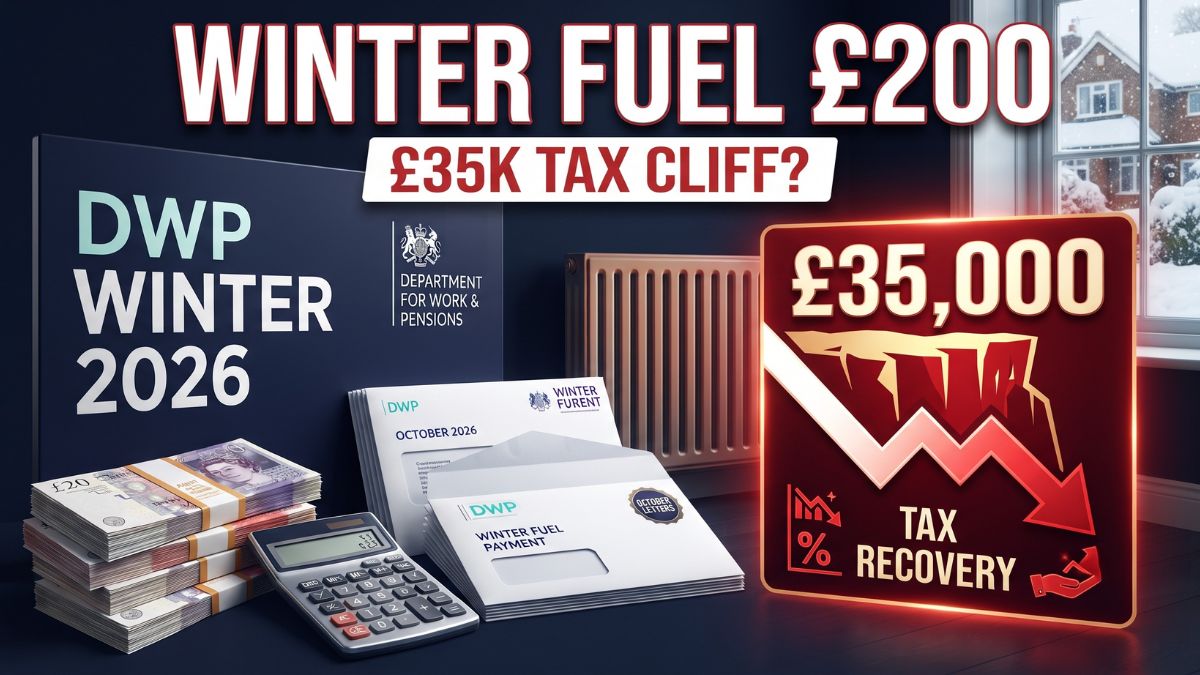
The Department for Work and Pensions (DWP) is preparing to send Winter Fuel Payment letters from October, as the claim form for winter 2026 to 2027 has now been published online.
For eligible pensioners, the payment will generally be worth £200 or £300, depending on age and household circumstances. Most people who qualify will receive the money automatically, but some pensioners will need to claim.
There is also an important tax rule to understand. People with individual taxable income above £35,000 can have the Winter Fuel Payment recovered through the tax system. This means receiving the payment does not necessarily mean keeping it.
The rules also differ across the UK, with Scotland operating a separate Pension Age Winter Heating Payment.
October Letters
The DWP says Winter Fuel Payment letters will be sent during October and November.
The department has also published the Winter Fuel Payment claim form for winter 2026 to 2027, confirming that the application process is now available.
The form states that people must have been born on or before 27 June 1960 to meet the age requirement for the 2026 to 2027 payment.
Most eligible people will not need to complete the form because the payment will normally be made automatically.
A claim is generally needed if the DWP specifically asks someone to apply, or if the person does not receive a DWP benefit or State Pension but has reached State Pension age and wants to claim.
Qualifying Week
Eligibility is based partly on a person’s circumstances during the qualifying week.
For winter 2026 to 2027, the qualifying week runs from 21 September to 27 September 2026.
A person must have reached State Pension age before or during this period and meet the other conditions for the payment.
The House of Commons Library explains that Winter Fuel Payment is an annual lump-sum payment intended to help older people with heating costs during winter.
Other conditions can apply, including rules concerning residence and periods of free treatment in hospital.
Payment Amount
The amount generally depends on age and household circumstances.
For many households, the payment is £200 where the oldest eligible person is under 80. Where someone aged 80 or over is part of the qualifying household, the amount can be £300.
The payment is made as a lump sum rather than as a monthly benefit.
Most eligible payments are made automatically, normally during November or December.
The government has used the Winter Fuel Payment for many years as a way of providing additional financial support to older households during the colder months.
£35,000 Threshold
The tax rule is one of the most important changes to understand.
A person whose individual taxable income is more than £35,000 can have their Winter Fuel Payment recovered through the tax system.
This is known as the Winter Fuel Payments Charge.
The threshold applies to the individual’s taxable income rather than the combined income of a couple.
As a result, two people in the same household can be treated differently.
For example, if one partner has taxable income above £35,000 and the other partner is below the threshold, the charge applies to the partner whose income exceeds the threshold. The other person’s payment is not automatically recovered simply because they live in the same household.
Tax Recovery
HM Revenue and Customs (HMRC) can recover the payment through the tax system.
Depending on the person’s circumstances, this can happen through a change to their PAYE tax code or through their Self Assessment tax return.
The government’s official guidance on the Winter Fuel Payments Charge explains how the recovery process works.
This means the headline payment amount should not always be viewed as the final amount retained by every recipient.
A pensioner with taxable income above the threshold can receive the payment and subsequently have it recovered through taxation.
Cliff Edge
The £35,000 threshold has attracted attention because of how it interacts with individual taxable income.
The policy does not operate as a traditional household means test. Instead, the tax charge is based on an individual’s income.
That can produce different outcomes for households with similar combined incomes.
For example, consider two couples. In one household, one person earns £36,000 and the other has little taxable income. In another household, both partners earn £18,000.
The combined income is broadly similar, but the tax charge can apply differently because the threshold is assessed at an individual level.
Think tanks including the Resolution Foundation have raised concerns about the complexity created by this structure and the potential for a £35,000 threshold to create a noticeable change in treatment around the cutoff.
Opt Out
People who do not want to receive the payment can choose to opt out.
This can be relevant for someone whose income is above the threshold and who would ultimately have the payment recovered through the tax system.
The government says people can opt out of receiving Winter Fuel Payment or the equivalent Pension Age Winter Heating Payment.
Once someone opts out, they will not receive the payment in future years unless they opt back in.
This makes the decision more significant than simply declining one year’s payment.
Scotland
The payment arrangements are not identical across the UK.
Winter Fuel Payment applies in England and Wales and, under the relevant arrangements, Northern Ireland. Scotland has its own benefit called the Pension Age Winter Heating Payment (PAWHP).
The Scottish payment provides equivalent support through the devolved social security system.
The Winter Fuel Payments Charge, however, applies across the UK to people whose individual taxable income exceeds £35,000 and who are subject to the relevant rules.

2026 Payment
For pensioners preparing for winter 2026 to 2027, the key dates and rules are straightforward but important.
The qualifying week is 21 to 27 September 2026. Letters are expected from October, while most automatic payments are expected later in the year.
The age requirement means a person must have been born on or before 27 June 1960, alongside meeting the other eligibility conditions.
Most eligible pensioners do not need to submit a claim. Those who are specifically asked to apply, or who do not receive a qualifying DWP benefit or State Pension, may need to use the claim form.
The £35,000 individual taxable-income threshold is another important consideration because a payment can subsequently be recovered through PAYE or Self Assessment.
For pensioners, the practical issue is therefore not only whether they qualify for the Winter Fuel Payment, but also whether their income means some or all of the payment will ultimately be recovered through the tax system.