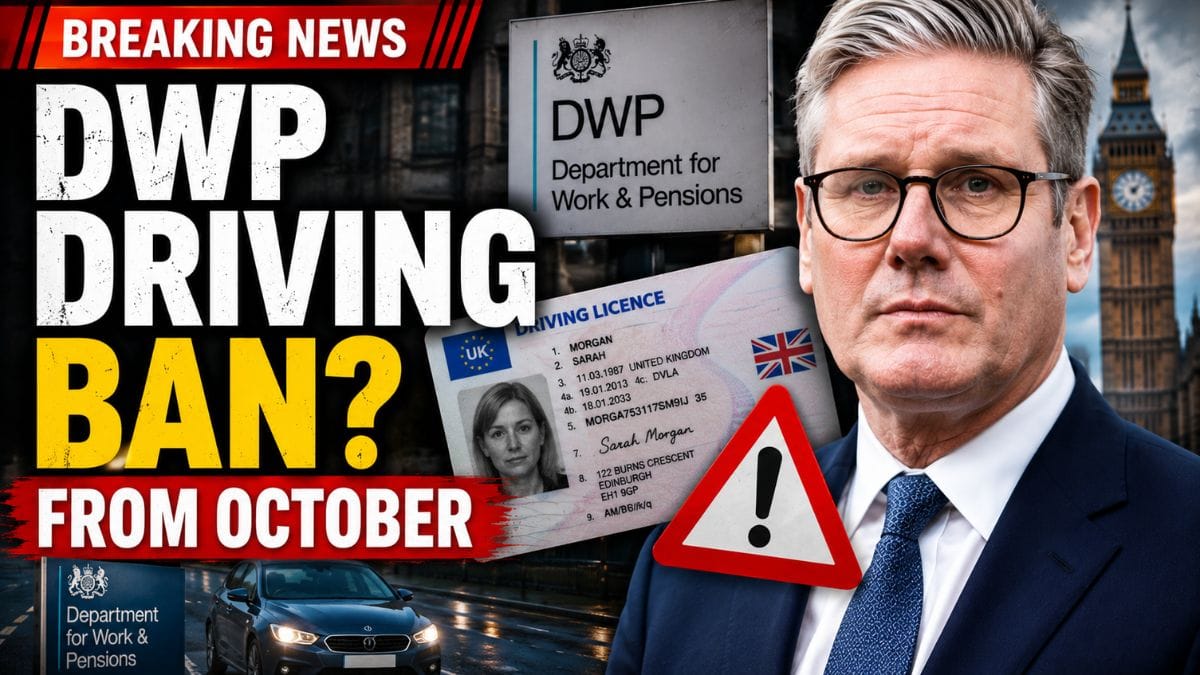
Some people with unpaid debts to the Department for Work and Pensions (DWP) could face restrictions on their driving licences from October 2026 under new powers introduced through the Public Authorities (Fraud, Error and Recovery) Act 2025.
The measures are aimed primarily at people who owe significant benefit-related debts and have the means to repay them but fail to do so without a reasonable explanation. However, the rules do not mean that every benefit claimant with a debt will automatically lose their licence.
The legislation gives the DWP additional ways to recover money it says is owed, including seeking court orders that can result in driving disqualification in certain circumstances.
Rules
Under the new provisions, the DWP can seek a driving disqualification where an outstanding debt is at least £1,000 and other recovery methods are not reasonably possible.
The process involves the courts. The DWP cannot simply remove someone’s driving licence without the required legal process.
Before making an order, the court must consider whether the person had the financial means to repay the debt but failed to do so without a reasonable excuse.
The rules therefore focus on debt recovery rather than applying a general driving restriction to people who receive benefits.
Exceptions
There are important safeguards for people who rely on their vehicle for essential purposes.
The code of practice states that a court cannot impose a driving disqualification if the person has an essential need to drive. This can include situations where driving is necessary to earn a living.
People whose jobs depend on driving, such as couriers, may therefore have grounds to explain why losing their licence would cause serious difficulties. Caring responsibilities or other essential driving needs may also be relevant.
However, the individual needs to make the court aware of their circumstances. The existence of an essential need to drive is not something that should simply be assumed during the process.
Repayment
People with DWP debts can avoid further enforcement action by paying what they owe or establishing an affordable repayment arrangement with the department.
Maintaining the agreed repayment terms can also prevent a suspended driving disqualification from taking effect.
This provides an important distinction between owing money to the DWP and actually being banned from driving. A person who receives a letter about an outstanding debt is not automatically facing a driving ban.
The government has encouraged people who receive correspondence about unpaid debts to contact the DWP rather than allowing the matter to progress.
Duration
An immediate driving disqualification order cannot initially exceed two years.
There are circumstances in which the overall period could become longer. The DWP says that if someone repeatedly breaches a suspended order by failing to make required payments without a reasonable excuse, more than one immediate disqualification order could be issued.
As a result, the total period of disqualification could exceed two years in certain circumstances.
The DWP must apply to revoke an immediate disqualification order once the debt has been paid in full. The department will notify the court, which will then notify the DVLA that the order has ended.
Licence
There are also rules governing what happens to the driving licence after a disqualification ends.
If an immediate disqualification order ends or is revoked within 56 days because the debt has been paid in full, the individual may be able to have their licence returned or replaced through the DVLA without paying a fee.
If the disqualification lasts longer than 56 days, the person may need to apply to the DVLA for a new licence and pay the applicable fee.
This means settling the debt can affect not only whether the disqualification continues but also how the licence is restored.
Recovery
The driving licence provisions are part of a wider set of powers introduced to improve the recovery of public money.
From October 2026, the DWP will also gain powers to recover certain debts directly from bank accounts under the new legislation, subject to the requirements and safeguards set out in the law.
The government says these measures are intended to address cases where people who can afford to repay debts do not do so.
The legislation also provides for an Eligibility Verification Measure at a later stage. This will allow the DWP to request restricted information from banks and financial institutions to help identify incorrect benefit payments and resolve discrepancies.
Benefits
The government has identified Universal Credit, Pension Credit and Employment and Support Allowance (ESA) among the benefits with significant levels of fraud.
The new recovery powers are not limited to people who are currently receiving benefits. They are particularly relevant to people who have stopped receiving DWP benefits but still have an outstanding debt.
The government says existing recovery options were limited in cases involving people who were no longer receiving benefits or were not in PAYE employment.
Savings
Ministers estimate that the wider measures could help the DWP recover substantial sums. Labour has said the approach could secure up to £1.5 billion over five years.
The government has also set a broader target of delivering £14.6 billion in savings over five years through efforts to tackle fraud, error and debt.
That programme includes plans to add up to 3,000 staff and increase the department’s use of data, analytics and investigative resources.
October
The new measures are expected to be introduced progressively from October 2026. People with outstanding DWP debts are being contacted and encouraged to resolve their accounts or agree repayment arrangements where appropriate.
The key point is that a driving ban is not an automatic consequence of having a benefit debt. A court must consider the circumstances, including whether the person could afford to repay and whether there is an essential need to drive.
For anyone who receives a DWP letter about an unpaid debt, contacting the department and establishing a manageable repayment arrangement could prevent the matter from progressing to enforcement action. The new rules are designed to give the DWP stronger recovery options while retaining court oversight and protections for people who genuinely depend on their driving licence.
FAQs
Can DWP debts affect a driving licence?
Yes, courts can order disqualification in certain cases.
When do the new powers begin?
The measures are being rolled out from October 2026.
What debt can lead to disqualification?
The debt must generally be at least £1,000.
Can workers avoid a driving ban?
A court cannot ban driving where it is essential to earn a living.