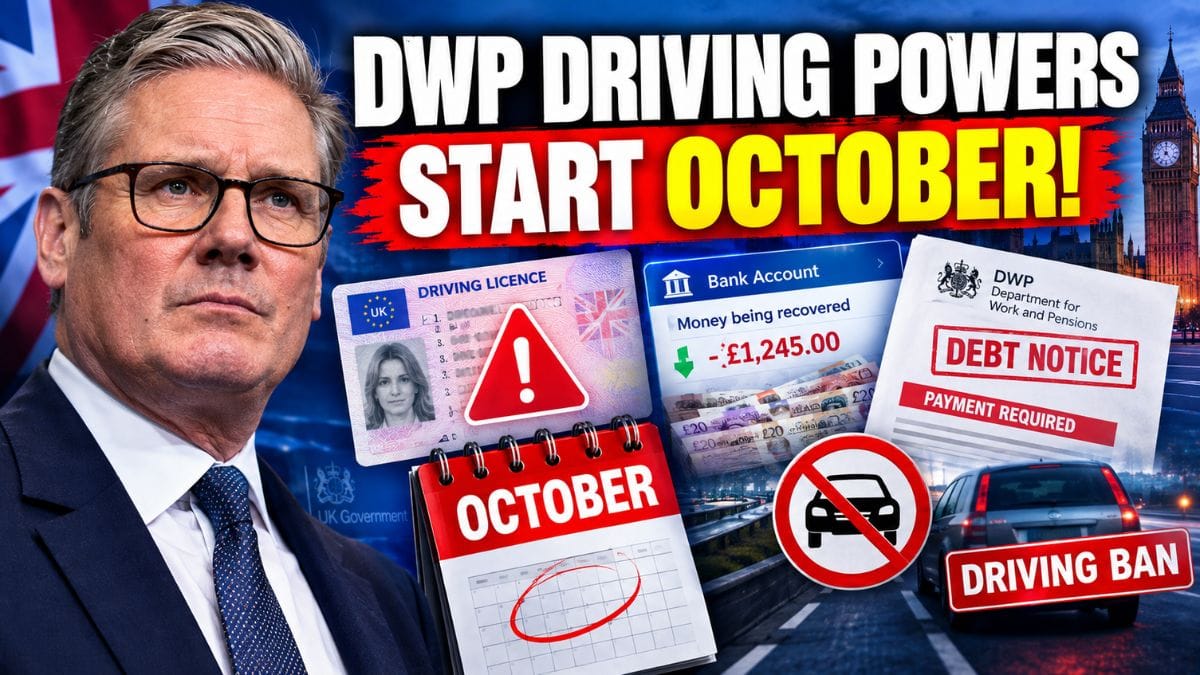
People who have stopped receiving benefits but still owe the Department for Work and Pensions money could face tougher recovery action from October 2026. In serious cases, that could include a court order preventing them from driving.
There is an important detail behind the October date. The powers came into force on 24 June 2026 under the Public Authorities (Fraud, Error and Recovery) Act 2025. October marks the planned start of a gradual enforcement rollout. The DWP set out that timetable in its June announcement.
Who could be affected?
The driving provision targets people who can repay but fail to do so without a reasonable excuse, where recovery through other means is not reasonably possible.
The DWP’s code of practice expressly excludes anyone who, when the court application is made, is entitled to and receiving a DWP benefit. The code applies to England, Scotland and Wales.
When could someone lose their licence?
A court can consider disqualification only where at least £1,000 remains outstanding. Someone with an essential need to drive, such as for their livelihood or caring responsibilities, is protected. The first order is suspended: the person can keep driving while meeting the repayment terms. These conditions are explained in the government’s announcement.
Breaching those terms without good reason can lead to an application for an immediate ban lasting up to two years. Anyone relying on an essential need to drive must explain it to the court. The code sets out that process.
What changes for bank accounts?
Direct deduction orders allow recovery from bank accounts without first obtaining a court order. They concern people off DWP benefits whose debts cannot suitably be recovered through PAYE wages. Affordability checks and notice requirements apply, with opportunities to challenge the order. If an assessment finds no means to repay, neither direct deduction nor driving-disqualification recovery should proceed at that time. These safeguards appear in the code of practice.
Bank eligibility checks are a separate measure. The June announcement described those as becoming operational in future; it did not give them the October debt-enforcement timetable.
An overpayment does not automatically mean fraud
Benefit debt and benefit fraud are different issues. An overpayment can follow a mistake or a change in circumstances; deliberate false information is another matter. Simply receiving a repayment letter does not establish that someone has committed fraud.
If you think you are being overpaid, tell the office handling your benefit promptly. Universal Credit recipients can report the problem through their online account. GOV.UK’s overpayment guidance explains the reporting process and says you may have to return money paid in excess of your entitlement.


What to do if a repayment letter arrives
Start by checking the reason for the debt and the amount outstanding. The Repay and manage benefit money you owe service lets you view your balance, the reason for repayment and your payment history. If you have stopped receiving benefits and have been invited to use the service, you can also arrange or manage a payment plan.
If the overpayment decision looks wrong, check the challenge instructions straight away. You can usually ask for mandatory reconsideration within one month of receiving the overpayment letter. This means asking for the decision to be looked at again. Follow the instructions for your particular benefit, as some use a different process. The official overpayment guide explains where to start.
If you accept the debt but cannot manage the repayments, contact DWP Debt Management to discuss what you can afford. Its published number is 0800 916 0647, available Monday to Friday, 8am to 7:30pm. The repayment guidance also lists accessible contact options.
Have your letter and a clear picture of your household budget to hand. Explain what is making repayment difficult, and keep a record of any arrangement you agree.