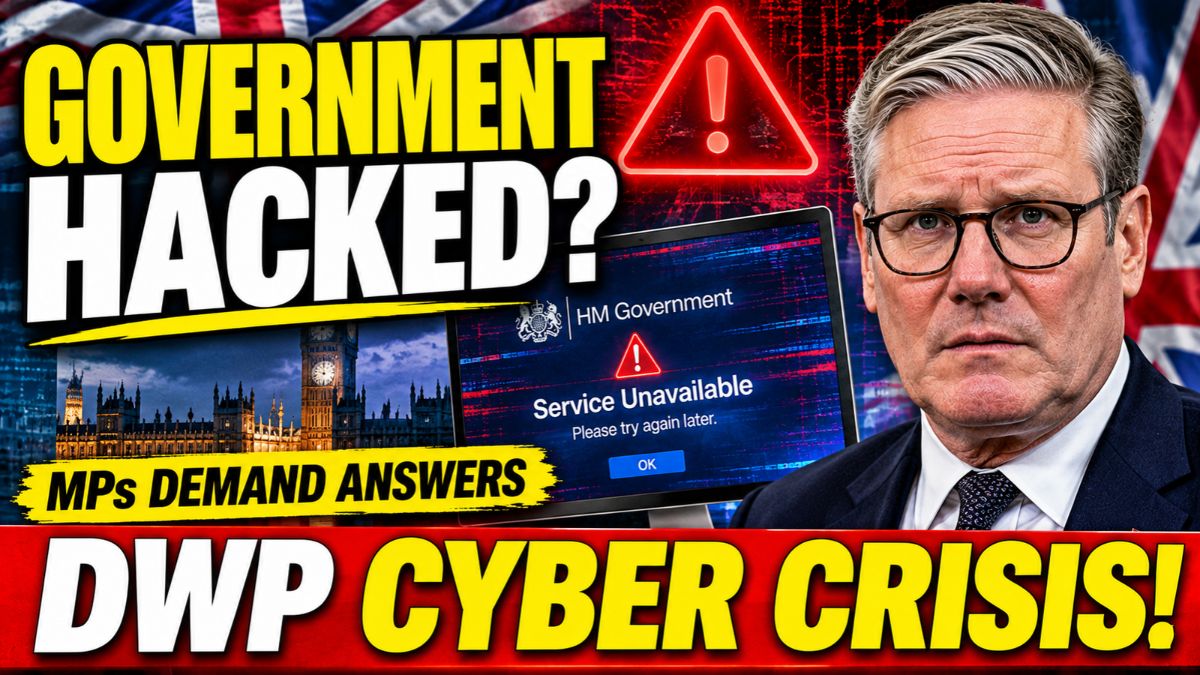
A serious cybersecurity incident affecting the Department for Work and Pensions (DWP) has prompted renewed questions about the security of the UK’s digital public services. The department temporarily took several online services offline after detecting unusual activity, leaving millions of benefit claimants unable to access their accounts or complete certain online tasks.
The disruption affected services used by Universal Credit claimants, pensioners, and people applying for disability support. Although the government confirmed that regular benefit and pension payments would continue as normal, the incident raised concerns about the resilience of systems that handle sensitive personal information.
Government officials have not confirmed whether the disruption resulted from a malicious cyberattack. However, ministers acknowledged the seriousness of the incident, while cybersecurity specialists and MPs called for stronger protection of public infrastructure.
Incident
Work and Pensions Secretary Pat McFadden described the disruption as a serious cyber incident. The DWP said unusual activity was identified on Thursday, prompting officials to take some public-facing services offline as a precaution.
The decision affected several online platforms, including Universal Credit accounts, pension services, and disability benefit applications. Users attempting to sign in were met with error messages, while others could not access their online journals or complete applications.
The department said the shutdown was intended to protect government systems and personal information while cybersecurity teams investigated the situation.
McFadden said officials had taken the appropriate action by temporarily disconnecting affected systems. He also confirmed that regular payments to benefit recipients and pensioners had continued without interruption.
The department has not provided a detailed explanation of what caused the incident or identified anyone responsible.
Concerns
The disruption prompted questions from MPs about the government’s ability to protect essential digital services.
Dame Chi Onwurah, chair of the Commons Science and Technology Committee, described the incident as a wake-up call for the government. She said people depend on public systems for essential services and should be confident that their personal information is protected.
She also highlighted previous concerns about weaknesses in government digital infrastructure and the need for stronger data management standards.
According to Onwurah, the government cannot successfully modernise public services without addressing existing technology and security weaknesses.
Her comments reflect broader concerns about the increasing dependence on online systems for welfare administration, healthcare, taxation, and other public services.
The incident also raises questions about how quickly essential services can recover when digital infrastructure becomes unavailable.
Investigation
The DWP is working with GCHQ’s National Cyber Security Centre (NCSC) and the Government Cyber Coordination Centre to establish what happened.
Downing Street has confirmed that the investigation remains ongoing. The prime minister’s official spokesperson said there was no evidence that a malicious actor had targeted other government departments.
However, the spokesperson declined to rule out the possibility that the DWP incident involved a hack.
David Knott, the UK’s former government chief technology officer, told BBC Newsnight that he believed the language used by officials suggested a possible attack.
He pointed to the use of the term cyber incident and the decision to take citizen-facing services offline as reasons for his assessment.
However, these observations do not establish the cause of the disruption. The DWP has said it will not speculate while the investigation continues.
The Information Commissioner’s Office, the UK’s data protection regulator, has also been in contact with the department regarding the incident.
No evidence of personal data exposure had been confirmed in the government’s statements at the time of reporting.
Payments
Although several online services were unavailable, the DWP confirmed that regular benefit and pension payments were not affected.
This was particularly important for the UK’s approximately 8.4 million Universal Credit claimants, many of whom rely on their monthly payments to manage rent, food, household bills, and other essential expenses.
People who could not access their accounts were advised to try again later or use the department’s usual telephone support channels where necessary.
The government also reminded claimants that official DWP communications would never ask them to provide bank details through suspicious messages or click unfamiliar links.
Claimants can check service updates and contact information through the official DWP website on GOV.UK.
The department has not announced a confirmed timetable for restoring all affected online services.
Threats
The DWP incident comes amid growing concerns about cyber threats affecting UK businesses and public institutions.
Earlier in November, several UK meat suppliers reportedly experienced problems after cyber incidents involving software used by supermarkets across Europe. These disruptions affected refrigeration systems and raised concerns about the vulnerability of supply chains.
Retailers have also reported cybersecurity problems. Next and ASOS separately disclosed incidents involving unauthorised access to certain data.
Another notable example was the cyberattack affecting Marks & Spencer in 2025. The incident disrupted online sales for several weeks and affected parts of the retailer’s operations.
These cases demonstrate that cyber incidents can affect organisations across different industries, including retail, government, and essential services.
Suzy Pallett, president of the Black Hat cybersecurity conference, said the DWP disruption highlighted the importance of preparing for cyber incidents rather than treating them as unlikely events.
Resilience
Cybersecurity experts have increasingly emphasised the importance of resilience, which involves not only preventing attacks but also ensuring organisations can recover when systems are disrupted.
The National Cyber Security Centre has repeatedly encouraged organisations to improve their ability to identify threats, protect sensitive information, and restore services following incidents.
Dr Richard Horne, chief executive of the NCSC, has also highlighted the growing frequency and sophistication of cyber threats.
Financial regulators have recently proposed additional guidance to help financial services organisations prepare for and recover from cybersecurity incidents. Although the proposals focus on financial institutions, they reflect wider concerns about operational resilience across essential services.
For the DWP, restoring online access is only one part of the response. The department must also establish how the incident occurred, assess whether any information was exposed, and identify measures that could prevent similar disruptions.



Outlook
The DWP cyber incident has renewed attention on the security of government technology and the risks associated with delivering essential services through online platforms.
Although benefit and pension payments continued during the disruption, the temporary loss of access demonstrated how dependent millions of people have become on digital government systems.
The investigation remains ongoing, and officials have not confirmed whether the incident involved a malicious attack or whether any personal information was compromised.
For now, the priority is to restore affected services, establish the cause, and strengthen protections where necessary. The incident also provides a reminder that government digital infrastructure requires continuous investment, effective security controls, and reliable recovery arrangements.