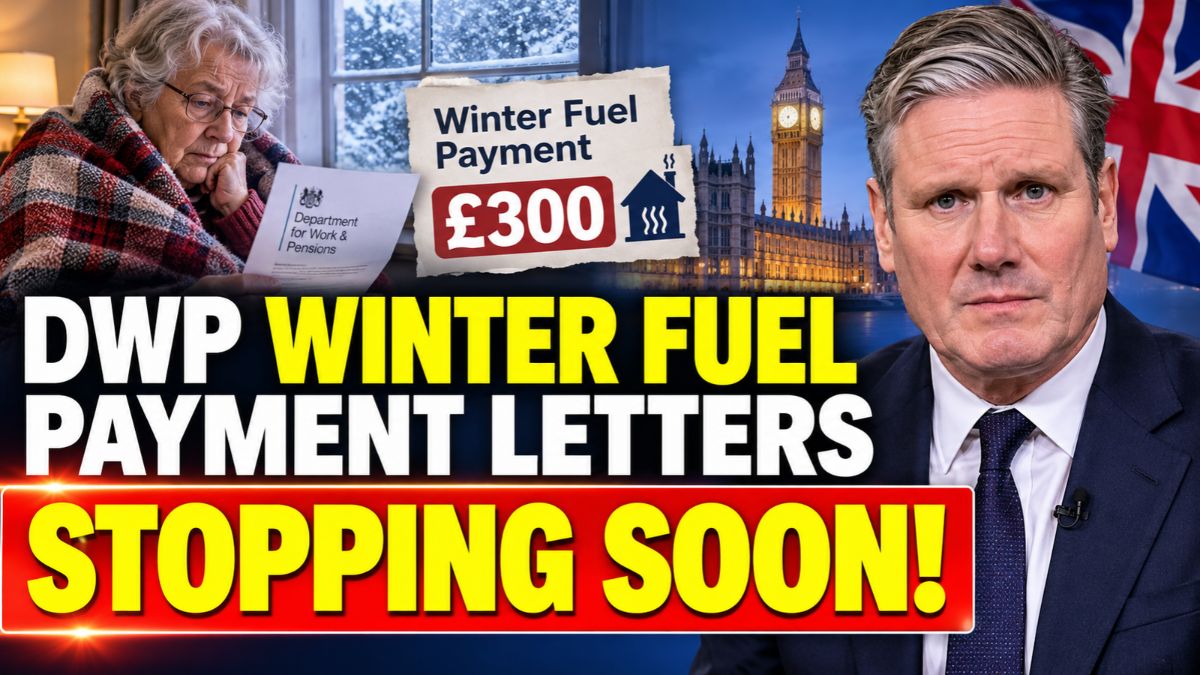
The Department for Work and Pensions (DWP) is approaching the end of its scheduled window for sending Winter Fuel Payment letters to eligible pensioners across England, Wales, and Northern Ireland. The letters, which have been arriving throughout October and November, explain how much financial support individuals can expect towards their heating costs during the winter of 2026 to 2027.
The Winter Fuel Payment is worth between £100 and £300, depending on a person’s age and circumstances. Most eligible pensioners will receive the money automatically, with payments generally expected during November or December.
As the letter distribution period comes to an end, pensioners who have not yet received confirmation may be wondering whether their payment is still on track. Knowing the eligibility requirements, payment amounts, and income rules can help households prepare for the colder months.
Letters
The DWP normally sends Winter Fuel Payment letters during October and November. These letters explain whether someone qualifies and provide information about the amount they are expected to receive.
The government has indicated that eligible pensioners should receive confirmation during this period. With November nearing its end, the scheduled letter distribution window is also approaching its conclusion.
However, not receiving a letter immediately does not necessarily mean someone has been excluded from the payment. Postal delivery times and individual circumstances can vary.
The payment itself is generally made separately from the notification letter. Most eligible recipients do not need to submit a new application because the DWP uses existing benefit and pension records to identify qualifying individuals.
Amounts
The Winter Fuel Payment for winter 2026 to 2027 ranges from £100 to £300. The amount depends on factors such as age, living arrangements, and whether someone lives alone or with another eligible person.
The payment is intended to help older households manage heating expenses during the winter months, when energy consumption generally increases.
The following table provides an overview of the payment structure described in the government guidance.
| Payment Category | Amount |
|---|---|
| Standard Winter Fuel Payment | £100 to £200 |
| Higher eligible payment | Up to £300 |
| Income threshold for recovery | More than £35,000 |
The exact amount depends on the recipient’s circumstances during the relevant qualifying period.
For detailed information about individual payment amounts, pensioners can consult the official GOV.UK Winter Fuel Payment guidance.
Eligibility
Not every pensioner automatically qualifies for the Winter Fuel Payment. The government has established specific age and residency requirements.
For winter 2026 to 2027, individuals generally need to have been born on or before June 27, 1960. They must also usually live in England, Wales, or Northern Ireland.
The qualifying week for this winter’s payment was September 21 to September 27, 2026.
Meeting the age requirement alone does not guarantee eligibility. Individuals must also satisfy the relevant residency and other qualifying conditions.
People who normally live outside England, Wales, or Northern Ireland may not qualify under the standard rules. Certain exceptions and separate arrangements may apply depending on where someone lives.
Exclusions
The DWP has outlined several circumstances in which individuals may not qualify for the Winter Fuel Payment.
These include people who were in prison throughout the qualifying week. Individuals who received free inpatient treatment in hospital throughout the qualifying week and the preceding year may also be excluded.
Immigration status can also affect eligibility. People whose immigration conditions prevent them from accessing public funds generally cannot receive the payment.
There are additional rules for pensioners living in care homes.
Someone living in a care home may still qualify, but an exclusion can apply if they receive Universal Credit, Pension Credit, or income-related Employment and Support Allowance and have lived in the care home continuously since June 29, 2026, or earlier.
These conditions are important because eligibility depends on more than age and pension status.
Income
One of the most important considerations for the 2026 Winter Fuel Payment is the £35,000 income threshold.
Pensioners with individual annual income exceeding £35,000 will generally have their Winter Fuel Payment recovered through HM Revenue and Customs (HMRC).
This means eligible individuals may initially receive the money but subsequently have to repay it through the tax system.
Importantly, the threshold applies to individual income rather than combined household income.
For example, if one partner earns £38,000 while the other earns £20,000, the higher-earning partner may have their payment recovered. The second partner’s income is assessed separately.
This distinction matters for retired couples who have different pension incomes, savings income, or other sources of earnings.
People who want to understand how recovery works can review the HMRC guidance on Winter Fuel Payment recovery.
Payments
Most eligible pensioners should receive their Winter Fuel Payment automatically. The DWP generally uses information already held through State Pension and other qualifying benefit records.
Payments are expected during November and December 2026. The timing can vary, so individuals should not assume that a delay means their payment has been rejected.
Anyone who believes they qualify but has not received their expected payment should check their eligibility and contact the relevant government department if necessary.
It is also important to keep bank account and personal details up to date with the relevant benefits office.



Scams
The DWP is also reminding pensioners to remain alert to fraudulent messages connected with Winter Fuel Payments.
Scammers may use the payment announcement to send fake emails, text messages, or make telephone calls claiming that pensioners must confirm their personal information to receive the money.
Eligible recipients generally do not need to provide new bank details or passwords through unsolicited messages to obtain the payment.
Anyone receiving an unexpected request for sensitive financial information should treat it cautiously. Official government guidance is available through GOV.UK, and pensioners should avoid clicking suspicious links or sharing security information.
As the November notification period comes to an end, pensioners should check their correspondence and understand the eligibility rules for the 2026 to 2027 Winter Fuel Payment. The support could provide useful assistance with winter heating costs, particularly for households managing higher energy bills.
However, the £35,000 individual income threshold means some recipients will have their payments recovered through HMRC. Checking official guidance and keeping personal information secure can help pensioners understand what to expect over the coming weeks.