More than one-quarter of Americans who first claimed Social Security in 2024 started receiving benefits at age 62, the earliest age generally available for retirement benefits. While claiming early can provide income sooner, it also results in a permanent reduction in monthly payments.
For retirees who rely heavily on Social Security, the difference can become significant over time. The decision to claim at 62 or wait longer depends on health, savings, employment, household finances, and expected retirement needs.
Early
Americans can generally begin collecting Social Security retirement benefits at 62. However, claiming before full retirement age (FRA) reduces the monthly benefit.
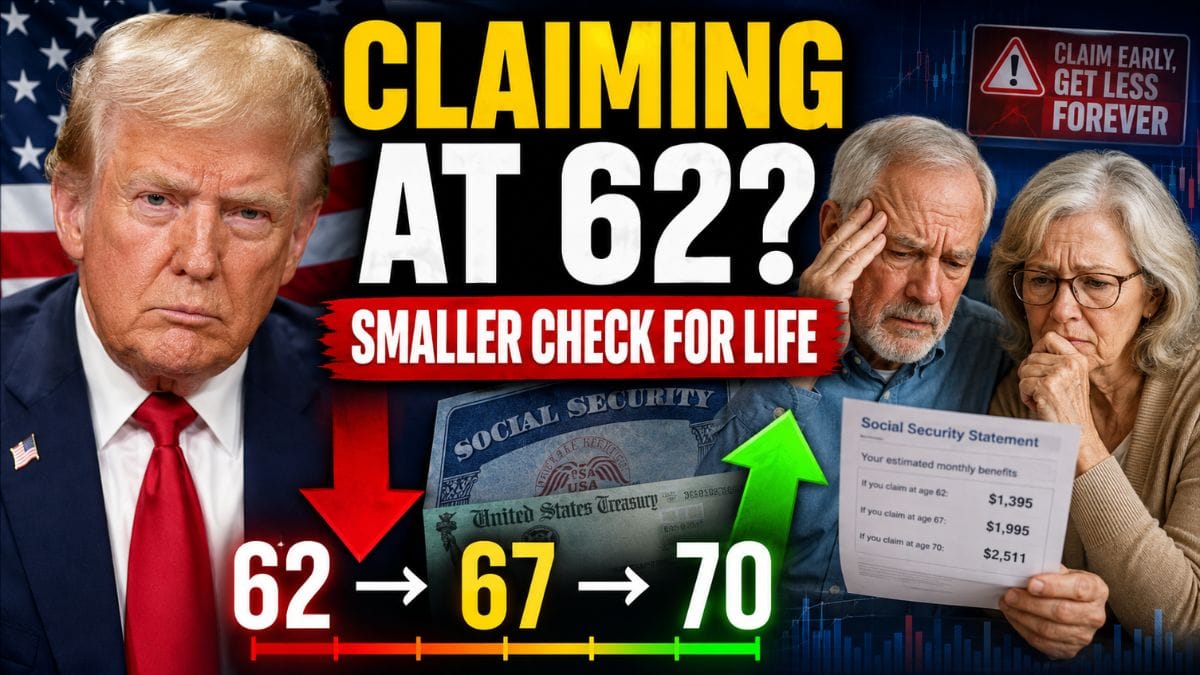
For people born in 1960 or later, full retirement age is 67. Someone who claims at 62 can receive a benefit that is up to 30% lower than the amount available at full retirement age.
About 26% of the 3.25 million people who first claimed Social Security benefits in 2024 did so at age 62, according to Social Security Administration data analyzed by Investopedia.
That share has fallen substantially over the past several decades. In the 1990s, more than 60% of new beneficiaries claimed at 62. The 2024 figure was the lowest in at least 40 years.
Trends
The decline in early claiming may indicate that more workers are choosing to wait for larger benefits. However, retirement decisions are not always made according to a financial plan.
The Employee Benefit Research Institute’s 2026 Retirement Confidence Survey found that Americans typically expect to retire at 65, while the median actual retirement age is 62.
That difference matters because leaving work early can affect both retirement savings and the timing of Social Security claims. Many people who retire earlier than expected say the decision was outside their control.
Health problems and layoffs are among the reasons workers may leave the workforce earlier than planned. For those households, claiming Social Security at 62 may be less about maximizing benefits and more about replacing lost income.
Reductions
The primary financial cost of claiming Social Security early is a smaller monthly payment that generally continues for life.
A person who claims at 62 receives less each month than that same person would receive by waiting until full retirement age. The reduction can become increasingly important as retirement continues, especially for people with limited savings or other income sources.
In December 2025, the average monthly payment for a 62-year-old who had recently started receiving benefits was $1,335, according to the Social Security Administration. The average benefit for new beneficiaries who were 67 was about $2,521.
These figures are averages rather than estimates of what every retiree will receive. Social Security benefits are based largely on an individual’s earnings history and claiming age.
Still, the difference illustrates why the timing of a claim can have a meaningful effect on retirement income.
Delaying
Waiting beyond full retirement age can increase the monthly Social Security benefit. For people who have reached FRA, retirement benefits generally increase by 8% for each year they are delayed, up to age 70.
This can make waiting attractive for people who have enough savings or other income to cover expenses while postponing Social Security.
The higher payment can also be useful later in retirement, when medical costs and other expenses may increase. A larger guaranteed monthly benefit may provide additional income for retirees who live for many years after leaving work.
However, delaying benefits also means giving up payments that could have been collected earlier. The financial value of waiting therefore depends partly on how long someone expects to receive benefits and what other resources are available.
Income
Social Security is an important source of retirement income for a large share of older Americans.
A 2024 Census Bureau report found that 42% of older Americans relied on Social Security for at least half of their income. Another 14% depended on Social Security for 90% or more of their income.
The EBRI survey also found that more than nine in 10 retirees considered Social Security either a major or minor source of retirement income.
For households in this position, the claiming decision can have a direct effect on their ability to pay recurring expenses. A permanently lower benefit may leave less money available for housing, food, health care, and other costs.
Choices
Claiming at 62 is not necessarily a poor financial decision. For some people, it may be the practical choice.
Someone who has stopped working because of health problems or a layoff may need Social Security income immediately. Others may prefer to use their benefits earlier because of personal circumstances or concerns about having enough income to meet current expenses.
Waiting can make more sense for someone who is healthy, has sufficient savings, continues working, or expects Social Security to provide a large share of their income later in life.
The decision can also affect married couples differently because each spouse has a separate earnings and claiming history. Household planning may therefore be more useful than looking at one person’s benefit in isolation.
Social Security claiming is ultimately a personal financial decision rather than a single rule that applies to every retiree. Starting at 62 provides income earlier but usually means accepting a permanently smaller monthly payment. Waiting until full retirement age or beyond can produce a larger benefit, but requires enough resources to cover expenses during the waiting period. Understanding that trade-off can help retirees choose a claiming strategy that fits their health, finances, and long-term income needs.
FAQs
Can I claim Social Security at 62?
Yes, retirement benefits can generally start at age 62.
How much is reduced at 62?
Benefits can be reduced by up to 30% versus claiming at 67.
What is full retirement age?
For people born in 1960 or later, full retirement age is 67.
How much does delaying increase benefits?
Benefits generally rise 8% yearly after FRA until age 70.



Why do people claim at 62?
Health, layoffs, finances, and personal needs can drive early claims.