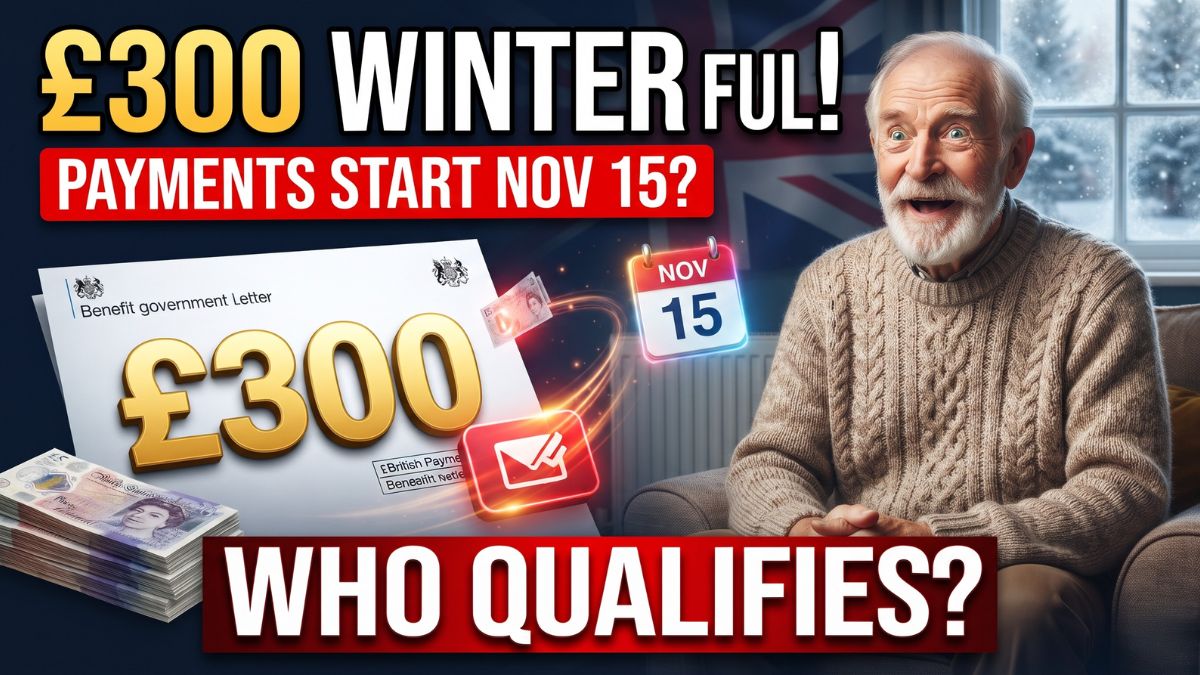
The Department for Work and Pensions (DWP) has outlined when eligible pensioners can expect to receive their Winter Fuel Payment for the 2026-27 winter season. Payments are scheduled to begin from mid-November 2026, with eligible households potentially receiving between £100 and £300 to help cover heating expenses.
The announcement comes as older people across England, Wales and Northern Ireland prepare for the colder months. For many pensioners, the Winter Fuel Payment provides additional support with energy bills, particularly when household heating costs rise during winter.
According to the information provided in the DWP’s latest guidance, most eligible recipients will receive the payment automatically. Letters are expected to arrive during October and November, explaining whether a person qualifies, how much they will receive and how the money will be paid.
However, not everyone who meets the age requirement will automatically qualify. Eligibility also depends on residency, circumstances during the qualifying week and other conditions.
The payment is also subject to a £35,000 income threshold. People whose taxable income exceeds this amount may have to repay the Winter Fuel Payment through the tax system.
Here is what pensioners need to know about the expected payment schedule, eligibility requirements, income rules and circumstances in which a claim may be necessary.
Payment
The Winter Fuel Payment is an annual, tax-free government payment intended to help eligible older people manage heating costs during winter.
For the 2026-27 winter season, the payment is expected to range from £100 to £300, depending on a person’s circumstances.
The DWP’s guidance states that payments will begin from mid-November 2026 onwards. The supplied information identifies 15 November as the date associated with the start of payments.
However, this should not be interpreted as a guarantee that every eligible pensioner will receive the money in their bank account on that exact date.
Payments are generally processed over a period, and the date on which an individual receives the money may depend on their circumstances and payment arrangements.
Most eligible people will receive the money automatically into the same bank or building society account used for their State Pension or other qualifying benefits.
The DWP is also expected to send letters during October and November. These letters should explain the amount payable and provide information about the payment process.
For people who have previously received the Winter Fuel Payment, the process is generally straightforward. They may not need to submit a new application if their circumstances remain unchanged and they continue to meet the eligibility requirements.
The official Winter Fuel Payment guidance provides information about the payment, eligibility and claiming arrangements.
Eligibility
The age requirement is one of the main conditions for receiving the Winter Fuel Payment.
For the 2026-27 winter period, the supplied DWP guidance states that people born on or before 27 June 1960 may qualify.
However, meeting the age requirement does not automatically guarantee payment.
Eligibility also depends on a person’s circumstances during the qualifying week, which is stated as 21 to 27 September 2026.
The qualifying week is used to determine whether an individual meets the relevant conditions for the winter payment.
People who usually live in England, Wales or Northern Ireland may qualify if they meet the age and other eligibility requirements.
However, certain circumstances can prevent someone from receiving the payment, even if they were born before the qualifying date.
These include:
- Usually living outside England, Wales or Northern Ireland.
- Visiting England, Wales or Northern Ireland during the qualifying week while normally living elsewhere.
- Receiving free hospital treatment for the entire qualifying week and the preceding year.
- Having immigration restrictions that prevent access to public funds.
- Being in prison for the entire qualifying week.
These conditions are intended to determine whether someone meets the requirements for the payment.
The DWP also applies separate rules to people living in care homes. Their eligibility may depend on whether they receive certain benefits and when they moved into the care home.
Pensioners should therefore review the official guidance rather than relying only on their date of birth.
Automatic Payments
Most people who qualify for the Winter Fuel Payment do not need to make a claim.
The DWP generally identifies eligible recipients through its existing benefit records and sends the money to the bank account used for their regular payments.
This means many pensioners who already receive the State Pension or another qualifying benefit may receive the Winter Fuel Payment without completing additional paperwork.
However, there are circumstances in which a claim may be necessary.
According to the supplied guidance, people may need to claim if:
- They have deferred their State Pension.
- They do not receive another DWP benefit.
- The DWP specifically asks them to make a claim.
These conditions are important because some eligible people may not be identified automatically through the usual payment process.
Anyone who believes they qualify but does not receive a letter should check the official guidance and contact the relevant department if necessary.
It is also important to ensure that personal information is up to date. Changes in address, bank details or benefit circumstances can affect the payment process.
People should avoid assuming that the absence of a letter automatically means they are ineligible. Checking the requirements can help identify whether a claim or further action is needed.
Income
One of the most significant changes highlighted in the supplied information concerns the £35,000 income threshold.
People whose taxable income exceeds £35,000 for the relevant tax year may have to repay their Winter Fuel Payment through the tax system.
This means the payment may initially arrive in a person’s bank account, but HMRC could subsequently recover the amount if their income exceeds the threshold.
The repayment is generally handled through the tax system rather than by requiring every recipient to return the money immediately.
For people who pay tax through PAYE, HMRC may adjust their tax code to collect the amount owed.
This can increase the tax deducted from wages, salary or pension income.
If HMRC cannot recover the full amount through the tax code during the tax year, it may issue a tax calculation explaining the remaining amount due.
The amount of tax recovered depends on the payment received and the individual’s tax circumstances.
People can use the official HMRC Winter Fuel Payment income checker to assess whether their income may exceed the threshold.
The income calculation should be based on the relevant taxable income for the tax year before deductions, as specified in the official guidance.
This is particularly important for pensioners who receive income from multiple sources, including:
- State Pension
- Private pensions
- Employment
- Certain taxable investments
- Other taxable income
A person’s total income may be higher than their regular monthly pension payment, so checking the relevant tax-year figure is important.
Repayment
The supplied guidance also highlights how HMRC may recover Winter Fuel Payments through changes to a person’s tax code.
For some people, the recovery process could involve more than one payment being collected through their tax code at the same time.
For example, if HMRC is already collecting an amount relating to a previous Winter Fuel Payment, it may adjust the tax code to begin collecting the amount associated with the 2026 payment.
The guidance provides an example involving a person who receives a £200 Winter Fuel Payment in both years.
In that situation, the person could pay approximately £30 to £33 more tax each month if HMRC is collecting amounts associated with both payments.
This is an example rather than a fixed repayment amount that applies to everyone.
The actual amount depends on the payment received, the tax code and the individual’s circumstances.
The supplied information also states that HMRC may change a person’s tax code again in April 2027 if they have not opted out of receiving the Winter Fuel Payment.
This could allow HMRC to continue collecting the amount associated with the 2026 payment while beginning collection in advance for the 2027 payment.
For people whose income exceeds the threshold, understanding this process can help avoid unexpected changes to their monthly take-home income.
The official HMRC tax overpayments and underpayments guidance explains how tax adjustments and repayment calculations may work.
Opt Out
People who expect their taxable income to exceed £35,000 may want to consider whether receiving the Winter Fuel Payment is appropriate for their circumstances.
The DWP provides an option to opt out of receiving the payment.
This may be relevant to pensioners who would otherwise receive the money automatically but expect HMRC to recover the full amount through the tax system.
Opting out could help avoid receiving a payment that would subsequently need to be repaid.
However, people should review the official rules before making a decision. The timing of an opt-out request and the relevant tax year can affect how the payment is handled.
The DWP’s official opt-out service provides information about how to decline the payment.
People who have already received a payment should not assume that opting out later will automatically cancel any repayment obligation. They should check the applicable instructions and contact HMRC or the DWP if they need clarification.
Care Homes
People living in care homes may also qualify for the Winter Fuel Payment, but additional eligibility conditions apply.
The supplied guidance states that someone living in a care home may be ineligible if both of the following conditions apply:
- They receive Universal Credit, Pension Credit or income-related Employment and Support Allowance.
- They lived in a care home for the entire period beginning on or before 29 June 2026.
These rules are intended to account for circumstances in which a person’s accommodation and heating costs may already be supported through other arrangements.
However, living in a care home does not automatically mean someone cannot receive the Winter Fuel Payment.
Eligibility depends on the person’s benefits, residence and other circumstances.
People who live in residential care should review the relevant guidance carefully rather than assuming they qualify or are excluded.
Payment Schedule
The expected payment arrangements for the 2026-27 Winter Fuel Payment can be summarised as follows.
| Important Detail | Expected Arrangement |
|---|---|
| Payment amount | £100 to £300 |
| Eligible birth date | On or before 27 June 1960 |
| Qualifying week | 21 to 27 September 2026 |
| Letters | October and November 2026 |
| Payment start | Mid-November 2026 onwards |
| Automatic payment | Most eligible recipients |
| Income threshold | £35,000 taxable income |
| Repayment method | Through HMRC’s tax system, where applicable |
These details reflect the information supplied in the DWP announcement. Individual payment dates and eligibility can vary, so recipients should consult the official guidance for confirmation.
The payment start date should also be distinguished from the date on which every eligible person receives their money. Payments may be processed over several days or weeks.
For pensioners who are expecting the payment, checking their bank account and any correspondence from the DWP can help establish whether the payment has been issued.



Outlook
The Winter Fuel Payment remains an important source of seasonal financial support for eligible pensioners across England, Wales and Northern Ireland.
The expected start of payments in mid-November 2026 gives households an indication of when they may receive assistance with winter heating expenses. However, the payment is not universal, and eligibility depends on more than age alone.
The £35,000 income threshold is another important consideration. While some pensioners may receive the payment automatically, those with higher taxable incomes could have the amount recovered through HMRC.
People who have deferred their State Pension, do not receive another DWP benefit or are asked to make a claim should also review the application requirements.
For most eligible recipients, the process is expected to remain automatic. Letters issued during October and November should provide further information about the amount payable and how the payment will be made.
The most useful step for pensioners is to check their eligibility, review their taxable income and ensure their personal details are up to date.
The Winter Fuel Payment can help households manage seasonal heating expenses, but understanding the rules is essential to avoid unexpected repayment obligations or delays.