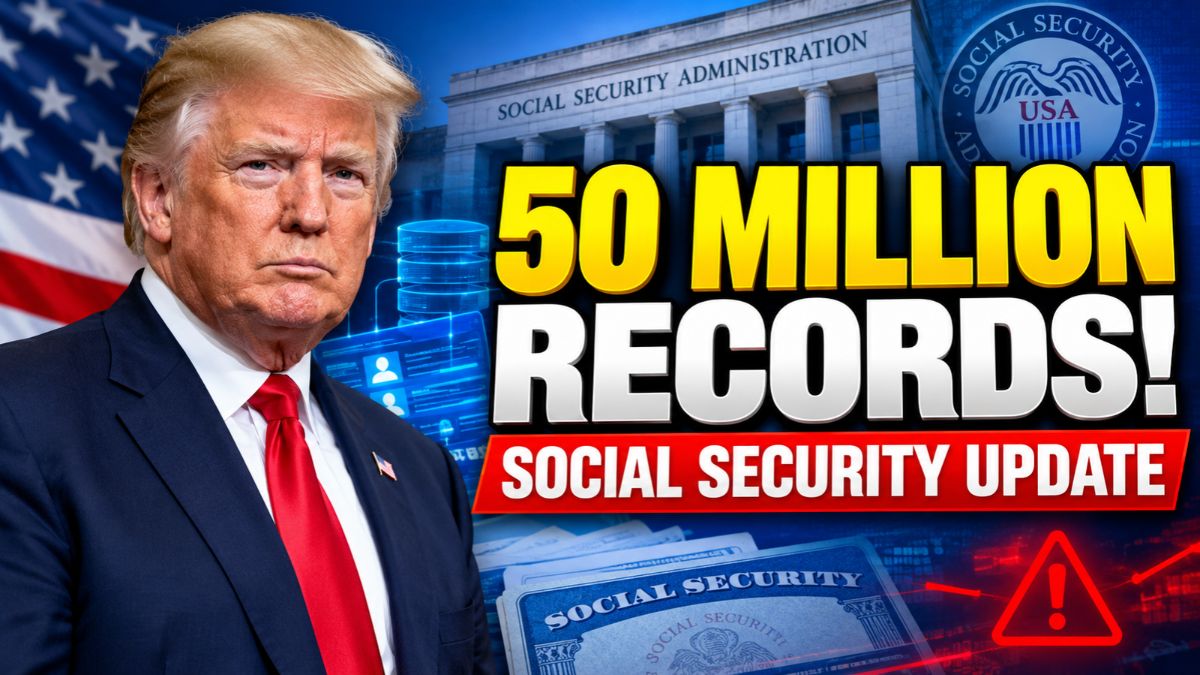
The US Social Security Administration (SSA) has updated millions of records as part of a major effort to improve the accuracy of information used to administer benefits and verify identities. The agency says it has added 17 million missing dates of death and updated citizenship information in approximately 25 million records. It is also working to correct another 8.5 million records containing inaccurate citizenship details.
The scale of the changes has raised questions about whether Social Security recipients need to check their information, whether monthly payments could be affected, and how the agency is addressing errors in its databases. For millions of Americans who depend on Social Security retirement, disability, or survivor benefits, understanding the purpose of the cleanup is important.
However, the figures need context. The SSA has not announced that the latest corrections have changed beneficiaries’ payment amounts or eligibility. It has also not introduced a new requirement for recipients to submit documents or update their information because of the cleanup.
The initiative is intended to improve government records, but its practical effects on individual beneficiaries will depend on the accuracy of their existing information and whether any specific record requires further correction.
Updates
The SSA describes the initiative as the most comprehensive records cleanup in its 91-year history. The effort focuses on two important categories of information: dates of death and citizenship status.
According to the agency, it added 17 million missing dates of death to its records. It also updated citizenship information associated with approximately 25 million records, while another 8.5 million records remain under review for inaccurate citizenship details.
The changes affect records associated with nearly 15% of active Social Security numbers, according to the agency. However, the SSA has not provided a complete breakdown showing how many unique individuals were affected or how many of the corrected records belong to current beneficiaries.
This distinction matters because a Social Security number can remain in government databases even when its holder is no longer receiving benefits. Not every record included in the cleanup necessarily represents an active recipient of monthly payments.
The agency’s announcement therefore should not be interpreted as meaning that millions of current beneficiaries have had their benefits changed or that everyone whose information was reviewed must take action.
For official information about the agency and its responsibilities, readers can consult the Social Security Administration’s official website.
Figures
The numbers released by the SSA provide an overview of the scale of the work. They also show that the agency is addressing both completed updates and records that still require attention.
| Category | Reported figure | Status |
|---|---|---|
| Missing dates of death | 17 million | Added to records |
| Citizenship information | About 25 million records | Updated |
| Inaccurate citizenship information | 8.5 million records | Further corrections underway |
| Active Social Security numbers affected | Nearly 15% | Agency estimate |
These figures describe separate categories of recordkeeping activity and should not automatically be added together to calculate the total number of people affected. The available announcement does not establish how much overlap exists between the groups.
The distinction between completed and ongoing work is also important. Although the SSA says it has updated citizenship information for approximately 25 million records, it is still working to correct another 8.5 million records.
That means the overall initiative involves both changes already made and additional corrections that remain in progress.
For beneficiaries, the figures alone do not indicate whether an individual record is accurate or whether a person’s benefits are affected. Those questions require information about the specific record and the rules applicable to the individual.
Sources
The agency relied on information from its own systems and other federal departments to identify and correct discrepancies. According to the announcement, information from the US State Department helped the SSA add missing dates of death, while data from the Department of Homeland Security supported updates to citizenship records.
Using information from multiple agencies can help identify inconsistencies that might not be apparent within a single database. However, data matching also requires appropriate verification to ensure that information is assigned to the correct person.
A missing date of death, for example, is not necessarily evidence of fraud. It may reflect incomplete records, delayed reporting, or information that has not been properly matched. Similarly, inaccurate citizenship information may result from outdated details or discrepancies between government databases.
The SSA says it has introduced stronger internal controls to reduce future data-entry errors. These controls are important because even a relatively small number of incorrect records can create difficulties when government agencies rely on those records to make administrative decisions.
Readers can find additional information about federal citizenship and immigration records through the US Department of Homeland Security. Information about consular services and the State Department’s responsibilities is available at the US Department of State.
These official resources provide context about the departments involved, although they do not independently establish the status of any particular Social Security record.
Purpose
Social Security records support a range of administrative functions. They help the government verify identities, maintain earnings histories, determine eligibility for benefits, and manage payments to recipients and eligible family members.
Accurate records are particularly important when an individual’s circumstances change. Retirement, disability, death, changes in certain eligibility conditions, and updates to personal information can all require government records to be reviewed.
When the information held by different agencies does not match, the discrepancy may create delays or require additional checks. A records cleanup is intended to reduce these inconsistencies and make the information more reliable.
The initiative also relates to efforts to prevent improper payments. Government agencies need accurate information to establish whether payments are being made to eligible recipients and whether benefits should be adjusted or stopped under applicable rules.
However, inaccurate information does not automatically establish that someone has received an improper payment. A record may be incomplete or incorrect without any wrongdoing by the person associated with it.
The distinction is important when evaluating the effects of the SSA’s announcement. Improving data quality can support better administration, but the announcement does not provide evidence that the corrections have produced a particular amount of savings or identified a specific level of fraud.
Deaths
Death records are an important part of Social Security administration because eligibility for benefits generally changes when a recipient dies.
When the agency receives reliable information that a beneficiary has died, it can update the relevant record and administer payments according to the applicable rules. Accurate death information also helps the SSA assess claims for survivor benefits from eligible family members.
Missing or delayed death information can complicate this process. If a death is not recorded promptly, the agency may need to review whether payments continued after the person’s death and whether any adjustment is required.
The opposite problem can be equally serious. If a living person is incorrectly recorded as deceased, the error may interfere with benefits, identity verification, or other administrative processes.
For someone who relies on a monthly Social Security payment to cover housing, food, utilities, or medical expenses, an incorrect death designation could create significant practical difficulties. Resolving such a mistake may require the person to contact the agency and provide information confirming their identity and circumstances.
The SSA’s announcement about adding 17 million missing dates of death should not be interpreted as evidence that 17 million people were incorrectly receiving benefits. The figure describes dates added to records, not a confirmed count of improper payments.
It is also important to distinguish between records containing missing information and records that contain incorrect information. The two categories present different administrative challenges and may require different corrective steps.
Citizenship
Citizenship information can be relevant when government agencies verify identity or assess eligibility for particular programs. Correcting inaccurate details can help ensure that records reflect the information available to the relevant authorities.
However, citizenship and Social Security eligibility are not interchangeable concepts. Eligibility for Social Security benefits depends on the type of benefit, an individual’s work history where applicable, and the legal requirements governing the claim. Some noncitizens may qualify for certain benefits when they meet the relevant conditions.
For that reason, an update to citizenship information does not, by itself, establish that a person’s benefits should begin, stop, or change.
The SSA has reported that it updated citizenship information for approximately 25 million records and is working on another 8.5 million records with inaccurate details. The agency has not announced that these changes automatically alter the eligibility of everyone whose information was reviewed.
Anyone who receives a notice about their status should read it carefully and contact the SSA if clarification is needed. It is important to distinguish an ordinary record correction from a formal decision about benefit eligibility.
Beneficiaries should also avoid assuming that an online record discrepancy necessarily indicates a problem with their legal status. Where information appears inconsistent, the appropriate response is to seek clarification from the agency rather than draw conclusions from the database entry alone.
Concerns
The cleanup comes amid wider scrutiny of the SSA’s handling of death records and the reliability of changes made to its databases.
Earlier in 2025, a former senior SSA official alleged in a whistleblower disclosure that Department of Government Efficiency staff had pushed the agency to mark as many as 2.7 million people as deceased without sufficient evidence.
The former official also alleged that more than 6,000 people were incorrectly recorded as dead in a separate update in April 2025. The SSA denied adding the proposed 2.7 million names to its Death Master File.
These allegations have drawn attention to the importance of verification procedures and oversight when government agencies make large-scale changes to identity records. Errors in death records can have serious consequences, particularly when they affect people who depend on regular benefit payments.
At the same time, allegations about earlier database changes should be distinguished from the latest cleanup announcement. The available information does not establish that the new corrections involved the people mentioned in those earlier allegations.
The reported figures also do not establish how many records, if any, required a benefit payment to be corrected or restored. Such conclusions would require additional information from the agency.
A useful assessment of the initiative will depend on more than the number of records updated. The accuracy of the corrections, the safeguards used to prevent mistaken matches, and the process for resolving disputes will also matter.
Benefits
For current beneficiaries, the central question is whether the cleanup affects monthly payments. At present, the SSA has not announced that the latest changes have altered benefit amounts or eligibility as a general consequence of the initiative.
Social Security payments are governed by specific eligibility and payment rules. A record correction may help the agency administer those rules accurately, but a correction alone does not necessarily change the amount a person is entitled to receive.
For example, adding a missing date of death to a historical record does not mean that a living beneficiary’s payment should change. Similarly, updating citizenship details does not automatically establish that an individual no longer qualifies for a particular benefit.
If a correction does affect an individual case, the outcome will depend on the circumstances and the rules applicable to that benefit. The agency’s broader announcement does not provide enough detail to predict the result for any particular recipient.
Beneficiaries should therefore rely on official notices and direct communication with the SSA rather than assume that the cleanup will affect their payments.
It is also worth remembering that retirement benefits, Social Security Disability Insurance, Supplemental Security Income, and survivor benefits have different eligibility requirements. A change relevant to one type of record does not necessarily have the same implications for another program.
Checks
The SSA has not announced a new requirement for beneficiaries to review their records or submit additional documentation because of the cleanup. Nevertheless, checking personal information periodically can help people identify discrepancies before they become more difficult to resolve.
People can use their online my Social Security account to review available information, including earnings history and, for those receiving benefits, certain payment details.
The official portal is available through the Social Security Administration website.
When reviewing information, pay particular attention to whether your earnings history appears consistent with your work experience and whether available benefit details match your understanding of your payments.
If something appears incorrect, contact the SSA through its official channels. Explain the discrepancy and ask what information or documentation, if any, is required to investigate it.
If a payment stops unexpectedly, do not assume the records cleanup is responsible. Contact the agency to establish the reason for the interruption and determine the appropriate next steps.
People should also be cautious about unsolicited calls, messages, or emails claiming that they must immediately verify their Social Security number because of the cleanup. Use official SSA contact details rather than links or phone numbers provided in unexpected messages.
Outlook
The Social Security Administration’s records cleanup represents a substantial effort to improve the consistency of information used in government administration. Adding missing death dates, updating citizenship records, and strengthening internal controls could help reduce discrepancies and support more accurate recordkeeping.
Still, the number of records updated is only one measure of the initiative’s effectiveness. The reliability of the underlying information, the quality of verification procedures, and the ability to correct mistakes fairly will be equally important.
For beneficiaries, there is currently no announced new documentation requirement or general change to benefits resulting from the cleanup. Reviewing personal information through official SSA services remains a practical precaution, particularly for anyone who notices an unexpected payment issue or an incorrect record.
The key point is that a large-scale data update does not automatically mean that an individual’s benefits have changed. Any effect on a particular beneficiary will depend on the information involved and the rules governing their case. Until the SSA provides further details, beneficiaries should rely on official guidance and seek clarification directly if they encounter a problem.
FAQs
Why did Social Security update millions of records?
The SSA aims to improve record accuracy and strengthen identity verification.
How many Social Security records were updated?
The SSA reported 17 million death-date additions and 25 million citizenship record updates.
Will the cleanup affect Social Security payments?
The SSA has not confirmed any payment changes resulting from the cleanup.
Do beneficiaries need to submit new documents?
The SSA has not announced a new documentation requirement for beneficiaries.