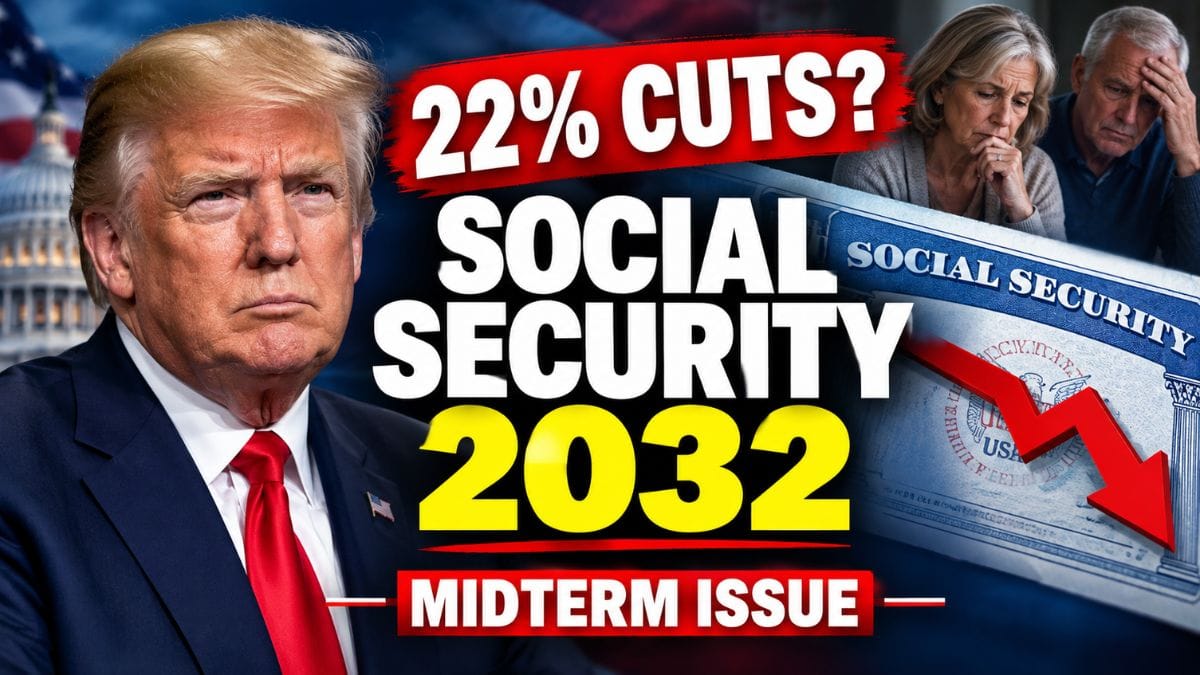
Social Security’s long-term funding problem could become an important issue in the 2026 midterm elections. Under the Social Security Board of Trustees’ projection cited in the source material, the program’s trust fund could be depleted in the final three months of 2032. Without congressional action, benefits would then face an estimated across-the-board reduction of 22%.
For millions of retirees, survivors and dependents, such a reduction could mean hundreds of dollars less in monthly income. That makes the issue more than a distant budget debate. It could directly affect household finances, particularly for Americans who rely heavily on Social Security.
The timing also matters. Senators elected in November 2026 would still be serving when the projected 2032 depletion date arrives. As a result, Social Security’s financing could become part of discussions about taxes, benefits, federal spending and retirement security during the midterm campaign.
Voters
A survey cited in the source material indicates that voters want candidates to address Social Security’s funding challenge. The Peterson Foundation surveyed 2,500 registered voters nationwide between August 20 and August 27.
More than 8 in 10 respondents said they would be more likely to support a candidate who had a plan to prevent automatic Social Security benefit reductions. By comparison, 17% preferred candidates who promised not to make changes to Social Security.
The numbers changed further when respondents were informed about the potential 2032 reductions. According to the survey, 91% supported Social Security reforms after learning that automatic cuts could begin if Congress does not act.
The findings also connect Social Security with broader household concerns. About 85% of respondents said addressing the program’s finances is more important because inflation and living costs remain concerns.
Impact
The potential reduction would not be confined to particular states or groups of retirees. An analysis cited from the Committee for a Responsible Federal Budget estimates that approximately 63 million Americans could be affected.
That figure includes about 54 million retired workers and roughly 9 million survivors and dependents. The analysis estimates an average reduction of around $500 per month.
For someone receiving Social Security as a major source of retirement income, losing several hundred dollars each month could require significant changes to a household budget. A reduction of that size could affect spending on groceries, housing, health care and other recurring expenses.
The actual impact would vary from person to person because Social Security benefits differ based on individual earnings and circumstances.
States
Several closely watched states could have millions of beneficiaries affected by a future reduction. The figures cited by CRFB show the potential scale of the issue.
| State | Potentially affected | Average monthly reduction |
|---|---|---|
| Georgia | 1.7 million | $487 |
| Michigan | 2 million | $523 |
| North Carolina | 2 million | $501 |
| Ohio | 2.2 million | $487 |
| Texas | 4.3 million | $489 |
Texas has the largest number of potentially affected recipients among these five states, based on the figures provided. Michigan has the highest estimated average monthly reduction among them.
These estimates illustrate why Social Security can be relevant to voters across age groups. Current beneficiaries are directly concerned about their payments, while younger workers may focus on the program’s future financing and the taxes or benefit changes that could be considered.
Solutions
There is no single policy mechanism required to address Social Security’s projected funding gap. The survey cited in the source material found support for several approaches.
About 72% of respondents supported increasing the payroll tax cap by an additional 1% on income above $184,500. Another 66% supported limiting annual Social Security benefits so that no retired couple receives more than $100,000 per year.
Around 65% backed reducing benefits received by the top 20% of earners. A similar 65% supported combining gradual benefit adjustments with tax increases.
These proposals would affect different groups in different ways. Raising the payroll tax cap would primarily affect higher-income workers, while changes to benefits could alter retirement income for particular groups.
Borrowing
Borrowing received less support in the survey. Only 29% of respondents supported borrowing additional money to prevent the projected benefit reductions.
The survey also found that 68% of battleground-state voters opposed adding to the federal deficit. The findings indicate that voters are considering not only whether Social Security should be protected from automatic reductions, but also how Congress should address the program’s long-term financing.
That leaves lawmakers facing several policy choices. The funding gap could be addressed through additional revenue, benefit changes, a combination of measures, or another approach.
COLA
Cost-of-living adjustments are another part of the Social Security debate. One proposal discussed by lawmakers and analysts is a flat-rate COLA, under which beneficiaries would receive the same dollar increase rather than having the adjustment calculated under the existing approach.
The proposal could affect beneficiaries differently depending on their benefit amounts and future cost-of-living increases. The analyst cited in the source material, Mary Johnson, has warned that a flat-rate COLA could reduce purchasing power for some beneficiaries over time.
The proposal could also have implications for future retirees because annual COLAs can affect benefit calculations over a person’s retirement years.



Midterms
The 2026 midterm elections arrive well before the projected 2032 trust fund depletion date, but the timing gives the issue a longer policy horizon. Senators elected this year could still be serving when Congress faces the projected deadline.
The 2028 presidential election would also take place before the projected 2032 depletion date. That means Social Security funding could remain part of federal policy discussions across multiple election cycles.
The central policy question is how Congress responds to the projected funding shortfall. Possible approaches include revenue increases, benefit adjustments, or combinations of the two. For voters, understanding how each proposal could affect taxes, current beneficiaries and future retirement income provides useful context when evaluating candidates’ positions.