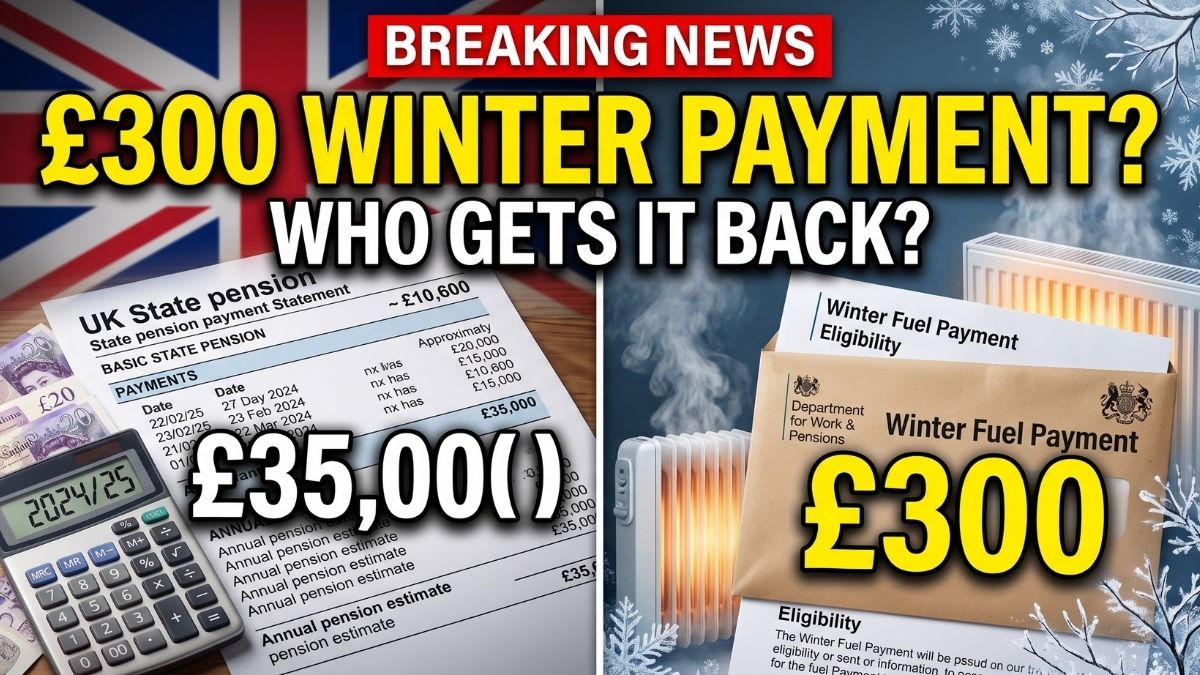
Millions of older people could receive a Winter Fuel Payment for winter 2026 to 2027. The payment is worth between £100 and £300, depending on age and household circumstances, but some higher-income pensioners will have the full amount collected back through the tax system.
The key points are easy to miss: the qualifying age is based on a specific birth date, the payment amount depends on who you live with, and the £35,000 income limit applies to the individual receiving the payment.
Who can get the payment?
For winter 2026 to 2027, you could qualify if you were born on or before 27 June 1960 and normally live in England, Wales or Northern Ireland. Scotland has a separate Pension Age Winter Heating Payment instead.
Most eligible people do not need to apply. The Department for Work and Pensions (DWP) says letters will be sent in October or November, with most payments made in November or December 2026.
The qualifying week is 21 to 27 September 2026. Your circumstances during that week, including your age and who you live with, help determine the amount.
How much will you receive?
The maximum is £300, but it is not a flat-rate payment for everyone. Someone living alone, or with people who are not eligible, will generally receive £200 if they were born between 28 September 1946 and 27 June 1960, or £300 if they were born before 28 September 1946.
The amount can be different for couples and people who receive Pension Credit, Universal Credit or income-related Employment and Support Allowance. For example, a couple may receive £100, £150, £200 or £300 depending on both people’s dates of birth and benefit status.
People in a care home who qualify usually receive £100 or £150, depending on their date of birth.
The official Winter Fuel Payment rates provide the full breakdown.
Who will have it reclaimed?
If your individual total income is over £35,000, HM Revenue and Customs (HMRC) will recover the Winter Fuel Payment. Your partner’s income is not added to yours for this test.
The payment is normally made in full first. HMRC then collects an equivalent amount through a tax-code adjustment or by adding a Winter Fuel Payment charge to your Self Assessment tax bill. The payment itself is not treated as ordinary taxable income.
The exact monthly deduction depends on the payment amount and your tax position. It is therefore better to check your HMRC notice than rely on a fixed figure such as £17 or £25 a month. HMRC has also warned that someone repaying more than one winter payment through PAYE could see a larger deduction while both amounts are collected.
If you expect your income to exceed £35,000, you can choose to opt out of future Winter Fuel Payments. The HMRC guidance explains how recovery and opting out work.
When will you not qualify?
Meeting the age rule is only one part of the test. You may not qualify if you normally live outside England, Wales or Northern Ireland, are subject to immigration restrictions that prevent access to public funds, or were in prison for the whole qualifying week.
A person who was in hospital for the entire qualifying week may also be excluded under the relevant rules. The date and length of a hospital stay matter, so anyone affected should check the current DWP guidance rather than assume that a short stay removes entitlement.
What about care homes?
Living in a care home does not automatically rule out a Winter Fuel Payment. However, different rules apply where someone has been in a care home throughout the qualifying period and receives certain income-related benefits, including Pension Credit, Universal Credit or income-related ESA.
A move into or out of a care home can change both eligibility and the amount. Report a change of address or circumstances to the Winter Fuel Payment Centre as soon as possible.


What should pensioners do now?
Keep an eye out for the DWP letter in October or November. It should explain the amount due and the expected payment date. If you do not receive a letter or payment by 27 January 2027, contact the Winter Fuel Payment Centre.
Check the amount against your own circumstances during 21 to 27 September. If your income is above £35,000, look out for an HMRC tax-code change or Self Assessment entry. If the DWP’s decision appears wrong, the official guidance explains how to ask for mandatory reconsideration.
Claims for winter 2026 to 2027 open on 21 September 2026 for people who are not paid automatically but believe they qualify. The GOV.UK claiming guidance explains who needs to apply.
The Winter Fuel Payment remains useful help with heating costs, but the headline £300 figure is only the maximum. Eligibility, household circumstances and individual income all matter, so checking the official rules is the safest way to find out what you should receive and whether HMRC will later reclaim it.