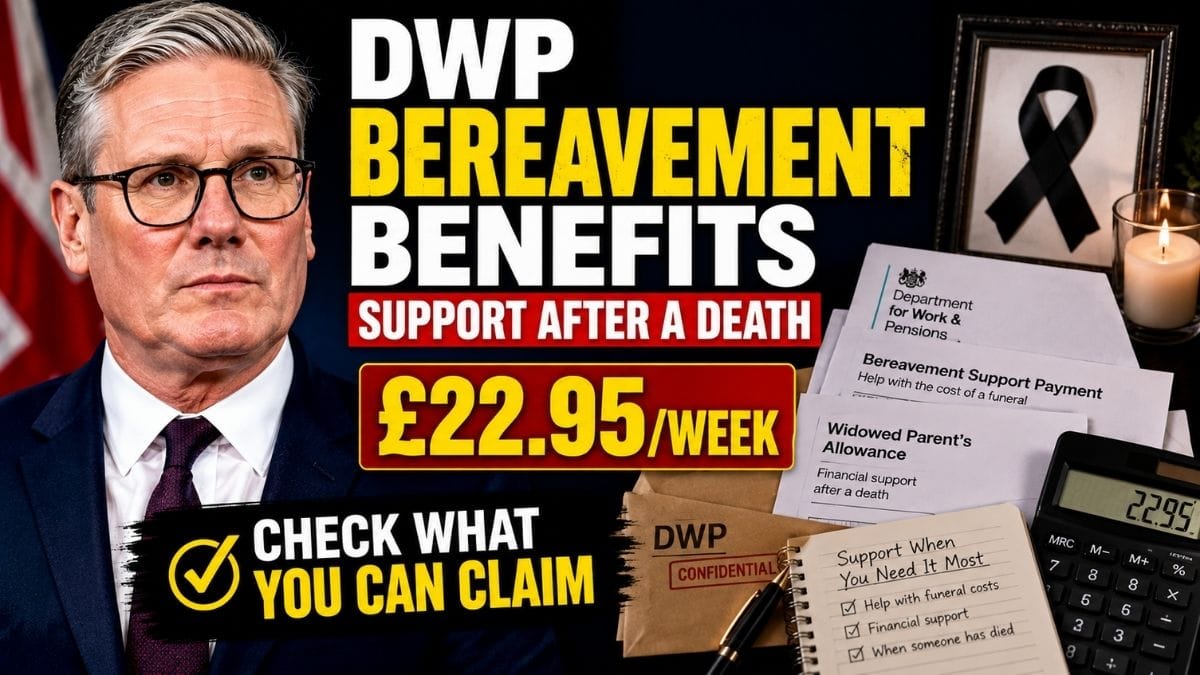
Losing a partner, spouse, civil partner, parent or child can create significant financial pressure alongside the practical and emotional challenges of bereavement. Several benefits and forms of financial support may be available, depending on the circumstances of the person who died and the surviving family members.
Support can include Bereavement Support Payment, Guardian’s Allowance and help with funeral costs. In Scotland, people on a low income may also qualify for Funeral Support Payment.
A death can also change existing benefit claims. In some cases, a surviving person may need to make a new claim for support that was previously paid in their partner’s name. Because some bereavement benefits have claiming deadlines, it can be important to check eligibility as soon as possible.
Bereavement
Bereavement Support Payment may be available to someone whose husband, wife or civil partner has died.
The benefit is generally intended for people who are below State Pension age. Eligibility can depend on factors including the deceased person’s National Insurance record and the circumstances of the surviving partner.
There are deadlines for claiming Bereavement Support Payment. Applying sooner can be important because the timing of a claim can affect how many payments a person receives.
The exact amount depends on the claimant’s circumstances. Current payment rates and eligibility conditions are available through GOV.UK.
Funeral
People living in Scotland who have a low income may be able to receive Funeral Support Payment to help with eligible funeral expenses.
Funeral Support Payment is the Scottish form of assistance and should not be confused with Funeral Expenses Payment, which applies elsewhere under the UK benefits system.
There are specific eligibility conditions, including rules concerning the applicant, their income and their relationship with the person who died. The payment can contribute towards eligible funeral costs rather than necessarily covering the full expense.
People in Scotland can check the current rates and eligibility requirements through mygov.scot.
Guardians
Guardian’s Allowance may be available to someone who is responsible for bringing up a child whose parents have died.
In certain circumstances, the allowance can also be available when one of the child’s parents remains alive. The rules depend on the child’s circumstances and the relationship between the claimant and child.
Guardian’s Allowance is separate from Child Benefit. This means an eligible person may be able to receive both.
The Guardian’s Allowance rate is currently:
- £22.95 a week per child
Claimants should check the latest GOV.UK rules before applying because eligibility requirements can depend on the circumstances of the child and surviving parent.
Child Benefit
A death can affect an existing Child Benefit claim, particularly when the person who normally received the benefit was the parent or partner who died.
Scottish Government guidance states that someone may need to make a new Child Benefit claim if they were not the person named as the claimant on the original application.
GOV.UK also has specific guidance for circumstances involving the death of a child or parent. Families should check the relevant rules rather than assuming an existing Child Benefit payment will automatically continue in the same person’s name.
Universal Credit
A bereavement can change household income, living arrangements and entitlement to benefits such as Universal Credit.
If a partner who was receiving benefits on behalf of the household dies, the surviving person may need to make a new claim for certain forms of support. The amount received from an existing benefit can also change after a death.
For this reason, people should notify the relevant benefit authorities about the change in circumstances and check whether they remain eligible for the same support.
A benefits calculator can also help someone assess whether a reduction in household income means they could qualify for additional assistance.
Pensions
The death of a spouse or civil partner can affect the survivor’s pension and tax position.
Depending on the pension arrangements and the deceased person’s National Insurance record, a surviving spouse or civil partner may be entitled to certain payments based on their late partner’s contributions.
Private or workplace pension arrangements can have their own rules about survivor benefits. It is therefore important to contact the relevant pension provider as well as checking government guidance.
A change in income can also affect tax. Additional pension income, annuities, benefits or inheritance may alter a person’s tax position, while a significant fall in income could reduce the amount of tax they pay.
Parental
Eligible employed parents who lose a child may have rights to Statutory Parental Bereavement Pay and Leave.
The scheme provides qualifying employees with time away from work following the death of a child, together with financial support where the relevant conditions are met.
There is also specific assistance in Scotland following the death or stillbirth of a baby.
The Pregnancy and Baby Payment element of Best Start Grant may still be available where a baby is stillborn or dies after birth. Applications following a stillbirth or death can generally be made within six months of the baby’s birth date, subject to the relevant rules.
Reporting
Families should make sure the death is reported to the government organisations that need to know.
The Tell Us Once service can allow a death to be reported to several government departments and organisations at the same time. This can reduce the need to contact each organisation separately.
When a death is registered, the registrar will explain whether Tell Us Once is available and how to use it. If the service cannot be used, the relevant organisations may need to be contacted individually.
Reporting the death promptly can also help prevent benefit overpayments and make it easier for the correct support to be arranged for surviving family members.



Checking
Bereavement can change a household’s financial circumstances quickly, so it is worth reviewing all available support rather than checking only one benefit.
The GOV.UK bereavement benefits hub provides information about different forms of assistance and can direct people towards further help with benefit claims.
People in Scotland can also seek free money and debt advice through the Money Talk Team. This service can help households check benefit entitlement, manage debt and look for ways to reduce essential costs.
The financial support available after a death depends heavily on individual circumstances, including the relationship to the person who died, household income, age, employment status and existing benefits. Checking official guidance and making claims within the relevant deadlines can help ensure that eligible support is not missed.