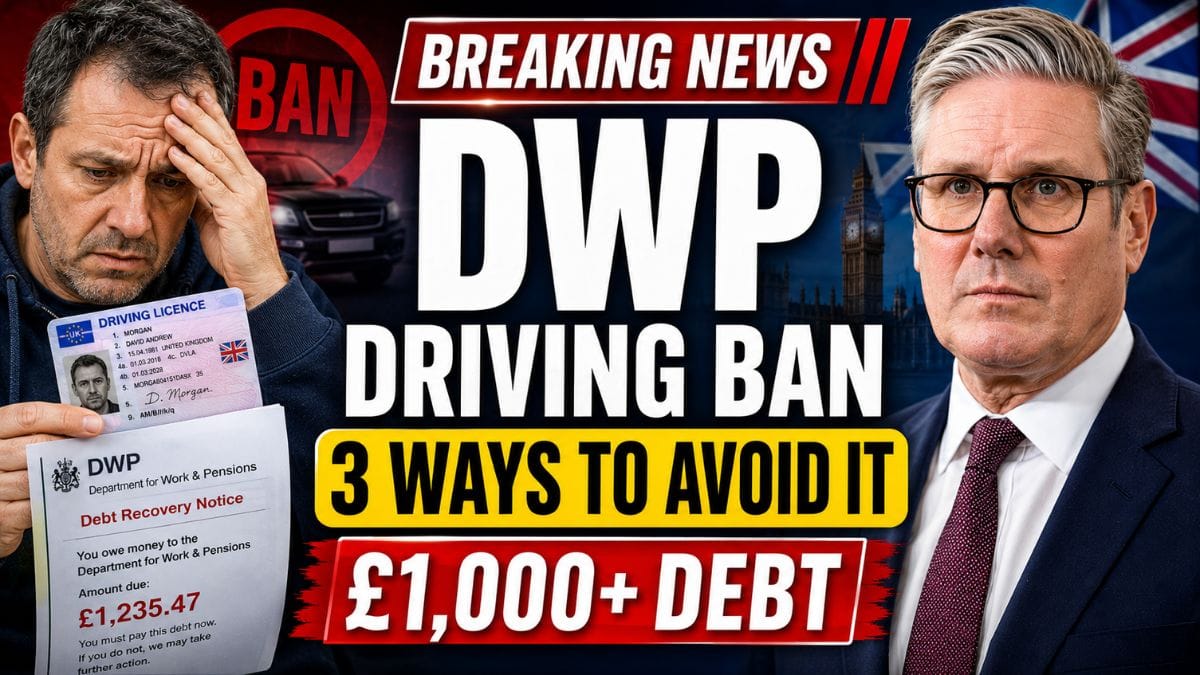
The Department for Work and Pensions is preparing to use new powers that could lead to driving licence disqualification for some people with outstanding benefit debt. The measures are due to be rolled out from October 2026 under the Public Authorities (Fraud, Error and Recovery) Act 2025.
The rules are aimed at recovering money owed to the DWP, particularly in cases involving benefit fraud or debts that have not been repaid after other recovery methods have been attempted.
However, a driving licence disqualification is not automatic. The rules set out several circumstances in which the measure cannot be used or a person can avoid an actual ban.
Rules
The new powers give the DWP the ability to seek a court order against certain people who owe benefit-related debts.
The DWP can consider driving disqualification only when the outstanding debt is at least £1,000 and it is not reasonably possible to recover the money through other means.
The measure is expected to be used alongside other recovery powers introduced under the 2025 legislation. These include the ability to recover certain debts directly from bank accounts without first obtaining a court order.
The driving licence measure is therefore intended as a further recovery option rather than an automatic consequence of owing money to the department.
Exceptions
There are three key circumstances highlighted in the rules that can prevent a driving licence from being revoked or disqualified.
The first is the amount of debt. If the outstanding balance is below £1,000, the DWP cannot use the driving disqualification power.
The second applies to people who are entitled to and receiving a DWP benefit at the time the application for disqualification is made. The DWP cannot use this particular power against those individuals.
The third relates to an essential need to drive. A court cannot make a disqualification order if it considers that the person has an essential need for their driving licence.
This can include situations where driving is necessary to earn a living or where a person has important caring responsibilities.
Suspended
Even where the DWP seeks a driving disqualification, an immediate driving ban is not necessarily the first step.
The rules provide for a suspended order to be made initially. Under that order, the court sets repayment terms for the individual.
If the person follows those terms, an actual disqualification does not take effect.
This gives people with outstanding debt an opportunity to resolve the issue without losing their licence, provided they comply with the repayment conditions established by the court.
The arrangement is intended to give debtors a final opportunity to repay what they owe or demonstrate that they are making agreed payments.
Breaches
The situation changes if someone fails to comply with the repayment terms without a reasonable excuse.
In that circumstance, the DWP can apply for an immediate disqualification order. The disqualification can last for up to two years.
The DWP has also warned that persistent breaches of a suspended order could result in more than one immediate disqualification order. As a result, the total period during which someone is unable to drive could exceed two years in some circumstances.
The individual therefore has a strong incentive to maintain the agreed repayment arrangement once a suspended order has been issued.
Licence
There are also consequences after a period of disqualification ends.
If an immediate disqualification lasts longer than 56 days, the individual must apply to the Driver and Vehicle Licensing Agency to renew their driving licence.
A fee will apply to that application.
The DWP must apply to end an immediate disqualification order when the debt has been fully repaid. The department will notify the court, and the court will then notify the DVLA that the order has ended.
The DWP will also confirm to the individual that the debt has been repaid.
Letters
The department has been contacting some people with outstanding debts to warn them about the new recovery powers.
The DWP is encouraging people who have received letters to make contact and arrange repayment rather than waiting for enforcement action.
For people who are no longer receiving benefits, the changes could be particularly relevant. The government has said that previously it had fewer options for recovering debts from people who were no longer claiming benefits or working in PAYE employment.
The new powers are intended to address that gap.
Recovery
Driving licence disqualification is only one part of the wider changes introduced by the PAFER Act.
The government also plans to use an Eligibility Verification Measure that will allow the DWP to obtain limited information from banks and financial institutions. The aim is to identify incorrect benefit payments and resolve errors more quickly.
The government has set a target of saving £14.6 billion over five years through action on fraud, error, and debt. The programme also includes plans to increase staffing and strengthen the department’s data, analytical, and investigative capabilities.
For people with DWP debt, the practical message is relatively straightforward: owing money does not automatically mean losing a driving licence. The debt must meet the relevant threshold, other recovery options must not be reasonably available, and the court must consider the person’s circumstances. An essential need to drive can also prevent disqualification. People facing repayment action can avoid an actual ban by engaging with the DWP and complying with the repayment terms set by the court.
FAQs
When can DWP seek a driving ban?
It can apply when debt is at least £1,000 and other recovery fails.
Can benefits recipients face this ban?
The power cannot apply to people receiving a DWP benefit then.
Can work protect my driving licence?
Yes, an essential need to drive can prevent disqualification.
How long can the ban last?
An immediate disqualification order can last up to two years.



How can I avoid disqualification?
Follow the court’s repayment terms or repay the debt in full.