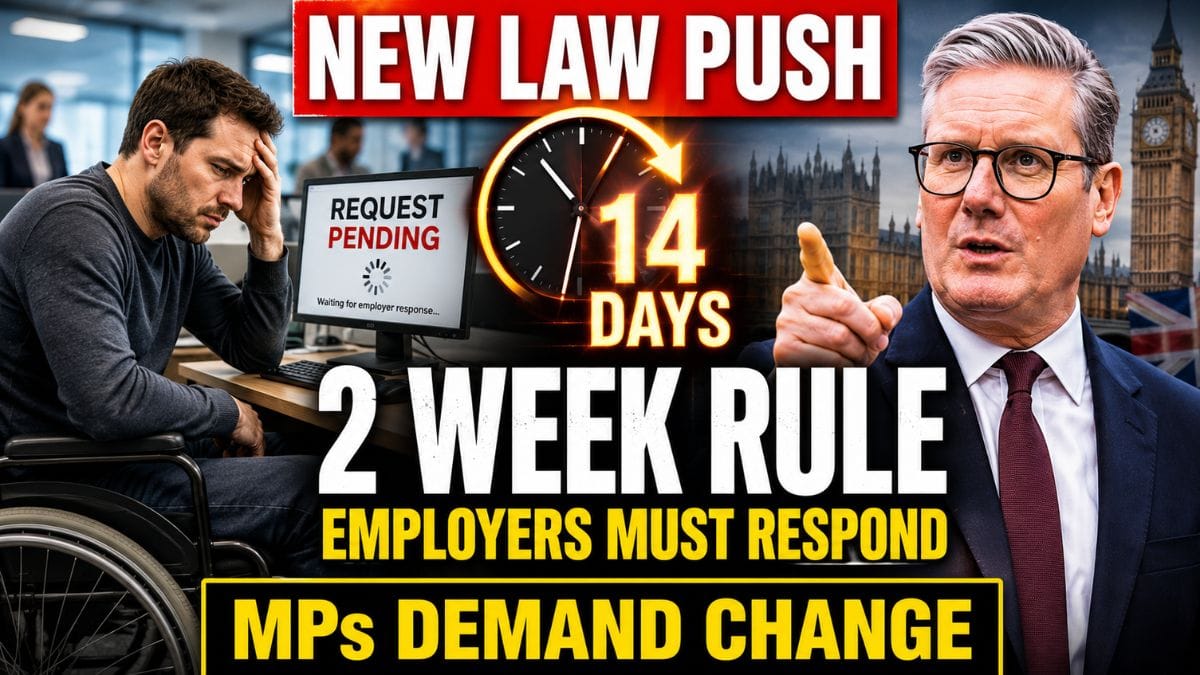
Cross-party MPs are calling for new workplace rules that would require employers to respond to disabled workers’ support requests within two weeks.
The proposal comes after concerns that many disabled employees face long delays when asking for workplace adjustments, with some waiting several months for support. Parliament’s Work and Pensions Committee said the current system is leaving too many people feeling excluded from employment despite existing legal protections.
The committee argues that faster responses could improve workplace accessibility and help more disabled people remain in work.
Proposal
Under the recommendations, employers would face a statutory deadline to handle reasonable adjustment requests within 14 days.
These requests can include:
| Type of Adjustment | Example |
|---|---|
| Flexible working | Remote work or adjusted hours |
| Physical workplace changes | Accessible desks or entrances |
| Equipment support | Specialist technology or tools |
| Schedule adjustments | Time for medical appointments |
MPs also proposed that employers should provide written explanations when requests are refused.
The committee suggested the rules should mirror existing flexible working regulations under employment law, which already require timely employer responses.
Delays
The committee’s findings highlighted significant delays in the current system.
According to the report, up to 82% of reasonable adjustment requests took more than four months to be fully implemented. Some employees reportedly waited as long as 12 months before receiving support.
| Adjustment Request Findings | Reported Data |
|---|---|
| Requests taking over four months | Up to 82% |
| Longest delays reported | Up to 12 months |
MPs warned that slow responses can leave disabled employees struggling to stay in work or unable to access suitable employment opportunities.
The report described some workplaces as creating a “hostile environment” for disabled workers due to delays and lack of accessibility.
Employment
The committee said employment figures show a continuing gap between disabled and non-disabled workers.
Current data cited in the report showed:
| Employment Group | Employment Rate |
|---|---|
| Disabled people | 52.8% |
| Non-disabled people | 82.5% |
| Overall UK rate (ages 16-64) | 75% |
MPs said the gap demonstrates that existing workplace protections are not working effectively for many people.
The report also found that disabled employees are more likely to leave their jobs compared with non-disabled workers.
| Workforce Group | Annual Job Exit Rate |
|---|---|
| Disabled workers | 10.1% |
| Non-disabled workers | 4.6% |
According to the committee, the disability employment gap has largely stalled since the pandemic.
Support
Committee chair Debbie Abrahams said inaccessible workplaces remain a major barrier preventing disabled people from entering or remaining in employment.
She stated that many employers are not acting quickly enough despite legal duties already requiring reasonable adjustments.
Ms Abrahams said the proposed two-week timeframe would help ensure disabled workers feel their rights are respected while encouraging employers to engage more actively with requests.
Flexible working arrangements were highlighted as one of the most effective forms of support. These arrangements can help employees manage health conditions, attend medical appointments, and maintain stable employment.
Business
The committee also acknowledged concerns raised by small businesses during the inquiry.
Many smaller employers reportedly said they lacked clear guidance, awareness, and financial resources to improve workplace accessibility.
MPs described small businesses as the “backbone of UK employment” and noted that some firms remain uncertain about how additional workplace support requirements would operate in practice.
The report backed recommendations from Sir Charlie Mayfield’s Keep Britain Working review, which proposed a new Workplace Health Provision scheme to support employers and employees.
However, MPs said businesses still have concerns about how such a scheme would be funded and implemented.
Awareness
In addition to the proposed response deadline, the committee recommended broader efforts to improve awareness of disabled workers’ rights.
Suggestions included:
| Recommendation | Purpose |
|---|---|
| National multimedia campaign | Raise awareness of workplace rights |
| Employer information duty | Inform staff about available support |
| Faster response rules | Improve access to adjustments |
MPs believe stronger communication and clearer guidance could help both workers and employers better understand their responsibilities and available support.
Outlook
The committee’s recommendations are not yet law, but they are expected to add pressure on ministers to strengthen workplace protections for disabled employees.
Supporters argue that quicker responses to reasonable adjustment requests could help reduce barriers to employment and improve job retention among disabled workers.
At the same time, business groups are likely to continue raising concerns about implementation costs and administrative demands, particularly for smaller employers.
The government has not yet confirmed whether it will adopt the proposed two-week legal deadline.
FAQs
What are MPs proposing for disabled workers?
A two-week employer response deadline.
What are reasonable adjustments?
Workplace changes supporting disabled employees.
How long do adjustments currently take?
Many take more than four months.
What is the disability employment rate?
About 52.8% according to the report.