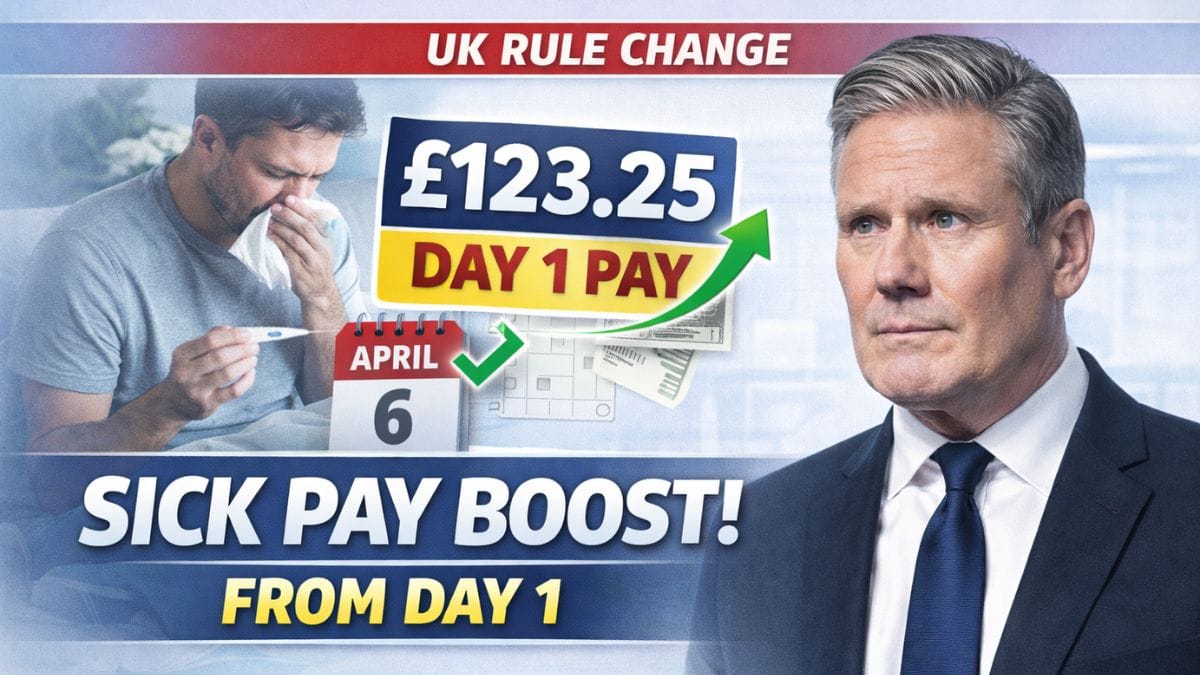
Millions of workers across the UK are now affected by updated Statutory Sick Pay (SSP) rules that came into force from April 6. The changes form part of a broader set of employment reforms aimed at improving income protection during periods of illness.
The reforms focus on expanding access, simplifying eligibility, and ensuring that workers are compensated earlier when they are unable to work due to health reasons.
Changes
The updated SSP framework introduces three key changes:
- Removal of the three-day waiting period
- Abolition of the lower earnings threshold
- Introduction of revised payment calculations
According to government estimates, these adjustments could support millions of employees and increase overall sick pay provision by approximately £400 million per year.
Waiting
Under previous rules, employees were not eligible for Statutory Sick Pay until they had been absent from work for more than three consecutive days. This meant that short-term illnesses often went unpaid.
With the removal of the waiting period, workers are now eligible to receive SSP from the first full day of absence.
| Rule | Before April 6 | After April 6 |
|---|---|---|
| Sick pay start | After 3 days | From day 1 |
| Short illness (≤3 days) | No pay | Eligible |
This change is expected to benefit those with shorter illnesses or intermittent health conditions, who previously may not have qualified for any support.
Threshold
Another significant reform is the removal of the lower earnings limit. Previously, employees needed to earn at least £125 per week to qualify for SSP.
This requirement excluded an estimated 1.3 million workers, particularly those in part-time roles or with lower incomes.
From April 6, this threshold no longer applies. As a result, a wider group of workers can now access Statutory Sick Pay.
| Criteria | Old Rule | New Rule |
|---|---|---|
| Minimum earnings | £125/week | No minimum |
This expansion is intended to make the system more inclusive and reflective of modern working patterns.
Rates
The updated payment structure introduces a dual-rate system. Statutory Sick Pay will now be calculated as the lower of:
- A flat weekly rate of £123.25
- 80 percent of an employee’s average weekly earnings
For many lower-income workers who were previously excluded, SSP will be based on 80 percent of their earnings.
| Payment Type | Amount |
|---|---|
| Flat rate | £123.25/week |
| Earnings-based | 80% of wages |
This approach aims to balance consistency with proportional support based on income levels.
Impact
The government has indicated that the changes are designed to reduce the financial pressure on workers who fall ill. By providing support from the first day of absence and expanding eligibility, the policy seeks to reduce instances where individuals feel compelled to work while unwell.
There are also potential public health implications. Encouraging workers to stay home when sick may help limit the spread of illness in workplaces, particularly in sectors where close contact is common.
From an employer perspective, the reforms may contribute to improved workforce recovery and productivity over time, although implementation and cost considerations may vary across businesses.
Transition
To ensure continuity, transitional arrangements have been introduced for workers who began a period of sick leave before April 6. These measures are intended to prevent disruption and ensure that individuals are not disadvantaged during the shift to the new system.
Employers and payroll providers are expected to apply the updated rules in line with official guidance, taking into account the timing of absence and eligibility criteria.
Outlook
The revised Statutory Sick Pay rules represent a structural change to how short-term illness is managed within the UK workforce. By removing key barriers to access and adjusting payment mechanisms, the system is intended to provide broader and more immediate support.
While the long-term effects will depend on implementation and workforce behaviour, the changes mark a shift toward a more inclusive sick pay framework.
FAQs
When do new SSP rules start?
They started on April 6, 2026.
Is sick pay now from day one?
Yes, the waiting period is removed.
Do low earners qualify now?
Yes, no minimum earnings needed.
What is the SSP weekly rate?
£123.25 or 80% of earnings.