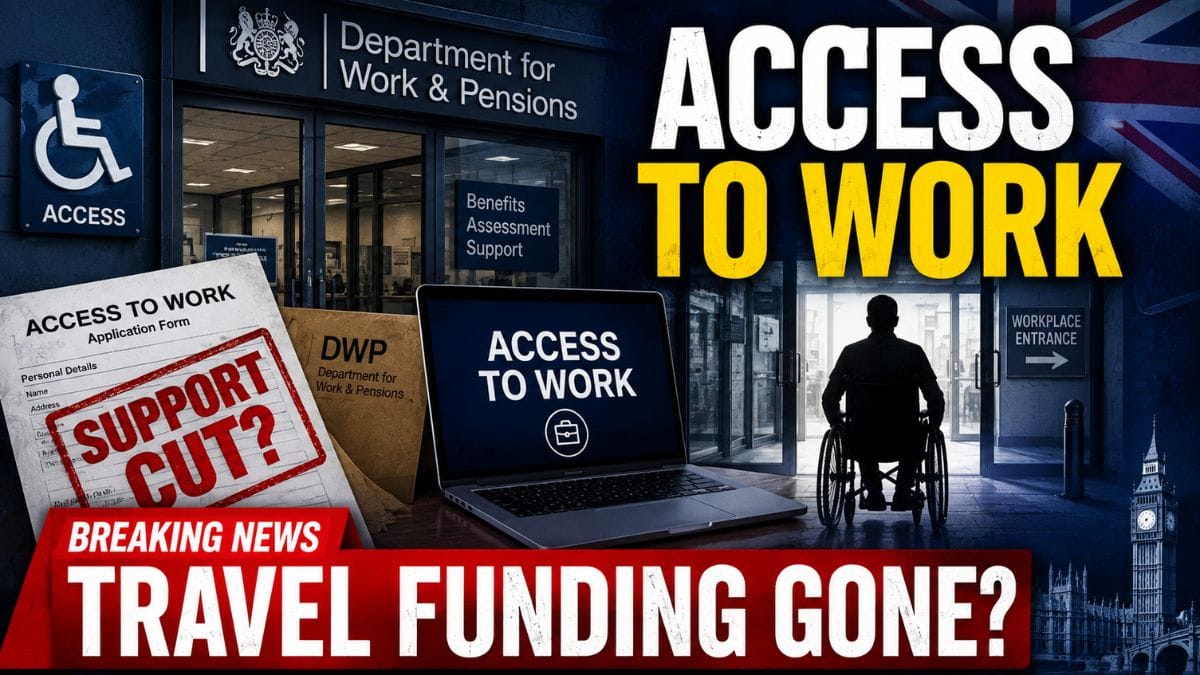
Access to Work, the UK government scheme that helps disabled people remain in employment, is facing renewed scrutiny after a disability charity chief said part of his long-standing support was withdrawn.
Kamran Mallick, chief executive of Disability Rights UK, said funding that had helped cover his travel to work was removed following a phone call from the Department for Work and Pensions (DWP) in July.
Mallick, who has used the scheme for around 15 years, said the decision would leave him facing costs that he believes are not practical for him to absorb. The case has also highlighted wider concerns about delays and growing demand for Access to Work.
Support
Access to Work provides grants to help people with disabilities or health conditions overcome barriers in the workplace.
The assistance can cover a range of costs that employers would not normally be expected to meet. Depending on an individual’s circumstances, this can include specialist equipment, support workers, workplace adaptations and travel expenses.
The scheme is intended to help people enter employment, remain in work and manage practical or mental health challenges connected with their jobs.
For disabled workers who rely on specialist assistance, losing that support can have a direct effect on their ability to continue working.
Case
Mallick, 53, has been unable to walk since contracting polio at the age of three and uses a wheelchair.
He said his Access to Work support had previously helped pay for taxi journeys to and from his workplace, as well as a support worker for 20 hours each week.
According to Mallick, the DWP suggested that his support worker should also take on responsibility for driving him.
He has argued that combining the two roles would not be a realistic solution.
“Driving and providing personal support are two distinct skill sets,” Mallick said, adding that finding someone who is suitably qualified, available and located nearby would be difficult.
He has requested reconsideration of the decision.
Delays
The dispute comes as Access to Work faces growing demand and longer processing times.
A National Audit Office report published in February found that the average processing time increased from 28 days in 2020/21 to 109 days in November 2025.
The number of applications has also risen considerably. Applications increased from 76,100 in 2018/19 to 157,000 in 2024/25.
That increase has been accompanied by higher government spending on the programme.
| Measure | Earlier figure | Later figure |
|---|---|---|
| Access to Work applications | 76,100 in 2018/19 | 157,000 in 2024/25 |
| Programme spending | £129 million | £320 million |
| Processing time | 28 days in 2020/21 | 109 days in Nov. 2025 |
The Work & Pensions Committee has also reported that about 66,000 Access to Work applications were waiting to be processed in March.
Concerns
Disability campaigners have raised concerns that pressure on the system may be affecting the level and duration of support awarded to applicants.
They argue that even without a formal policy change, decisions made under a heavily pressured system could result in people receiving less assistance or having existing support reduced.
Mallick described his experience as part of a wider pattern rather than an isolated administrative problem.
“It is infuriating to hear ministers insist on the importance of disabled people working, while the very support that makes that possible is quietly stripped away,” he said.
The criticism comes at a time when the government has emphasized helping more disabled people move into or remain in employment.
Government
The DWP has rejected suggestions that the Access to Work policy itself has been changed.
A department spokesperson said the government was sorry to hear about Mallick’s experience and would consider his reconsideration request.
The DWP also described Access to Work as a vital source of assistance for disabled people and people with health conditions who want to start or remain in employment.
The department acknowledged that demand has increased significantly and said it is working with disabled people and their organizations to improve the scheme.
The government has said that any future policy changes would be announced before they are introduced.
Outlook
The debate over Access to Work is taking place alongside broader discussions about the UK’s disability and welfare system.
The government has promoted initiatives such as Right to Try, which is designed to allow some benefit claimants to explore employment without immediately losing their benefits.
At the same time, ministers have faced criticism over proposed changes to disability benefits. Plans involving Personal Independence Payment were scaled back last year, while disability minister Stephen Timms launched a review of the benefit.
That review is expected to report in the autumn, potentially providing further information about the government’s approach to welfare reform.
For disabled workers, however, Access to Work remains a separate and important source of employment support. The growing number of applications and longer processing times have increased pressure on the scheme, while individual cases such as Mallick’s have raised questions about how support is being assessed and maintained.
The DWP maintains that no changes have been made to Access to Work policy. The outcome of Mallick’s reconsideration request, along with any future government announcements, could provide further clarity on how the scheme will operate for disabled workers who depend on it.
FAQs
What is Access to Work?
It helps disabled people meet extra costs linked to employment.
Who can use Access to Work?
Disabled people and people with health conditions may qualify.
Can Access to Work cover travel?
Yes, travel expenses may be covered when eligibility requirements are met.
Have Access to Work rules changed?
The DWP says no changes have been made to its policy.



Why are applications taking longer?
Rising demand has contributed to longer processing times.