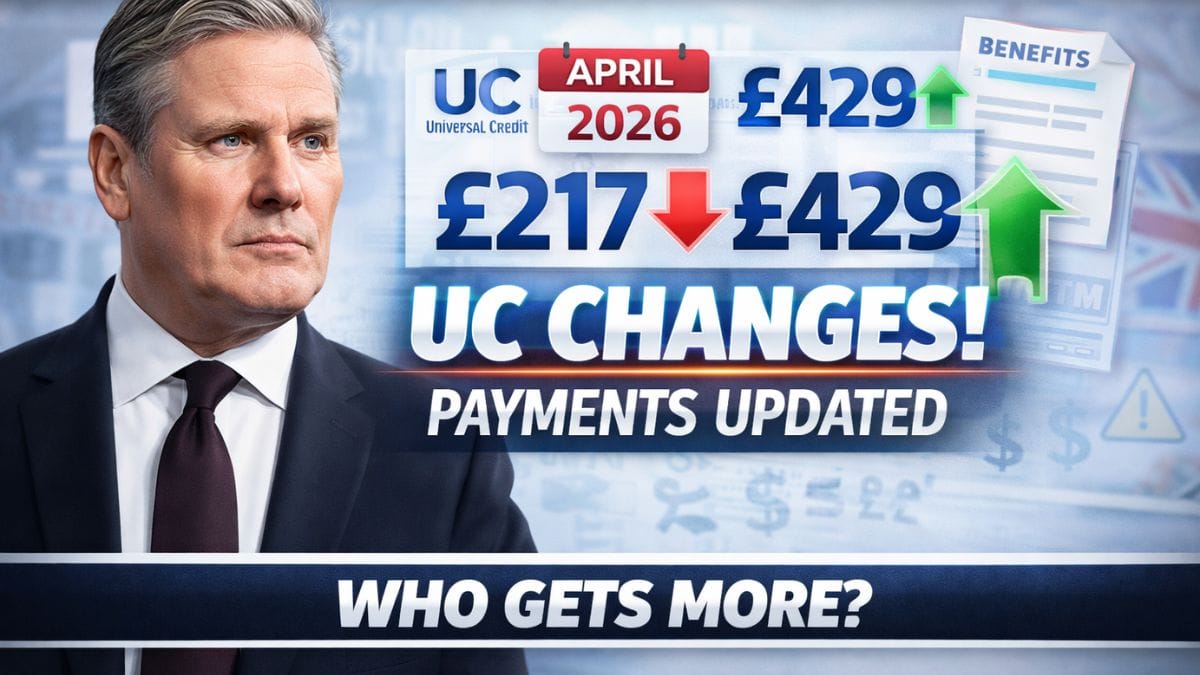
A series of changes to Universal Credit came into effect in April 2026, introducing adjustments to payment rates and employment support. The measures are aimed at encouraging more people into work while managing long-term welfare spending.
The updates affect both new and existing claimants, particularly those with health conditions or limited capability for work. Knowing these changes is important, as they directly influence benefit amounts and available support.
The latest reforms were introduced on April 6, 2026. They focus on two main areas: adjusting payment structures and expanding employment support for people with health conditions.
The government estimates that these changes could reduce projected Universal Credit spending by around £1 billion, while also increasing incentives for employment.
At the same time, millions of households will see modest increases in their standard allowance.
Health
One of the most significant changes involves the Universal Credit health element.
New claimants will now receive a lower monthly rate of £217.26, compared to the previous higher rate of £429.80.
However, the higher rate will still apply to:
- Existing claimants are already receiving the health element
- Individuals with severe or lifelong conditions
- People nearing the end of life
This creates a clear distinction between new and existing claimants, with different levels of financial support depending on when a claim is made.
Also Read: Motability Black Box Rule – What Drivers Must Know From April 2026
Rates
Alongside the changes to the health element, standard Universal Credit payments have increased.
From April 2026, the monthly standard allowance rates are:
| Category | Monthly Amount |
|---|---|
| Single under 25 | £338.58 |
| Single 25 and over | £424.90 |
| Couple under 25 | £528.34 |
| Couple 25 and over | £666.97 |
These increases are above inflation and are expected to continue rising each year until 2029 or 2030.
For many households, this translates to an annual boost of around £295, with part of that increase exceeding inflation.
Support
A key part of the reform package is expanded employment support for people with health conditions.
Individuals with Limited Capability for Work and Work-Related Activity status will be offered voluntary support to help them move toward employment. This includes:
- One-to-one guidance from advisers
- Tailored employment plans
- Assistance in overcoming barriers to work
More than 65,000 people have already taken up this support since March 2025.
Importantly, participation remains voluntary, meaning claimants are not required to engage if they are unable or unwilling to do so.
Balance
The reforms aim to address concerns that the previous system may have discouraged employment.
Under earlier rules, individuals receiving the health-related top-up could receive significantly more than those actively seeking work, without structured support to transition into employment.
The updated approach attempts to balance financial support with incentives and opportunities to work, particularly for those who may be able to do so with assistance.
Eligibility
Some elements of Universal Credit remain unchanged.
For example, individuals with Limited Capability for Work may still qualify for an additional £158.76 per month. However, eligibility for this specific payment generally applies to those whose health-related claims began before April 3, 2017.
This distinction highlights the layered nature of the system, where entitlement can depend on both personal circumstances and the timing of a claim.
Impact
The changes are expected to affect a large number of claimants, including:
- Around 2.7 million people are assessed as having limited capability for work
- Nearly four million households are receiving standard Universal Credit
For some, the increase in standard allowance will provide additional financial support. For others, particularly new claimants with health conditions, the reduced health element may result in lower payments compared to previous rules.
The overall impact will vary depending on individual circumstances, including health status, household composition, and claim history.
Outlook
The April 2026 reforms mark part of a broader shift in welfare policy. Future increases to the standard allowance are already planned, with above-inflation rises expected over the next several years.
At the same time, the emphasis on employment support suggests a continued focus on helping claimants move into work where possible.
As with any large-scale policy change, the long-term effects will depend on how these measures are implemented and how claimants respond to the new structure.
For now, the updated system reflects an attempt to combine financial support with increased access to employment opportunities, while also addressing the overall cost of welfare spending.