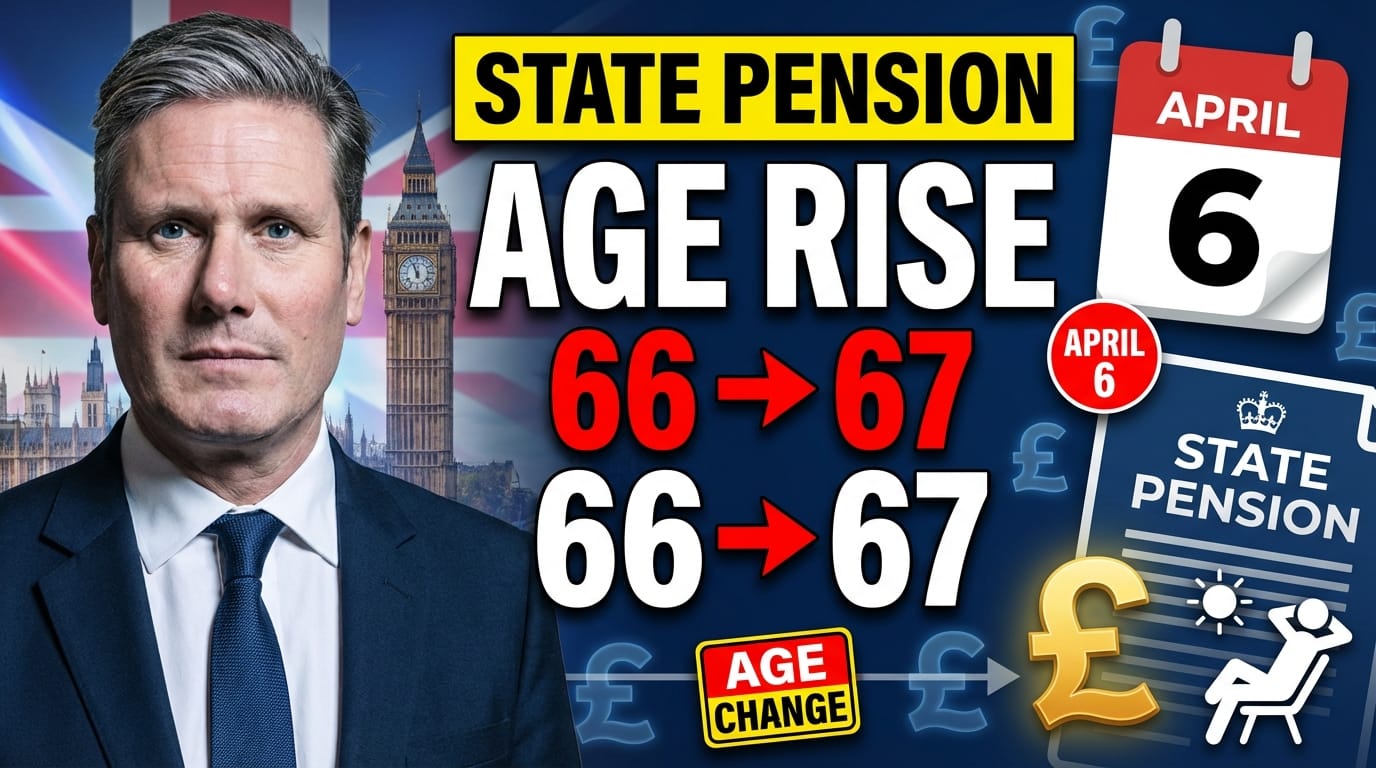
Many people in the United Kingdom closely monitor changes to the State Pension system because it affects when they can begin receiving retirement income. From April 6, a significant adjustment to the State Pension age will begin to take effect. The change forms part of a long-term policy aimed at adapting the pension system to longer life expectancy and evolving economic conditions.
The increase will not happen all at once. Instead, the State Pension age will gradually rise from 66 to 67 over a two-year period. Knowing who is affected and how the change works can help individuals better plan their retirement timeline.
Change
Beginning April 6, the State Pension age for both men and women will start increasing from 66 to 67. The adjustment will be introduced gradually between 2026 and 2028.
This phased approach means that people will reach State Pension age slightly later depending on their date of birth. The policy mainly affects individuals born after April 1960.
Those born between April 6, 1960 and March 5, 1961 will see their State Pension age set at 66 years plus a specific number of months. Over time, the qualifying age will continue rising until it reaches 67 for later birth groups.
The change reflects ongoing reviews of the pension system conducted by the UK government.
Timeline
The gradual increase is designed to spread the impact across multiple birth groups. Instead of raising the pension age overnight, the government is introducing small monthly adjustments over two years.
| Birth Period | State Pension Age |
|---|---|
| Before April 6, 1960 | 66 years |
| April 6, 1960 – March 5, 1961 | 66 years plus several months |
| After April 1961 | Gradual move toward 67 |
By 2028, the full transition to a State Pension age of 67 will be completed.
Definition
The State Pension age is the earliest age at which a person can start receiving their State Pension from the UK government.
It is important to note that this age may not be the same as the age at which someone can access a workplace pension or a personal retirement plan. Different pension systems have their own eligibility rules.
For many people, the State Pension represents a core part of their retirement income, which makes the timing of eligibility particularly important.
Reviews
Changes to the State Pension age are guided by legislation and periodic government reviews.
The Pensions Act 2014 requires the government to regularly assess whether the current pension age remains sustainable. These reviews examine factors such as life expectancy, economic conditions, and public finances.
The first review of the State Pension age was completed in 2017. A second review concluded in 2023. In July 2025, the government announced the launch of the third review, which will again evaluate whether further adjustments may be necessary in the future.
Any proposed change following a review must be approved by Parliament before becoming law.
Eligibility
The amount of State Pension a person receives depends largely on their National Insurance contribution record.
Under the current system, which applies to individuals who reached State Pension age from April 2016 onward, the full State Pension can be received after 35 qualifying years of National Insurance contributions.
However, individuals need at least 10 qualifying years to receive any payment at all.
These qualifying years can come from employment, self employment, or credited periods such as caring responsibilities or unemployment benefits.
| Qualifying Years | Pension Outcome |
|---|---|
| Less than 10 years | No State Pension |
| 10 years or more | Partial pension |
| 35 years | Full new State Pension |
Deferring
People do not have to claim the State Pension immediately after reaching the qualifying age.
Some individuals choose to delay claiming their pension, a process known as deferring. By postponing the claim, it may be possible to receive a higher weekly payment when the pension is eventually claimed.
The decision to defer often depends on personal financial circumstances, employment status, and retirement plans.
Claiming
The new State Pension is not paid automatically when someone reaches State Pension age. Individuals must actively submit a claim to begin receiving payments.
To complete a claim, applicants usually need several pieces of information, including:
- Date of most recent marriage, civil partnership, or divorce
- Dates spent living or working abroad
- Bank or building society account details
- Social security numbers related to any foreign pension schemes
The UK government provides an online tool on the GOV.UK website that allows individuals of any age to check their State Pension age and estimate when they may become eligible.
As the State Pension age gradually increases, knowing the new timeline and eligibility requirements becomes increasingly important. Planning ahead allows individuals to adjust their retirement strategy and ensure they meet the contribution requirements needed to receive the full benefit.
FAQs
When does the State Pension age increase begin?
The change begins on April 6, 2026.
What will the new State Pension age be?
It will gradually rise from 66 to 67.
How many years for a full State Pension?
You need 35 qualifying years of contributions.
Can you delay claiming the State Pension?
Yes, deferring may increase the payment amount.