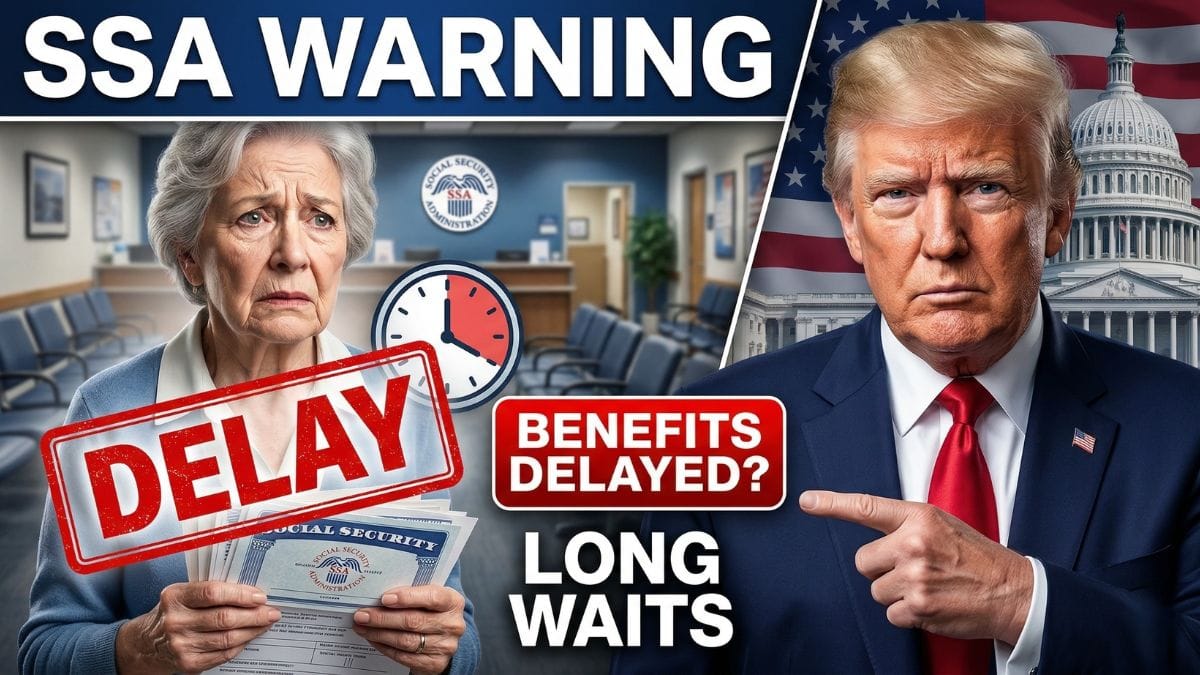
Social Security survivor benefits are designed to provide timely financial support to families after the loss of a wage earner. However, recent developments within the Social Security Administration (SSA) have led to growing delays, particularly affecting widows and dependent children. These delays reflect a combination of staffing reductions, administrative changes, and structural limitations in how benefits are processed.
Since early 2025, the SSA has undergone a significant reduction in its workforce. Reports indicate that nearly 15 percent of staff have left the agency, either through layoffs or attrition. This shift has placed considerable strain on field offices and customer service operations.
For many applicants, including widows seeking survivor benefits, the process has become slower and more complex. Securing an appointment can now take weeks or, in some cases, months, creating barriers to accessing essential financial support.
Staffing
A central factor behind these delays is the reduction in personnel. The SSA eliminated approximately 7,200 positions during a major workforce restructuring effort, followed by an additional 1,500 job cuts in the current fiscal year.
These reductions have affected frontline employees the most. These workers are responsible for processing claims, answering inquiries, and assisting applicants in person or over the phone.
The impact can be summarized below:
| Category | Impact |
|---|---|
| Total staff reduction | 15% decline |
| Initial job cuts | 7,200 positions |
| Reductions | 1,500 positions |
| Field office impact | 49 offices lost 25%+ staff |
With fewer staff available, the system has struggled to keep up with incoming claims.
Access
Reduced staffing levels have directly affected access to services. Many field offices now operate with limited capacity, leading to fewer walk-in opportunities and a heavier reliance on scheduled appointments.
At the same time, appointment availability has tightened. Applicants often face extended wait periods before they can speak with a representative. This delay is particularly significant for survivor benefits, which cannot be fully processed online.
As a result, individuals who depend on in-person or phone-based assistance face longer processing times.
Calls
The SSA has reported improvements in call center performance, citing reduced average wait times. However, an audit by the Office of the Inspector General suggests that these figures may not fully reflect user experience.
The agency introduced an automated callback feature, which records callers as having zero wait time if they opt for a return call. This adjustment has lowered reported averages, even though actual wait times for those remaining on hold remain higher.
A comparison illustrates this difference:
| Period | Reported Wait | Actual Hold (no callback) |
|---|---|---|
| March 2025 | Not specified | 83 minutes |
| September 2025 | 7 minutes | 19 minutes |
While the callback system may improve convenience for some, it does not fully resolve underlying service delays.
Process
One of the most significant structural issues is the lack of a fully digital application process for survivor benefits. Unlike retirement benefits, which can often be applied for online, survivor claims require direct interaction with SSA staff.
This requirement creates a bottleneck. Applicants must either call or visit a field office, both of which are currently experiencing high demand and limited capacity.
For widows, this means there is no alternative pathway to avoid delays.
Impact
The burden of these delays falls disproportionately on women. Data shows that women account for approximately 95 percent of applicants for aged widow benefits and 92 percent of those seeking young survivor support.
Several factors contribute to this:
- Longer life expectancy
- Lower lifetime earnings on average
- Greater reliance on spousal benefits
Delays in accessing these benefits can therefore have immediate financial consequences, especially for those with limited savings or alternative income sources.
Families
The issue extends beyond widows to children who depend on survivor benefits. Around 1.3 million children in the United States receive these payments.
For many families, these benefits are essential for covering basic expenses such as housing and food. Estimates suggest that 1 in 10 children live in households that rely on Social Security survivor income.
Processing delays can disrupt this support, increasing the risk of financial instability in affected households.
Outlook
The current situation reflects a combination of operational and structural challenges within the SSA. Staffing reductions, increased demand, and limited digital infrastructure have collectively contributed to slower service delivery.
While the agency has introduced measures such as callback systems and staff reassignment, these steps have not fully offset the impact of workforce losses.
Addressing these delays may require a combination of staffing adjustments, process improvements, and expanded digital access. Until then, applicants, particularly widows and families, may continue to experience longer wait times when seeking benefits.
FAQs
Why are widow benefits delayed?
Staff cuts and high demand slow claim processing.
Can survivor benefits be applied online?
No, they require phone or in-person applications.
How long are wait times now?
Appointments may take weeks or months to secure.
Who is most affected by delays?
Widows, children, and low-income families.