Social Security remains one of the most important sources of retirement income for millions of Americans. Many older adults depend on their monthly benefits to pay for housing, groceries, healthcare, utility bills, and other essential expenses. That is why concerns about potential Social Security benefit cuts have become an important issue for current and future retirees.
The concern is linked to the program’s long-term financial outlook. Social Security receives most of its funding through payroll taxes collected from workers and employers. However, demographic changes, including an aging population and a changing balance between workers and retirees, are putting pressure on the program’s finances.
According to the Social Security Trustees’ projections referenced in the source material, the program could face a situation in which its available trust fund reserves are depleted in approximately six years. If Congress does not introduce changes before then, retirees could face an automatic reduction in scheduled benefits.
Some projections point to a potential reduction of around 22%. For someone who relies heavily on Social Security, such a change could significantly affect their household budget.
But does this mean retirees should expect their checks to be cut? Not necessarily. There are several important factors to understand, including the program’s funding structure, the role of Congress, and the steps retirees can take to prepare for possible changes.
Funding
Social Security is primarily funded through payroll taxes paid by employees and employers. These contributions help finance retirement, disability, and survivor benefits.
The system operates largely on a pay-as-you-go basis. This means taxes collected from current workers are used to help pay benefits to people who are already receiving Social Security.
However, the relationship between workers and beneficiaries has changed over time.
Americans are living longer, and a large generation of workers has reached retirement age. At the same time, the number of workers supporting each beneficiary has declined compared with earlier decades.
This creates a financial challenge. When fewer workers contribute relative to the number of people receiving benefits, the program faces greater pressure to meet its obligations.
The Social Security trust funds help manage the difference between incoming revenue and outgoing payments. However, these reserves are not unlimited.
For more information about the program’s finances, retirees can review the official Social Security Administration website.
Shortfall
The Social Security Trustees publish annual reports examining the program’s financial condition. These reports estimate how long the trust fund reserves may last under different economic and demographic assumptions.
One important distinction is that trust fund depletion does not mean Social Security will completely run out of money.
Even if the reserves are depleted, payroll taxes will continue to come into the system as long as people work and employers pay wages.
The problem is that incoming revenue may not be sufficient to cover all scheduled benefits.
As a result, the program could face automatic reductions in the amount it can pay if lawmakers do not make changes.
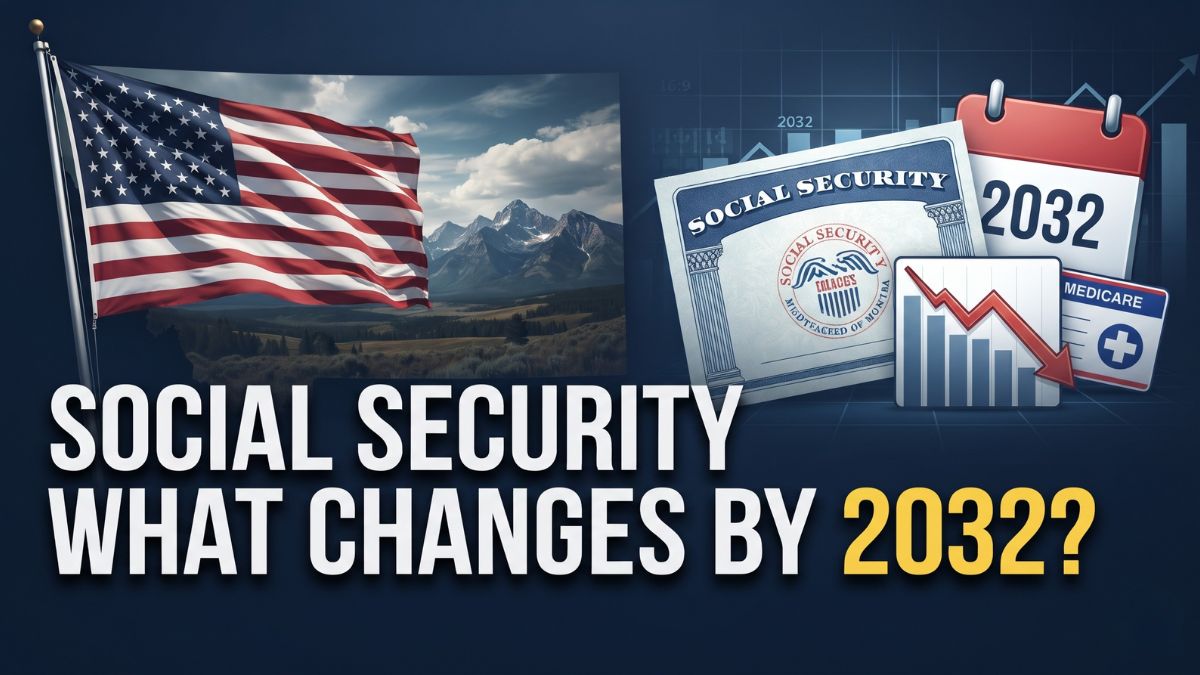
According to the projections discussed in the source material, retirees could face a reduction of approximately 22% in scheduled benefits around 2032.
However, this figure is a projection rather than a confirmed future policy decision. The actual financial outcome will depend on economic conditions, demographic trends, and any legislation passed by Congress.
Readers can examine the latest official estimates through the Social Security Trustees Reports.
Congress
Congress plays an important role in determining the future of Social Security.
Lawmakers have several potential options for addressing the program’s financial shortfall. These include increasing payroll tax revenue, adjusting the taxable earnings limit, changing benefit calculations, or modifying retirement-related rules.
Some proposals could increase the amount of money entering the system, while others could reduce future financial obligations.
Congress has previously passed legislation to address Social Security funding problems.
One notable example occurred in 1983, when lawmakers approved significant changes to help strengthen the program’s finances. Those reforms included gradually increasing the full retirement age for certain generations and expanding the taxation of Social Security benefits.
This history demonstrates that the program’s financial challenges are not new.
However, reaching an agreement can be difficult because different proposals affect workers, retirees, employers, and taxpayers in different ways.
Many retirees are particularly concerned about changes that could reduce the purchasing power of their monthly checks. Younger workers, meanwhile, want assurance that the system will remain financially sustainable when they retire.
Politics
Social Security is also an important political issue because millions of Americans depend on the program.
Retirees represent a significant voting group, and Social Security benefits affect households across the country. Any proposal involving substantial benefit reductions could attract considerable public attention.
For lawmakers, this creates pressure to find a solution before automatic reductions become necessary.
Historically, Congress has acted when the program has faced major financial challenges. That history provides some reason to expect future legislative action.
Nevertheless, retirees should not assume that lawmakers will automatically resolve every funding problem before the projected deadline.
Political negotiations can take time, and different approaches may involve difficult compromises.
For this reason, understanding the financial risks is more useful than relying entirely on expectations about what Congress might do.
Preparation
Although potential Social Security cuts are not guaranteed, retirees can take practical steps to understand how a reduction might affect their finances.
One useful approach is to calculate what a 22% reduction in monthly benefits would mean for the household budget.
For example, consider someone currently receiving $2,000 per month in Social Security retirement benefits.
| Monthly Benefit | Amount |
|---|---|
| Current monthly benefit | $2,000 |
| Potential reduction | 22% |
| Estimated monthly reduction | $440 |
| Remaining monthly benefit | $1,560 |
Under this hypothetical example, the retiree would receive $440 less per month if a 22% reduction occurred.
That would equal $5,280 less over a full year.
These figures are illustrations, not a prediction of an individual’s future payment. Actual benefits would depend on the final changes made to Social Security and the applicable payment rules.
Still, running these calculations can help retirees identify possible gaps in their retirement budgets.
Savings
Retirement savings can provide an additional source of income if Social Security benefits become less generous.
People with workplace retirement accounts, traditional IRAs, Roth IRAs, or other investments may be able to use those resources to supplement their monthly income.
However, withdrawals should be planned carefully.
Taking too much money from retirement accounts too quickly can increase the risk of running out of savings later in retirement.
Retirees should consider their expected living expenses, healthcare costs, investment returns, and estimated life expectancy when developing a withdrawal strategy.
Those who are still working may have additional opportunities to strengthen their finances.
For example, working part-time, delaying unnecessary purchases, or increasing retirement contributions could help build a financial cushion.
Even relatively small adjustments can make a difference when maintained over several years.
Spending
Another practical step is reviewing monthly expenses.
Many retirees have limited opportunities to increase their income, so controlling spending can help protect their financial stability.
Start by separating essential expenses from discretionary spending.
Essential expenses generally include:
- Housing and property-related costs.
- Groceries and household supplies.
- Electricity, water, and other utilities.
- Health insurance and medical expenses.
- Prescription medications.
- Transportation and basic personal needs.
After identifying these expenses, review areas where spending could be reduced without affecting essential needs.
For example, retirees might compare insurance policies, review subscription services, reduce unnecessary purchases, or explore lower-cost transportation options.
Healthcare deserves particular attention because medical expenses can become a significant part of retirement budgets.
A realistic spending plan can help retirees understand how much income they need and whether additional savings or income sources may be necessary.
Benefits
Retirees should also make sure they are receiving the Social Security benefits they are entitled to.
The amount of retirement benefits a person receives depends on factors such as their lifetime earnings record and the age at which they claim benefits.
For people who have not yet retired, choosing when to claim Social Security can have a substantial effect on monthly payments.
Claiming before full retirement age generally results in a permanently reduced monthly benefit. Delaying benefits beyond full retirement age can increase monthly payments up to age 70.
However, the best claiming age depends on individual circumstances, including health, financial needs, employment status, and other retirement income.
People who are already receiving benefits should regularly review their earnings records to make sure their reported work history is accurate.
The official Social Security retirement benefits page provides information about eligibility, claiming ages, and benefit estimates.



Outlook
The possibility of Social Security cuts deserves attention, but retirees do not need to assume that a 22% reduction is inevitable.
The projected shortfall is a serious financial issue, yet the program will continue collecting payroll taxes even if its trust fund reserves become depleted.
That distinction is important because it means Social Security is not expected to disappear entirely.
Instead, the central concern is whether incoming revenue will be sufficient to pay the full amount of scheduled benefits.
Congress has several policy options available, although each comes with financial and political consequences. The eventual outcome will depend on which reforms lawmakers choose and when they implement them.
For current retirees, the most practical response is to stay informed, review personal finances, and consider how different benefit scenarios could affect household income.
Social Security remains an important foundation of retirement income for millions of Americans. While the possibility of future reductions should not be ignored, there is also no confirmed decision to cut everyone’s benefits by 22%.
Knowing the program’s financial outlook and preparing for different possibilities can help retirees make more informed financial decisions. Rather than relying entirely on future government action, households can strengthen their retirement plans by reviewing expenses, protecting savings, and understanding their available income sources.